Less than a month after the announcement of the monetary reconversion, the President of Venezuela Nicolas Maduro ordered new economic measures, this time in relation to the minimum wage system that will come into force on September 1.
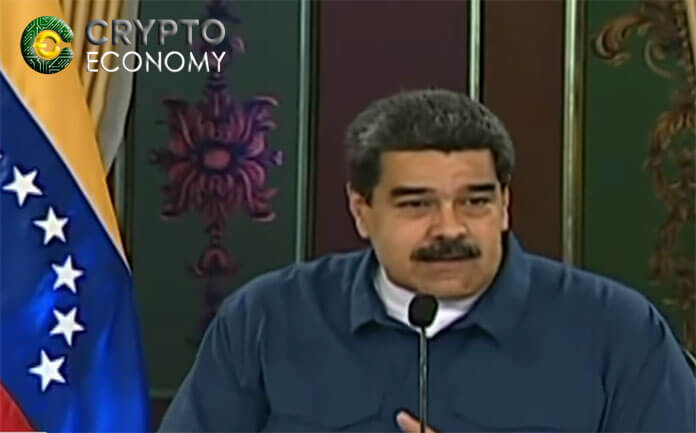
Via national TV broadcast, he publicized the implementation of a new wage system that will be pegged to the Petro, the national cryptocurrency. The idea posed by the controversial Head of State is that from now on, the country has two accounting units: the first one will be the new local currency, the Sovereign Bolivar (Bs.S); and the second one will be the Petro.
Maduro explained that the minimum wage was fixed to Bs.S 1,800, which equals to half the value of the Venezuelan cryptocurrency – Bs.S 3,600 or US $ 60, corresponding to the current price of the oil barrel. In addition to being confusing for the citizens, this explanation has triggered a load of critics, since cryptocurrencies are known for being decentralized, which means their value cannot be established by any State or institution.
Likewise, the president asserted that the State will assume the payroll of all small and medium enterprises in the country, for the next 90 days:
“We are going to a ‘zero fiscal deficit’, a stage of necessary fiscal discipline that will strengthen the new Venezuelan economic system”, Maduro added.
The end of the chaos, or the beginning?
The pegging of the minimum wage system to the petrocoin – launched on February this year, and considered as the first cryptocurrency backed by the oil reserves of a country – has caused fear, uncertainty and doubt among citizens, given the lack of information and teaching from the government so people have, at least, a basic level of knowledge on the matter.
However, according to the ruling party and supporters of Maduro, these economic measures were taken as part of the battle they hold against what they deemed as an ‘economic war’ – which is nothing more than a hyperinflation caused by a series of actions and omissions in the economic industry, including corrupted processes in a strict exchange control few private businesses have access to.
Meanwhile, different voices from all sectors, both opposition and dissident Chavismo, agree on the advent of a chaotic environment in the upcoming days, not only because of the aggressive impact this new devaluation will have, but because of the muddle of the people, who did not have enough time to adapt such changes and a crisis that reaches all sectors, including healthcare and public transport.
TL;DR: Orlen’s failed Venezuelan oil deal involved a $230 million advance, largely routed through USDt, but delivered only about $29 million in oil. Funds moved
TLDR: The investigator liquidated a total of approximately $41,000 in unsolicited digital assets sent directly to his public address. An initial donation of $25,000 in
TL;DR: The exchange platform OKX will allocate a direct humanitarian assistance fund in the stablecoin Tether (USDT) for registered users residing in the regions hardest
The philanthropic arm of the largest global exchange, Binance Charity, announced the delivery of $3 million dollars in emergency aid to support those affected by
TL;DR USDT demand in Venezuela continues to rise as the bolivar weakens and access to U.S. dollars through banks remains limited. Data from Binance P2P
TL;DR: The Ministry of Electric Energy confirmed that the disconnection of digital asset mining farms remains in effect indefinitely. Electricity demand in Venezuela reached 15,000
We use cookies to ensure that we give you the best experience on our website. If you continue to use this site we will assume that you are happy with it.OkPrivacy policy