MarketsNews
Utah Halts Criminal Case Against Kalshi, but Keeps Threat Alive
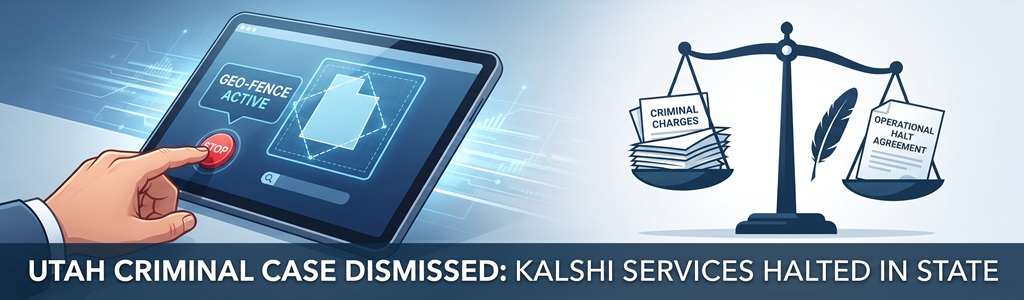
Utah prosecutors drop 14 criminal charges against Kalshi and its co-founders after suspending operations in the state on November 24, 2026.


Key points
- Dismissal of charges: On November 24, 2026, the office of Utah Attorney General Derek Brown filed a motion to dismiss without prejudice 14 criminal charges against KalshiEX LLC and its co-founders, Tarek Mansour and Luana Lopes Lara.
- Suspension of services: The move occurred one day after the platform halted operations in Utah, applied geofencing blocks, and committed to monitoring local IP addresses, affecting more than 177,000 user accounts in the state.
- Active civil litigation: The civil lawsuit filed by the state attorney general’s office on October 8, 2026, remains ongoing, and authorities maintain the warning that criminal charges will be refiled if the company resumes activity in Utah.
The Utah Attorney General’s Office announced this Tuesday that it moved to dismiss the criminal case against Kalshi and its executives after the prediction market platform suspended its services for residents of the state. The decision comes after weeks of legal disputes surrounding jurisdiction over sports and election event contracts in the United States.
The motion was filed in the Third District Court as a dismissal without prejudice, allowing prosecutors to refile the indictment if the company resumes operating in Utah. Official information from the attorney general’s office indicates the move responds to the withdrawal of the platform’s offerings and technical controls implemented to block access from the state.
Background of the Indictment and Operational Suspension
The criminal investigation into the platform began in September 2026, when an undercover agent placed wagers totaling $114.87 on the application. On October 28, 2026, Attorney General Derek Brown‘s office brought 14 criminal charges against KalshiEX LLC and co-founders Tarek Mansour and Luana Lopes Lara, including counts for gambling promotion and a pattern of unlawful activity.
Utah is one of only two states in the United States that prohibit all forms of gambling under its constitution, in effect since 1896. Official documentation indicates state authorities view prediction contracts as games of chance subject to local laws rather than the federal exemption invoked by the company.
Following prior judicial setbacks in August 2026 in federal courts and the denial of emergency relief by the Tenth Circuit, the firm halted the opening of new positions for Utah users between November 23 and November 24, 2026. According to case disclosures, customers in Utah retain the ability to withdraw funds and close existing positions, while over 177,000 accounts are affected by the operational pause.
Estimates of fees collected from users in the state range between $30.6 million and $61.2 million, according to figures cited in case reports. The company agreed to implement geofencing and monitor connection attempts from IP addresses located in Utah as part of the adjustment that prompted the review of its criminal stance.
Scope of the Threat and Jurisdictional Conflict
Attorney General Derek Brown stated that Utah does not allow gambling, that prediction markets fall into that category, and that charges will return if the company comes back to the state. Per official information from the attorney general’s office, at least seven event contract operators —including Kalshi, DraftKings, Fanatics, FanDuel, Novig, ProphetX, and Robinhood— have ceased activity tied to these contracts in Utah following enforcement actions.
The dismissal does not cover the civil lawsuit filed on October 8, 2026, by the state attorney general’s office, which remains active and also names two Susquehanna trading firms linked as Kalshi market makers. Court records and case statements note that state authorities continue monitoring other platforms and may initiate additional civil or criminal actions if they detect sports betting promotion within the territory.
Kalshi General Counsel Yaakov Roth stated on social media on November 24, 2026, that good-faith jurisdictional disagreements should not be criminalized and that the firm is open to discussing interim measures with state attorneys general while courts determine regulatory authority. The company maintains that the CFTC holds exclusive jurisdiction over contracts listed under its federal registration.
The dispute pits federal and state positions against each other across multiple judicial circuits nationwide, featuring conflicting appellate rulings and parallel litigation brought by the CFTC itself to halt state restrictions. According to reports on the company’s legal standing, dropping the charges in Utah reduces the immediate criminal exposure of its founders in that state, though it does not resolve the underlying conflict over prediction market regulation.
On the immediate court calendar, the arraignment scheduled for December 4, 2026, in a Salt Lake City court for the co-founders would become unnecessary if the criminal dismissal motion is granted, while a judicial ruling remains pending following hearings on the CFTC‘s lawsuit against Utah. Meanwhile, the state civil litigation and disputes in other jurisdictions continue moving forward in the courts.