TL;DR:
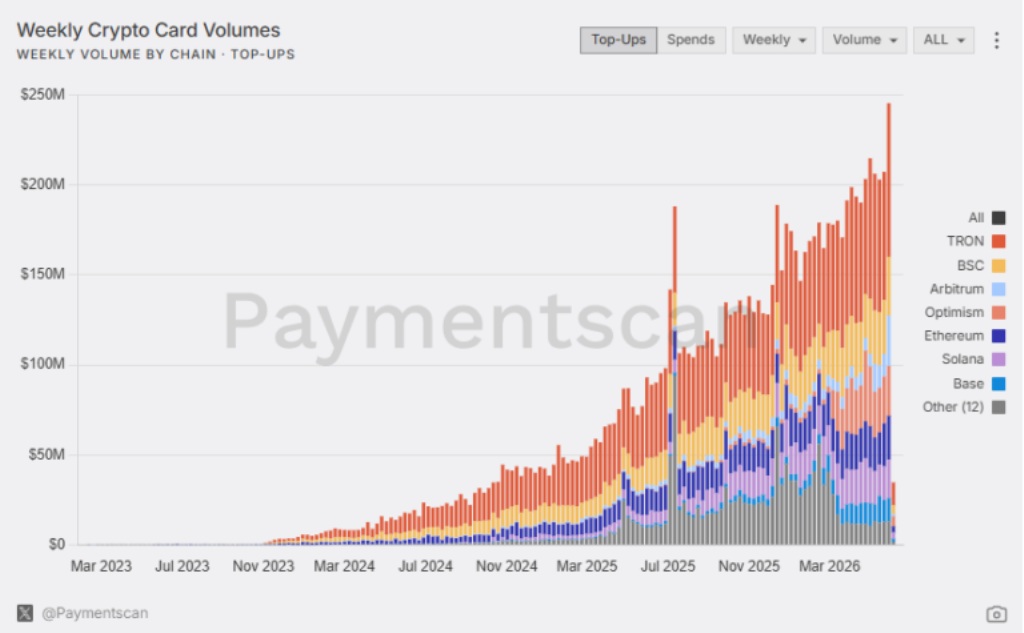
- Crypto cards reached an all-time high in top-ups during the last week of June, hitting $245 million in a single week.
- Card spending surpassed $10 billion in cumulative volume. The largest inflows come from networks such as TRON, BNB Chain, Optimism, and Base.
- Tighter regulations and custody issues threaten the viability of several crypto neobank projects.
Crypto cards have become one of the most dynamic sectors in the industry. Ten native ecosystem projects recorded all-time highs in usage and transaction volume.
Five projects set new activity records. According to data from Paymentscan, weekly top-ups reached an all-time high of $245 million in the last week of June, while cumulative spending surpassed $10 billion, positioning these cards as one of the products with the strongest market fit in the crypto asset space.
5 crypto card projects hit new ATHs in weekly volume
EtherFi, RedotPay, Phantom, KAST, and EXA
Projects tracked by PaymentScan generated ~$228.1M in volume last week, accounting for ~92.9% of all volume tracked on the platform
It feels like we’re approaching an inflection… pic.twitter.com/XdYROIQKSc
— Daniel (@0xDani) July 7, 2026
The phenomenon reflects two structural trends: the mass adoption of stablecoins and the convergence between decentralized finance and traditional fintech applications. On the network side, the largest inflows are concentrated in TRON and BNB Chain, while spending originates primarily from cards built on Optimism, Base, and Arbitrum. The recent decision by Revolut to drop support for USDT has also driven crypto card adoption in regions outside the eurozone, where access to that stablecoin remains critical.
Regulations and Custody: the Weak Points of Cards
However, the sector’s growth is not without complications. Ana Gabriela Ojeda Caracas, director of Blend Money, warned that not all neobanks will survive the next 18 months. According to Caracas, the surge in activity raises compliance demands, particularly around real-time sanctions screening, which translates into a significant operational burden for smaller projects.
Adding to the regulatory challenges is the lack of custody standards. The case of KAST, one of the most prominent projects on Solana, illustrates this issue: user deposits are treated as exchange transactions, which grants the issuer effective control over the funds. The safer alternative for users is to opt for self-custody solutions, where funds remain in wallets that are always accessible and cannot be unilaterally blocked.
Meanwhile, some analysts warn that part of the activity boom is being driven by points accumulation campaigns and airdrop promises, which could distort real adoption metrics once those incentives disappear.