TL;DR:
- The Ministry of Electric Energy confirmed that the disconnection of digital asset mining farms remains in effect indefinitely.
- Electricity demand in Venezuela reached 15,000 megawatts (MW) during the last week of April 2026.
- The National Dispatch Center reported that current thermal generation is operating at 40% of its installed nominal capacity.
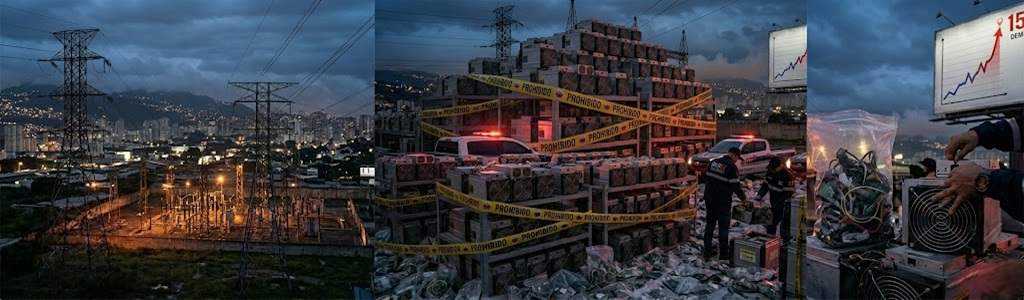
This week, Venezuelan authorities ratified that the Crypto mining ban continues and that they will be strict with its enforcement throughout the national territory. The measure responds to a sustained increase in energy consumption, which reached its highest point in the last nine years according to official electric system records.
Comunicado de última hora sobre tema eléctrico en Venezuela pic.twitter.com/UaprjP0Jxd
— Miraflores Al Momento (@AlMomento_M) May 7, 2026
The Ministry of People’s Power for Electric Energy (MPPEE) pointed out that the main objective is to stabilize the load of the National Electric System (SEN). According to information released by the agency, the use of high-consumption processors for data mining represents a technical pressure that the system cannot absorb in the current climatic context.
Data provided by the Executive branch indicate that high temperatures have raised residential and industrial demand. Official documentation suggests that disconnecting mining equipment has allowed for the recovery of a maneuverability margin close to 500 MW in critical areas such as Carabobo and Aragua.
According to reports from local media and government sources, inspections in industrial zones have intensified during the first four months of 2026. These actions seek to identify unauthorized connections that could compromise distribution in local networks.
Technical factors of the energy crisis and the digital sector
The generation infrastructure at the Guri complex presents technical challenges that limit distribution toward the western part of the country. Reports from the National Electric Corporation (Corpoelec) suggest that the current demand of 15,000 MW is dangerously close to the limit of the real operating capacity of the active turbines.
The state’s stance regarding the Crypto mining ban hardened following the restructuring of the National Superintendency of Cryptoassets (Sunacrip). Administrative records from the oversight board indicate that no new operating licenses will be granted as long as the SEN does not overcome the current contingency phase.
Energy sector analysts consider that the recovery of the thermal grid is a necessary prior step for any reopening of mining activity. According to technical projections, sustained investment in combined cycle plants would be required for the system to support the load of industrial data centers.
In the parallel market, home mining activity has also seen a reduction. Network monitoring data suggest that the ‘hashrate’ coming from residential nodes in Venezuela has dropped by 65% since the start of mass disconnection operations in 2024.
The regulatory situation remains under the direct supervision of security agencies. Current regulations establish that the use of specialized equipment for validating transactions on blockchains without state certification could result in the final seizure of physical assets.
The next milestone in this scenario will be the presentation of the SEN management balance corresponding to the close of the first half of 2026. This report will determine if technical conditions exist to evaluate a partial easing of restrictions in states with an energy surplus.