The impending United States midterm election has created a high-tension scenario for the digital assets industry. With Congress in recess and the legislative window compressing, the fate of the CLARITY Act remains unresolved. The November electoral outcome will define not only the composition of the House and Senate but also the regulatory framework governing token classification, regulator jurisdiction, and the competitive positioning of the U.S. market within the global crypto ecosystem.
President Donald Trump has resumed public campaigning to pressure Congress into passing the CLARITY Act, labeling the legislation as a critical tool to keep the United States ahead of China in financial innovation. During a White House event with chief executives from Kraken, Bitgo, Ripple, Coinbase, and ChainLink, Trump urged legislators to proceed. Executive endorsement, however, has not cleared the procedural hurdles.
The Senate has scheduled a cloture vote for mid-September, though this vote represents only the first of several procedural steps the legislation must surmount. Even if Majority Leader John Thune advances the bill to the floor, the House of Representatives will likely seek amendments, opening a conference committee process that could reopen settled issues from prior Senate negotiations. The calendar works against the bill: Congress holds approximately three weeks of session between the recess return and the pre-election closure in November.
On Polymarket, the probability of CLARITY Act enactment before the end of 2026 stands at 21% , with over $7 million in volume traded. On Kalshi, probabilities have declined from 50% to 23% within a single month. Miller Whitehouse-Levine, CEO of the Solana Policy Institute, assigned the bill a 10% probability of pre-midterm passage. This low-probability perception carries substantive weight, reflecting the complex interplay of interests—from banks and securities firms to derivatives exchanges—that have mobilized against the bill’s advancement.
The SEC Regulatory Response to Legislative Vacancy
With congressional action stalled, the Securities and Exchange Commission (SEC) has opted for unilateral action. On August 18, 2026, the SEC published a 400-page proposed regulation titled “Regulation Crypto Assets” , which establishes a tailored offering regime for digital tokens. The proposal outlines three pathways: an exemption for startups raising up to $5 million, an exemption for fundraising up to $75 million, and a safe harbor for investment contracts that would permit tokens to exit security status.
The fundamental conflict arises from the incompatible definitions embedded in Regulation Crypto Assets and the CLARITY Act. The CLARITY Act applies a four-part test to determine blockchain decentralization, capping ownership concentration at 20% . The SEC safe harbor, by contrast, relies on issuer self-declaration regarding the cessation of essential managerial efforts. More critically, the SEC proposal does not resolve the jurisdictional question of whether a token falls under SEC or Commodity Futures Trading Commission (CFTC) authority—precisely the problem the CLARITY Act was designed to address.

Commissioner Hester Peirce, architect of the safe harbor concept, departs from her position in November 2026, creating a finite window for the proposal to advance before the Commission loses the necessary votes for finalization.
Should both frameworks proceed in parallel, the industry faces two overlapping regimes that diverge on fundamental aspects such as token classification, initial capital thresholds, and regulatory obligations for software developers. The question is not which framework offers superior design, but which framework survives the legislative and administrative collision.
Political Expenditure as a Survival Strategy
The crypto industry has internalized the reality that regulation gets decided not solely in committee hearings but at the ballot box. Sector firms have allocated $189 million to the 2026 midterm elections, representing 37% of all corporate political spending in the current cycle. This figure already exceeds the $170 million spent during the entire 2024 electoral cycle.
Ripple Labs leads expenditure with $49.6 million, followed by Crypto.com with $38.6 million and Coinbase with $35.2 million. Entities affiliated with Gemini and the Winklevoss twins added another $25.7 million. Funds channel primarily toward two super PACs: Fairshake, which supports pro-crypto candidates across both parties and has received $82.6 million, and MAGA Inc. , the pro-Trump super PAC, which has received $56.2 million from the crypto sector, with Crypto.com directing $35 million directly to that vehicle.
Crypto sector spending exceeds combined expenditures from artificial intelligence and major technology firms ($60 million) and online betting platforms ($45.6 million). Andreessen Horowitz has donated $51.65 million, although the firm has oriented $50 million toward the Leading the Future PAC, focused on AI. These expenditure magnitudes underscore an industry not merely participating in the political process but actively attempting to purchase regulatory certainty through financial influence.
The Trump Factor and Partisan
Presidential involvement in the crypto ecosystem has created political difficulties for Democratic legislators. Many Democrats oppose the CLARITY Act on grounds that the legislation insufficiently prevents elected officials, including the president, from benefiting from personal crypto ventures—a concern tied directly to the Senate investigation into the Trump family’s involvement with World Liberty Financial. Should Democrats reclaim the House in November, the CLARITY Act almost certainly expires before enactment.
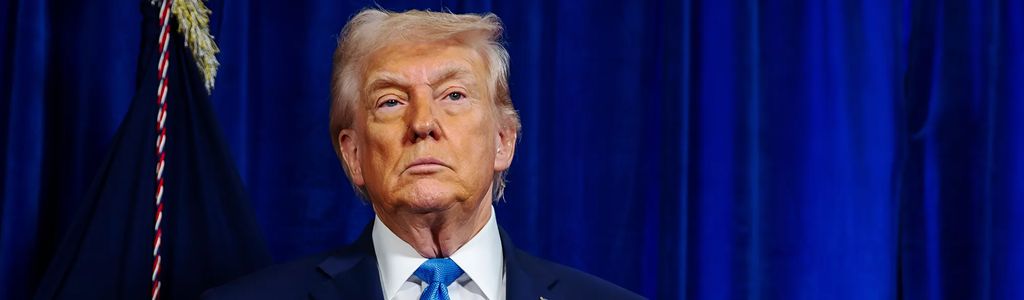
Trump has signaled clear intent to influence the midterm elections through MAGA Inc. , which maintains a substantial war chest. The president has resumed campaign rallies, beginning in South Carolina to support Senate candidate Darline Graham, with increased activity expected in the months preceding November.
For the crypto industry, the emerging scenario presents high uncertainty with multiple possible outcomes:
- Scenario 1: CLARITY Act passage during the September session. Unlikely, given the calendar constraints and the complexity of competing interests. Even with a successful cloture vote, the conference committee process would consume time not available on the legislative calendar.
- Scenario 2: CLARITY Act survival during a post-electoral lame duck session. Possible, though conditional upon Republicans retaining control of at least one chamber. A Democratic House victory would terminate the legislation.
- Scenario 3: SEC Regulation Crypto Assets adoption as the predominant regulatory framework. The SEC proposal advances in parallel and, facing legislative failure, becomes the de facto standard, despite contradictions with the CLARITY Act and its failure to resolve the jurisdictional question.
- Scenario 4: CFTC intervention. The CFTC is drafting its own rules for the crypto market as a backup response to CLARITY Act stagnation, which would introduce a third regulatory actor to the matrix.
The $189 million expenditure does not guarantee a specific legislative outcome
The CLARITY Act and Regulation Crypto Assets operate on mutually exclusive definitions of decentralization and jurisdictional authority; the SEC proposal does not preempt the jurisdictional ambiguity between the SEC and CFTC, whereas the CLARITY Act resolves the ambiguity only upon enactment.
The November election determines which framework gains precedence. A Democratic House majority terminates the CLARITY Act process. A Republican retention allows a lame-duck consideration, subject to the cloture vote results in September.
The industry must evaluate the September cloture vote as the primary indicator of short-term regulatory viability. A failed cloture vote establishes the SEC proposal as the default regulatory baseline, irrespective of the November election results. The election outcome subsequently determines whether a legislative override of the SEC framework remains possible in the 2027 session. The spending levels represent the industry’s cost of accessing that decision point, not a guarantee of a favorable rule set.
The 2026 Election Does Not Settle This
Midterm outcomes in 2026 reset political capital available for policy changes. If Republicans gain Senate seats, crypto-friendly bills get floor time. If Democrats retain control, they don’t. Neither scenario produces major legislative rewrites because the time window is compressed and competing priorities absorb floor time.
More likely: executive branch actions accumulate gradually. SEC guidance documents shift enforcement tone. CFTC clarifies derivatives jurisdiction over crypto futures markets. FinCEN updates anti-money laundering rules to reduce compliance burdens on legitimate exchanges. None of these are dramatic. All of them move policy in marginal crypto-favorable directions.