TL;DR:
- Donald Trump led a press conference at the White House alongside executives from Coinbase and Gemini to demand the passage of the market structure legislation.
- The House of Representatives approved the bill in July 2025, but the initiative remains stalled in the United States Senate.
- Brian Armstrong, CEO of Coinbase, projected that the bill could secure more than 60 votes during the procedural vote scheduled for September 15.
During a press gathering at the White House this Wednesday, President Donald Trump pushed Congress to finally pass the CLARITY Act. At the event, the head of state was accompanied by several stakeholders from the digital asset industry.
Key figures from the sector also participated, such as Coinbase CEO Brian Armstrong, and Gemini co-founders Cameron and Tyler Winklevoss. During his speech, Trump urged lawmakers to ratify a fair version of the initiative to preserve national technological competitiveness against foreign powers like China.
The bill, the Digital Asset Market Clarity Act, was backed by the House of Representatives in mid-2025. However, its legislative process remains stalled in the Senate due to disagreements over the regulation of tokenized stocks, stablecoin yields, and potential corporate conflicts of interest.
During the press conference, Brian Armstrong noted that a legal framework would provide long-term regulatory stability for companies operating in U.S. territory. The Coinbase executive added that the legislative text could surpass the 60 votes required when the Upper Chamber considers a procedural motion scheduled for September 15.
Trump defended the viability of the bill, describing it as a measure with bipartisan support within Congress. The president had previously promoted the initiative last July following the passing of Senator Lindsey Graham, whom he described as a key champion of the regulation.
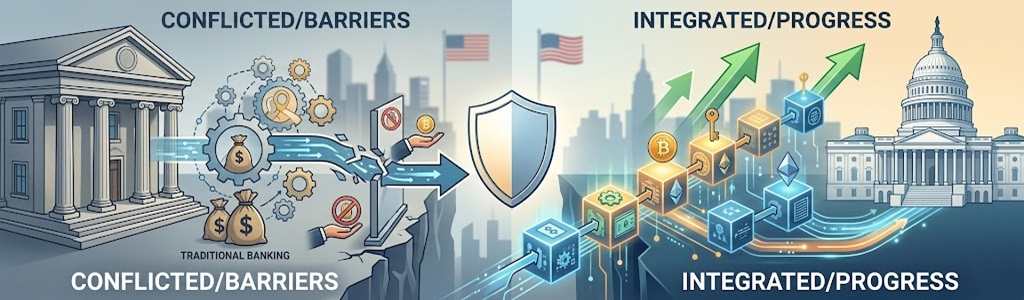
Political divides and regulatory agency progress
The presidential remarks triggered immediate reactions in the legislative arena. During his appearance at the Wyoming Blockchain Symposium, Democratic Senator Ruben Gallego questioned the administration’s stance regarding the bill’s ethics provisions. Gallego maintained that defining regulatory boundaries belongs exclusively to Congress and the Senate, rejecting any attempts by the Executive branch to shape the scope of the rules to its own convenience.
The Washington event follows previous meetings held at the White House, including the March 2025 regulatory summit and the formal signing of the GENIUS stablecoin act in July of that same year.
Amid the current congressional recess, financial supervisory agencies have begun structuring independent guidelines. The Commodity Futures Trading Commission (CFTC) convened its Innovation Advisory Committee to evaluate provisional measures while Congress remains in legislative recess. Meanwhile, the Securities and Exchange Commission (SEC) presented regulatory proposals this week aimed at establishing safe harbors and specific exemptions for token issuance in the domestic market.
The calendar marks September 15 as the key date for the initiative’s progress, the day the Senate resumes legislative sessions and puts the motion to conclude debate to a vote.