The story between World Liberty Financial and Justin Sun encapsulates, in less than eighteen months, everything that can go wrong when hidden centralization meets expectations of decentralization. What began as a strategic alliance between an influential global crypto investor and a project backed by the Trump family ended in two simultaneous lawsuits, the freezing of billions of dollars in tokens, and public accusations of fraud, abuse of power, and market manipulation.
The conflict reached its breaking point in May 2026 when World Liberty Financial filed a defamation lawsuit against Sun on May 4, accusing him of launching a public campaign against the company after it restricted access to his WLFI holdings.
But the dispute did not start there. Sun had filed his own legal action two weeks earlier, on April 21, alleging that World Liberty Financial illegally froze his deposits and blocked his voting rights. Between both legal actions lies a chain of events that exposes how even the most sophisticated investors can become trapped in control structures that contradict decentralization principles.
The timeline of deterioration begins in November 2024, when Sun invested $30 million in World Liberty Financial. At that moment, the project faced a slow initial phase, seeking to build momentum after a capital raise that had not gained traction.
Sun did not merely invest; he became a visible public endorsement. He subsequently increased his total commitment to approximately $75 million, according to court documents and reports cited in the filings. His participation placed him among the project’s most important early backers.
World Liberty Financial launched in 2024 as a decentralized finance (DeFi) venture explicitly linked to President Donald Trump and members of his family, including Donald Trump Jr., Eric Trump, and Barron Trump. The project attracted attention for its political connections, its token structure, and the profile of its backers. For Sun, the investment offered early access, a major investor position, and potential returns tied to a politically backed crypto project.
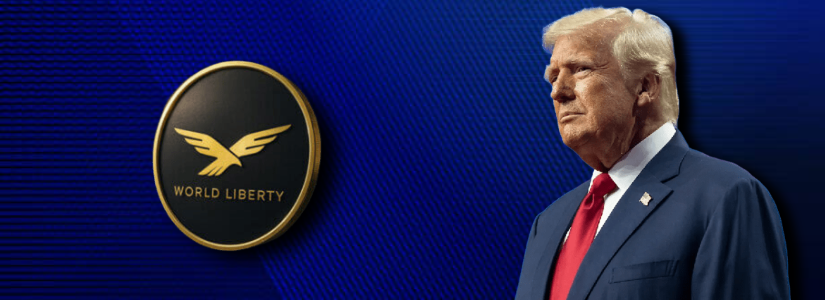
Everything changed when WLFI token trading began in September 2025. Here enters the technical element that defines the entire dispute: how a company handles the behavior of a major investor when token price stability is at risk.
On-chain data cited in the litigation shows wallets linked to Sun moving WLFI tokens toward exchanges like HTX and Binance. World Liberty Financial interpreted these movements as part of a coordinated strategy involving short-selling and price suppression. The company argues that Sun leveraged his investor position to manipulate the market after failing to achieve expected returns.
Sun categorically denies those accusations. According to his version, the token movements were routine exchange deposit tests, standard operations for an institutional investor managing liquidity. His lawsuit describes the company’s response as an illegal seizure of investor assets, not a protective action.
What occurred next reveals the core contradiction of the project. The company blacklisted wallets associated with Sun, freezing hundreds of millions of unlocked WLFI tokens and billions more under vesting schedules. Reports cite two wallets linked to Sun affected by the freeze: an active trading wallet and a vesting or reserve wallet.
World Liberty Financial justifies its action by claiming it had contractual authority to freeze tokens under disclosed agreements and token terms. Sun presents a radically different claim: that the company deployed a hidden smart contract function, effectively a backdoor, allowing insiders to freeze assets and revoke voting rights without governance approval.
The Paradox of Decentralization: Centralized Control Disguised as Protocol
At the center of this dispute lies a critical structural question: how can a project labeled as decentralized operate with centralized control mechanisms capable of freezing billions in assets without community consent?
The blacklist function in WLFI’s smart contract operates precisely in that manner. Sun alleges it functioned on demand, enabling instant freezing of holdings and removal of governance rights. World Liberty Financial maintains that the tool was properly disclosed and used to protect token holders from alleged misconduct.
This creates a fundamental dilemma: what does decentralization mean when a central group can override ownership rights without transparent governance? According to Sun’s legal argument, it means that investors do not truly own autonomous assets, but rather hold revocable access subject to centralized control conditions.
World Liberty Financial escalated the conflict by filing its countersuit in Florida on May 4, accusing Sun of defamation and reputational damage. The complaint alleges a “scorched-earth” campaign, claiming Sun used social media pressure and false statements to force restoration of his access. The company seeks monetary damages and a jury trial.
Sun rejected the defamation claims as a public relations maneuver and continues pursuing allegations of fraud, breach of contract, and unlawful asset control.
The situation becomes more complex when considering Sun’s broader involvement in Trump-linked crypto projects, including his purchase of the $TRUMP meme token. Reports also note that the Securities and Exchange Commission (SEC) settled a fraud case against Sun in 2026, adding regulatory and political layers to the dispute.
The token restructuring proposal adds urgency. World Liberty Financial introduced a governance plan affecting 62.28 billion locked tokens, achieving approximately 99.4% approval. The proposal includes a burn of 4.52 billion tokens and introduces a two-year cliff followed by long-term vesting schedules.

Despite these measures, WLFI token performance remains under pressure, trading near $0.06 in May 2026, reflecting a decline of 70% to 80% from previous levels. Sun’s holdings remain frozen, making their value purely theoretical. His position, once valued at over $1 billion at peak prices, now sits significantly lower, though still above his initial investment on paper.
Governance concentration introduces further tension. Reports indicate that large wallets control a disproportionate share of voting power, while Sun argues that the freeze excluded him from governance despite his major stake. This creates a disconnect between capital ownership and decision-making power.
For World Liberty Financial, the case centers on whether it legitimately acted to prevent market manipulation. For Sun, the issue centers on whether a “decentralized” project can legally freeze assets and voting rights through centralized mechanisms. These positions remain structurally incompatible within the current legal framework.
Courts will examine investor agreements, smart contract disclosures, token transfers, public communications, and actual control authority over user assets. The resolution will likely take months or years.
The outcome will define whether crypto projects labeled as decentralized can maintain centralized control functions without legal consequences, and whether investors have effective recourse against asset freezes. For now, the alliance between Sun and World Liberty Financial remains completely broken, the tokens remain locked, and the question of what decentralization truly means in crypto finance remains unresolved.