TL;DR:
- Ripple established its new headquarters for the Middle East and Africa (MEA) region within the Dubai International Financial Centre (DIFC) on April 30, 2026.
- The Middle East region currently represents nearly 20% of the company’s global customer base, according to recent operational data.
- The company obtained a full license from the Dubai Financial Services Authority (DFSA) in March 2025, enabling its regulated cross-border payment services.
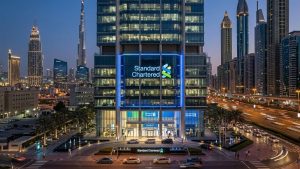
This Thursday, Brad Garlinghouse, CEO of Ripple, described the expansion to the UAE as a strategic milestone, following the opening of a new regional headquarters in Dubai designed to double the operational capacity of its technical and commercial team.
Leaders attract leaders…
Proud to be expanding in the UAE https://t.co/V8xGAEDabx
— Brad Garlinghouse (@bgarlinghouse) April 30, 2026
The decision to expand the physical presence in the DIFC responds to what the firm describes as a massive appetite for highly regulated digital asset services. Reece Merrick, Managing Director of Ripple for MEA, indicated that the current infrastructure will allow absorbing the growth in local demand in critical areas such as custody and institutional payments.
Since 2020, the company has maintained operations in the United Arab Emirates, a period during which it consolidated alliances with entities such as Zand Bank, the nation’s first digital bank, and the South African Absa Bank.
Regulatory Advances and RLUSD Adoption
According to information from the DFSA, Ripple reached a regulatory milestone in March 2025 by becoming the first fully licensed blockchain payment provider in the jurisdiction.
This regulatory framework facilitated that, in June of the same year, the authority approved the use of the RLUSD (Ripple USD) stablecoin as a recognized cryptographic token within the financial center. Market data indicates that RLUSD reached a capitalization of $1.557 billion at the close of April 2026, with an active presence on networks such as Ethereum and the XRP Ledger.
Ripple’s strategy in the region is distinguished by a focus on regulatory clarity. The Ripple Labs report indicates that Dubai’s environment allows for a smoother integration of business solutions compared to other global markets. Garlinghouse highlighted through the social network X that “leaders attract leaders,” emphasizing the alignment between the company’s technological vision and the pro-crypto policies of the Emirati regulators.

Strengthening the Institutional Ecosystem
The physical expansion in the DIFC coincides with the integration of new custody infrastructures in the Asian and Middle Eastern markets. The company projects that the new office will serve as a central node to support strategic partners using its payment rails for real-time settlements. The Ripple Custody infrastructure is presented as the technical pillar for banks seeking to manage digital assets under international compliance standards.
The volume of transactions processed through its regional partners showed an upward trend during the first quarter of 2026. Operational data suggests that Ripple’s network in the UAE acts as an essential liquidity bridge for corporate remittances between Africa and the Persian Gulf. This consolidation occurs in a context where the DIFC hosts more than 8,800 active companies, positioning itself as a top-tier financial center on a global scale.
The next milestone for the company in the region will be the large-scale implementation of its RLUSD stablecoin on local exchange platforms, scheduled for the close of the second quarter of 2026.