TL;DR:
- Bitcoin (BTC) surpassed $76,000 after Iran announced the reopening of the Strait of Hormuz during the ceasefire period.
- WTI crude oil prices dropped nearly 10% to $85.90 per barrel, their lowest level since the conflict began in March.
- Technical analysts note that a sustained breakout above $77,000 could open the door to a recovery toward significantly higher levels.
Bitcoin (BTC) surpassed $76,000 again, driven by a geopolitical de-escalation signal: Iranian Foreign Minister Seyed Abbas Araghchi declared that the Strait of Hormuz will remain fully open to commercial traffic for the remainder of the ceasefire period. U.S. President Donald Trump responded immediately on Truth Social, thanking Iran for the full reopening of the strait.
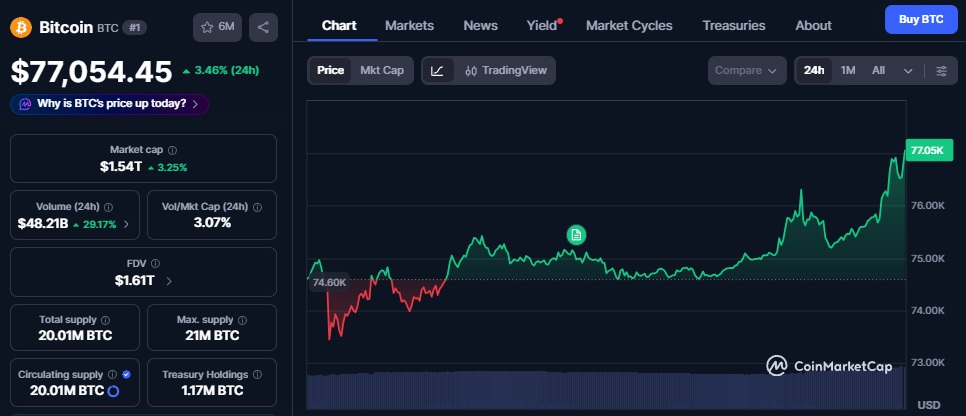
Markets reacted swiftly and decisively. WTI crude oil prices plunged nearly 10%, to $85.90 per barrel, marking their lowest level since shortly after the start of the armed conflict in early March. In that same context, BTC climbed rapidly and has now surpassed $77,000, accumulating a gain of around 3.5% over the past 24 hours. U.S. stock index futures also posted broad gains of approximately 1%.
$76,000: the Barrier BTC Needs to Leave Behind
The $76,000 zone is critical. Bitcoin was trading in the $76,000 to $78,000 range in the days leading up to the February 5 crash, when its price retreated to $60,000. Since then, BTC has attempted to break above that level on multiple occasions, though each rally was quickly absorbed by a wave of selling. Technical analysts argue that sustaining a breakout above $77,000 could open the path toward a more substantial recovery.

Negotiations Underway between Washington and Tehran
Meanwhile, Axios reported that the United States and Iran are negotiating a three-page plan to end hostilities. Among the points under discussion is the release of $20 billion in frozen Iranian funds in exchange for the country abandoning its enriched uranium stockpile. If the negotiations succeed, the geopolitical landscape could consolidate as an additional catalyst for risk assets, including cryptocurrencies such as BTC.