TL;DR:
- Jeff Park, Bitwise advisor, predicts Bitcoin will receive a wave of capital as Korean investors rotate out of tech stocks.
- South Korean retail investors hold concentrated positions in Samsung, SK Hynix and Hanmi Pharmaceutical, the top KOSPI stocks.
- A 22% capital gains tax and stricter reporting requirements have been established in the Korean market.
Jeff Park, researcher and advisor at Bitwise, published a prediction that could shake the crypto market: Bitcoin will receive a massive capital inflow from South Korean retail investors once they decide to rotate out of their positions in KOSPI tech stocks. “Imagine the candle when Korean retail finally exits Hynix, Samsung and Hanmi and comes back to Bitcoin,” Park wrote. “It’s only a matter of time.”
Park’s theory starts from a straightforward diagnosis. Currently, Korean retail capital is concentrated in three giants of the local market: Samsung Electronics and SK Hynix, global leaders in high-bandwidth memory and semiconductors, and Hanmi Pharmaceutical, a benchmark in the domestic biotech sector. These companies were the main beneficiaries of the artificial intelligence boom during 2025 and early 2026, which kept that capital “trapped” in profitable positions within the traditional stock market.
Imagine the candle when Korean retail finally rotates out of Hynix, Samsung, and Hanmi and comes back to Bitcoin
It’s simply a matter of time
— Jeff Park (@dgt10011) May 12, 2026
The Rotation That Could Shake Bitcoin and the Market
Park’s reasoning is based on the fact that South Korean retail investors are globally known for their high-risk trading style and their ability to move markets through volume. The moment they perceive a ceiling in tech stocks, Bitwise anticipates, they will sell their positions simultaneously and redirect that flow into Bitcoin. Park described the current situation as the “calm before the storm.”
Kimchi Premium
The phenomenon has a concrete historical precedent: the so-called “Kimchi Premium,” by which Bitcoin tends to trade between 5% and 15% above global prices on Korean exchanges, driven by intense local demand. If that pattern repeats at a larger scale, the liquidity event could have visible effects across the entire international market.
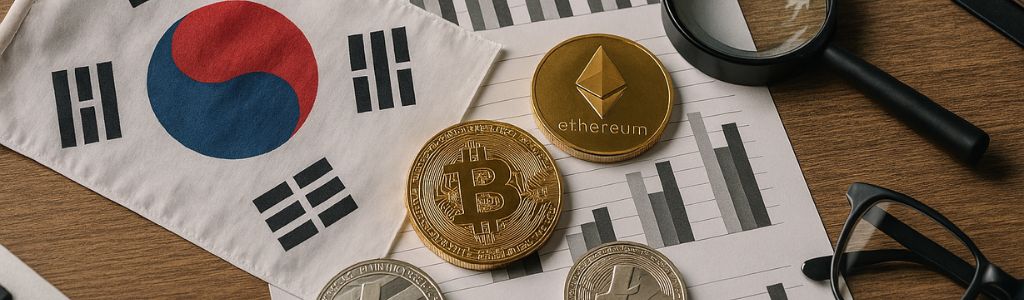
The scenario will nonetheless unfold within a regulatory environment that has grown progressively more restrictive. The South Korean government implemented a 22% capital gains tax on crypto assets and tightened reporting requirements for operators in the sector, which is also dealing with the fallout from the Bithumb disaster.