TL;DR
- Samsung will introduce USDC transfers to Samsung Wallet, an app compatible with 82 million Galaxy devices in the United States.
- The integration will use Solana and Sui infrastructure, with Bastion and Coinbase handling operations and asset custody.
- Stablecoins could make international remittances easier, although conversion fees, regulation, and user adoption will remain decisive factors.
Samsung will introduce USDC transfers to Samsung Wallet, allowing users to send money from compatible Galaxy devices in the United States. The feature will begin rolling out during the last week of October and will support transfers to digital wallets and bank accounts in more than 60 countries.
The initiative could bring stablecoins to millions of consumers who have never used a cryptocurrency platform. Its main advantage is bringing blockchain payments into a familiar app, without requiring users to manage private keys or install additional tools.
USDC Will Reach Millions of Galaxy Devices
Samsung estimates that 82 million Galaxy devices are compatible with its wallet in the United States. That figure represents the service’s potential reach, not the number of people who will necessarily use USDC.
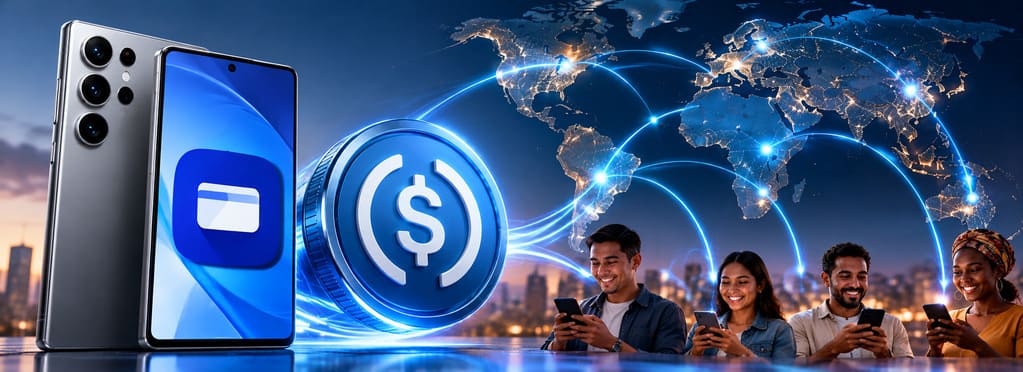
The integration will use Solana and Sui as its blockchain networks, while Bastion will provide regulated infrastructure, accounts, and compliance services. Coinbase will custody the funds through Coinbase Prime Vault.
Samsung will not charge fees for sending USDC to compatible wallets, although receiving intermediaries may impose charges. Transfers to bank accounts will have varying costs depending on the destination.
The absence of network fees does not mean every remittance will be free. Converting dollars into stablecoins and subsequently receiving local currency may involve additional expenses.

Remittances Need Simplicity, Not More Apps
The main obstacle to using cryptocurrencies as everyday money has not always been technological. Many people do not understand how wallets, blockchain networks, and receiving addresses work.
Samsung aims to reduce these difficulties through a familiar interface. Users will be able to send funds from their phones, while certain recipients will receive money directly into their bank accounts.
People do not need to understand Solana or Sui to benefit from a simpler international transfer. Separating the underlying infrastructure from the user experience could encourage adoption beyond the cryptocurrency sector.
However, the service will require identity verification and biometric authentication. It will also be subject to regulatory restrictions and eligibility requirements.
Its usefulness will depend on whether users can complete transactions without facing more complicated procedures than those offered by banks and remittance apps.

Mass Distribution Does Not Guarantee Adoption
Samsung offers something many blockchain projects still need: direct access to consumers through an app installed on their devices.
But having millions of compatible phones does not translate into millions of transfers. Users will need to find sufficient advantages to change their financial habits.
Competition includes banks, digital wallets, and specialized remittance companies. To compete with them, USDC will need to offer competitive costs, speed, and reliable mechanisms for recovering funds when problems arise.
There are also risks involving transfer errors, fraud, and dependence on custodians. Ease of use does not eliminate financial responsibilities or consumer protection requirements.
Samsung plans to introduce merchant payments using stablecoins at a later stage, but that functionality will not be available during the initial rollout.
USDC’s integration has greater potential to expand the everyday use of cryptocurrencies than many initiatives focused exclusively on their prices. Its economic value will depend on how many people use the service regularly and how much they can save compared with existing alternatives.