TL;DR:
- Fabric Foundation announced on August 4, 2026, the integration of the PI token as a payment method within the RoboPay infrastructure.
- The Pi Core Team development group has not issued any official statement or verified the reported partnership.
- The technical proposal considers the use of smart contracts under the PiRC2 standard for the automation of recurring on-chain payments.
Fabric Foundation recently announced that Pi Network is joining its ranks as a payment partner within the RoboPay platform. However, this announcement has not yet been verified by the Pi Core Team, leaving the update classified as an unconfirmed claim within the crypto sector.
Pi Network @PiCoreTeam joins RoboPay as a payment partner. Pi will be used to pay for robot services across the Fabric network.
RoboPay was built to enable AI agents to discover, hire, coordinate, and pay robots autonomously onchain, transforming robots from connected machines… pic.twitter.com/1qxLC0CMKc
— Fabric Foundation (@FabricFND) August 4, 2026
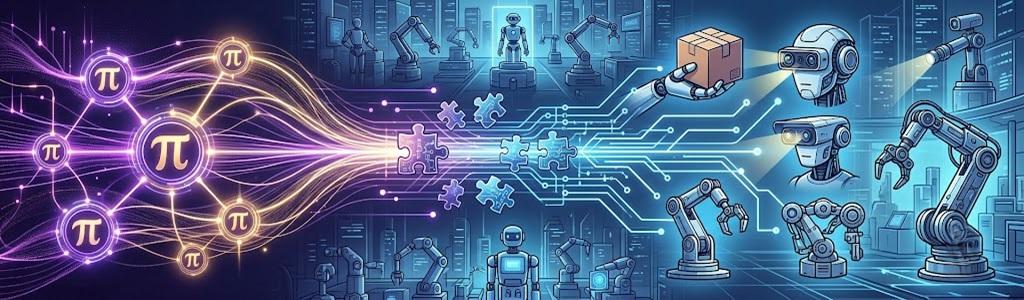
The announcement made by Fabric Foundation asserts that RoboPay’s infrastructure will enable the use of the PI token for the autonomous contracting of robotic services. According to official information from the organization, the network is designed to operate on the Fabric Network, allowing artificial intelligence agents to coordinate and settle transactions directly on the blockchain.
Asset holders could use the cryptocurrency to pay for automated services instead of acquiring physical ownership of the machines.
Among the use cases described in the briefing note are robotic grocery delivery, security patrolling on properties, and automated industrial inspection. Additionally, the release mentions interaction with humanoid assistants in commercial and hospitality establishments. Fabric Foundation calls this structure an “open machine economy,” where human users, artificial intelligence systems, and robotic units interact through the same financial protocol.
The published technical approach involves task selection and process execution performed automatically by computer agents. According to details shared by the user community, the framework would rely on PiRC2 smart contracts to manage subscriptions and recurring charges. These contracts would allow robots to receive payments without requiring traditional financial intermediaries.
Technical integration and community stance on the announcement
Members of the Pi Network ecosystem reacted to the news highlighting the potential expansion of the token’s practical utility.
However, crypto market analysts, including commentator CryptoDiva, urged users to maintain operational caution due to the lack of a statement from the Pi Core Team. The absence of verification across the network’s official channels makes it impossible to determine whether the contractual agreement is finalized, in the negotiation phase, or lacks institutional validity.
Market data indicates that open interest in PI futures contracts reached $8.82 million on Wednesday, compared to $8.51 million recorded the previous day. The reading of this metric reflects a variation in the notional value of derivatives amid the report’s circulation.
A report published by Bitget points out that adding use cases linked to robotics would boost real demand for the asset in the secondary market. According to technical analysis released by the same platform, the cryptocurrency’s price tested a resistance zone near $0.0850 during the early hours of August 5, 2026.
The eventual validation of the partnership would link the network to the development of infrastructures integrating artificial intelligence and robotics on-chain.
Monitoring this integration will depend on an official statement issued by the Pi Core Team through its verified communication channels in the coming days.