TL;DR:
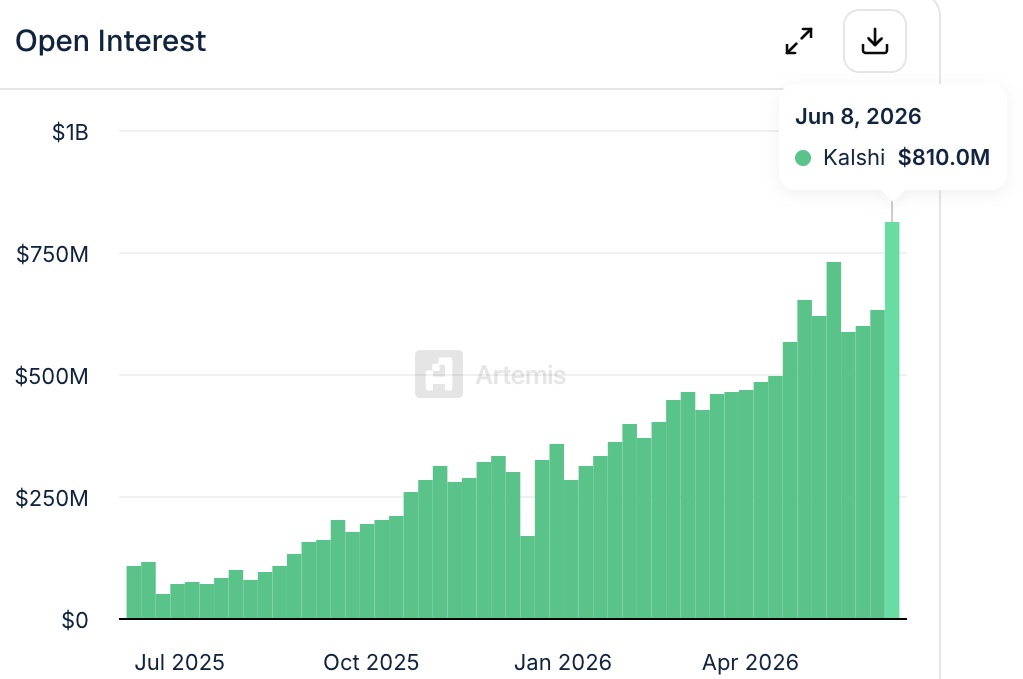
- Kalshi recorded a weekly open interest record of $810 million, 28% more than the previous week and nearly double that of Polymarket.
- The launch of BTCPERP, the first CFTC-regulated perpetual Bitcoin contract, was the main driver of its growth.
- Bitcoin’s 13% drop during the week, which briefly touched a low of $59,000, also contributed to the increase in open interest on the platform.
Kalshi recorded a weekly open interest (OI) of $810 million, according to data from Artemis, setting a new all-time record for the prediction markets platform. That figure represents a 28% increase from the previous week and surpasses the previous highs recorded in mid-May.
Unlike volume, which can spike and vanish within hours, OI reflects the money that remains committed in open positions, making its sustained growth a robust indicator of a platform’s real traction.
BTCPERP: The Key Product
The most important catalyst was the launch of BTCPERP, the first perpetual futures contract on Bitcoin regulated by the U.S. Commodity Futures Trading Commission (CFTC). Because they carry no expiration date, perpetual contracts feed OI indefinitely as long as the position remains open. The event contracts Kalshi had been offering until now settle on a specific date and exit the record at expiration, which prevents them from accumulating OI in the same way. The addition of a perpetual instrument structurally reconfigured the metric.
Market volatility also played its part. Bitcoin posted its steepest weekly decline of the year, falling more than 13% from highs near $74,000 to a low of $59,000. It is currently trading around $63,500. In this context, Kalshi’s event contracts offer a concrete advantage: the maximum loss is capped at the amount staked. When prices fall and leverage triggers liquidations on other platforms, that feature attracts capital seeking exposure with defined risk.

Kalshi Doubles Polymarket
Kalshi’s OI now nearly doubles that of its main competitor, Polymarket, which last week recorded $419.9 million, a ratio of 1.9 to 1. The gap is considerable given that both figures were practically even at the start of the year. While Polymarket maintains its binary resolution and settlement model, Kalshi has progressively migrated toward a regulated derivatives exchange structure, which allows it to incorporate more complex and longer-duration instruments.
The OI record is the clearest signal yet that that strategy is attracting capital at scale. The question that remains is whether the number holds once the volatility of early June dissipates, or whether market conditions did more of the work than the product itself.