
TL;DR:
- Tether recorded a sharp increase in USDT transfer activity on networks such as Ethereum and Tron following Bitcoin’s volatility.
- Liquidations in derivatives markets and price instability drove a massive liquidity rotation toward stablecoins across multiple platforms.
- USDT flows established themselves as a real-time indicator of market sentiment and liquidity conditions in the crypto ecosystem.
Tether recorded a spike in transfer activity across major blockchain networks and cryptocurrency exchanges after a new wave of Bitcoin volatility triggered a massive liquidity recomposition in digital asset markets. On-chain monitoring platforms registered a sustained increase in USDT movements on Ethereum and Tron during the latest trading sessions, with traders rotating capital between spot exchanges, derivatives platforms, and stablecoin settlement systems.
The immediate trigger was a broad deterioration across Bitcoin and altcoin markets, where elevated volatility and derivatives liquidations intensified demand for defensive positioning. Since stablecoins allow capital to remain within the crypto ecosystem without direct exposure to price swings, Tether (USDT) activity tends to surge during periods of aggressive repositioning.
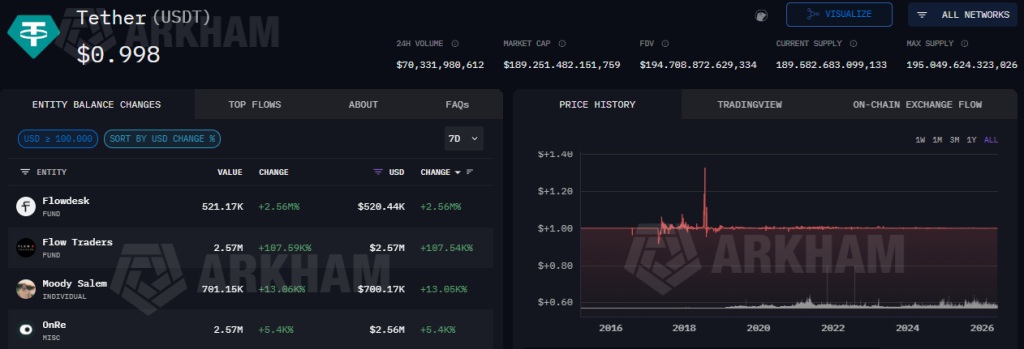
Tether: USDT Flows Serve as a Market Thermometer
Traders monitor stablecoin transfer behavior as a real-time signal of liquidity conditions during periods of high volatility. The increase in USDT transactions can simultaneously reflect several dynamics: defensive positioning, deleveraging, capital preservation, and preparation for a rapid market re-entry if conditions stabilize.
This pattern was particularly visible in perpetual futures markets, where liquidations and collateral adjustments accelerated the displacement of stablecoin liquidity across exchanges and trading systems. Since USDT operates as one of the primary collateral assets in perpetual futures infrastructure, shifts in derivatives positioning directly impact stablecoin flows across multiple blockchain networks.

USDT, the Backbone of Crypto Infrastructure
Despite sharp volatility, USDT maintains one of the largest liquidity footprints in the global crypto trading infrastructure. The stablecoin remains deeply integrated in spot markets, derivatives settlement systems, institutional operations, and cross-chain liquidity networks. As markets continue to navigate high-uncertainty conditions, Tether’s transfer activity will keep functioning as one of the most direct indicators of liquidity conditions and overall sentiment across the industry.