TL;DR
- Bitcoin surpassed $73,000 and accumulated a gain of more than 7%.
- Spot ETFs in the US attracted more than $680 million in two days.
- Analysts warn that the March rally could be a bull trap.
Bitcoin climbed more than 7% this week, and the rally dropped the asset directly into the price range that analysts on both sides of the debate identify as the most consequential level of the year. The problem is that nobody agrees on what happens next once it gets there.
The divide is not minor. On one end, analysts read the current setup as the foundation of a sustained recovery. On the other, a $40,000 price target sits on the table alongside a warning that $2.3 billion in long positions accumulated between $60,000 and $73,000 are about to get erased. Both camps point to the same price action and reach opposite conclusions.
Crypto analyst Michaël van de Poppe identified a resistance level Bitcoin reached this week and described the current setup as the most consequential trend shift since October 10 — the last point the market staged a meaningful directional change.
Van de Poppe does not call for an immediate breakout. Instead, he expects a consolidation period before any move higher, arguing the market needs time and a proper build-up before it can push through resistance with conviction. His read is cautious but constructive — the structure looks right, but the timing requires patience.
Resistance level has been reached for #Bitcoin.
Obviously, first test, there won't be a clear breakout taking place.
Things take time and a build-up is required.
However, as the short-term trend has switched to upwards, I think it's the most vital trend switch we see since… pic.twitter.com/DREITBXDsA
— Michaël van de Poppe (@CryptoMichNL) March 5, 2026
The opposing argument carries considerably more alarm. Analyst NoAlphaLimits issued a direct warning on March 5, calling for Bitcoin to drop toward $40,000 to $45,000 before any meaningful recovery takes hold.
His case rests on the geopolitical situation developing in the Middle East. QatarEnergy declared force majeure, the Strait of Hormuz turned into active combat territory, and oil prices spiked in response. Rising energy costs push inflation expectations upward, which leaves the Federal Reserve with shrinking room to cut interest rates — a constraint that historically weighs on risk assets including Bitcoin.
The Macro Environment Matters More Than the Chart Right Now
The stress in traditional safe-haven assets adds weight to the bearish scenario. Silver dropped more than 11% on Tuesday. Gold slid more than 3%. When assets that typically absorb risk-off capital start falling alongside equities and crypto, the signal points toward broad capital contraction rather than sector rotation. Investors are not moving money from risky assets into safer ones — they are pulling money out of markets entirely.
Blockchain advisor Anddy Lian offered the most grounded framework for understanding Bitcoin’s current position. His central observation: Bitcoin’s 89% correlation with the S&P 500 makes the asset a macro trade first and a crypto story second. Bitcoin moves with equity markets and rate expectations, which means the variables driving its next direction are not on-chain metrics or technical patterns — they are inflation data, Fed policy signals, and the geopolitical developments that feed directly into both.
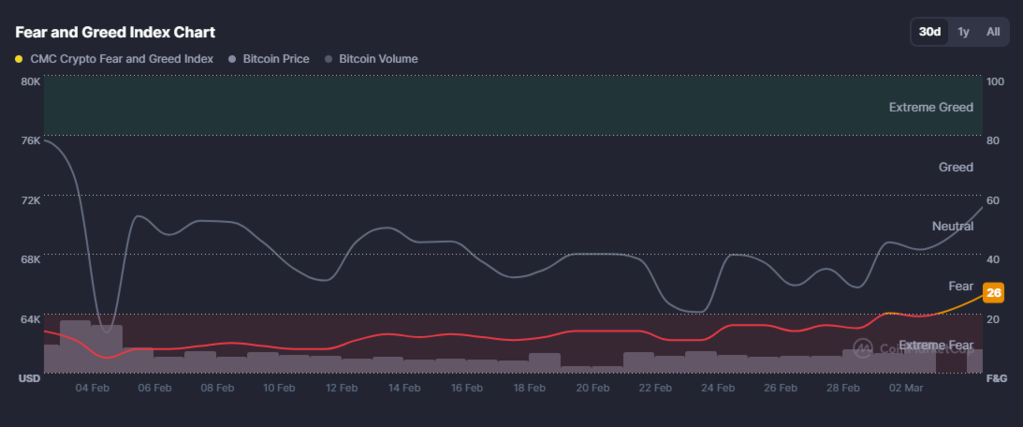
The Fear and Greed Index shifted from 19 to 29 within 24 hours, a meaningful improvement in sentiment but still firmly inside fear territory. The reading confirms that buyers returned to the market this week without fully displacing the anxiety that drove the prior selloff.
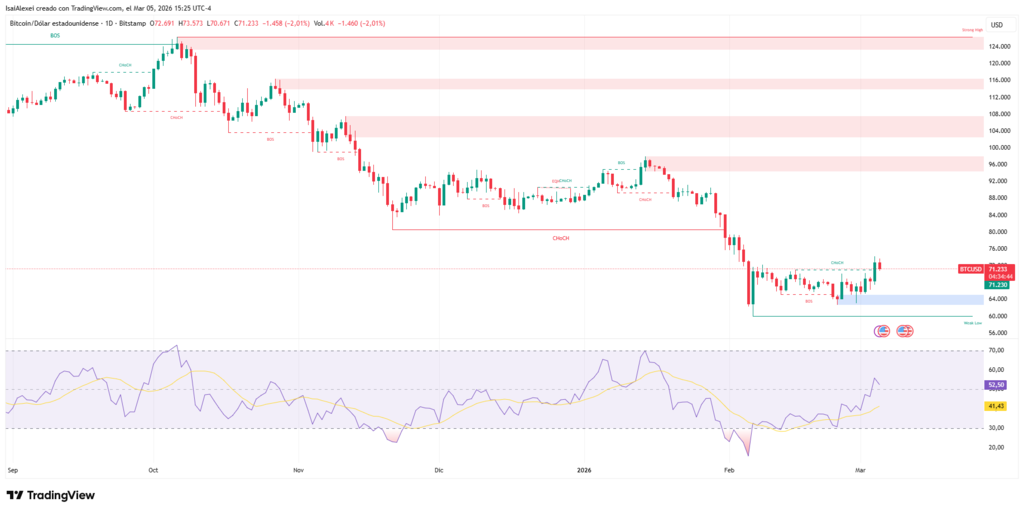
The $72,000 to $74,000 range represents the zone Lian identifies as most telling. Bitcoin currently trades inside that range, making every daily close a data point in the argument between bulls and bears. A sustained move above $74,000 would challenge the $40,000 thesis directly. A rejection at current levels would give it considerably more credibility.
The Non-Farm Payrolls report scheduled for March 6 introduces the next hard variable
A strong jobs number reinforces the Fed’s rationale for keeping rates elevated, which pressures risk assets. A weak number reopens the rate cut conversation and potentially shifts the macro backdrop in Bitcoin’s favor overnight. Neither outcome is priced in with certainty, which means the report carries the capacity to reset the entire near-term outlook in either direction regardless of what the technicals currently suggest.
Bitcoin’s next move depends less on crypto-specific factors and more on whether the combination of Middle East conflict, oil price pressure, Fed policy constraints, and labor market data resolves in a direction that makes institutional capital comfortable adding risk exposure. The chart shows a critical level.