TL;DR:
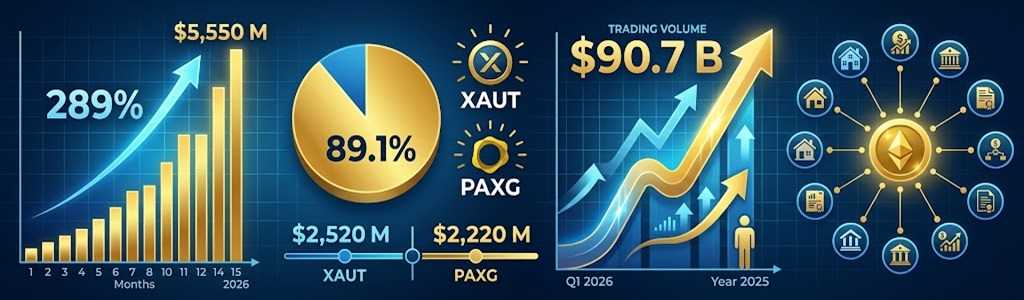
- XAUT and PAXG jointly represent 89.1% of the expansion in the tokenized raw materials sector since the beginning of 2025.
- The market capitalization of Tether Gold reached approximately $1.87 billion, while PAX Gold stands at $1.8 billion.
- As of May 13, 2026, both assets maintain a tight parity, trading in the range of $4,683 and $4,684 per unit.
During the last year, the tokenized commodities market recorded accelerated growth, establishing XAUT and PAXG as the dominant assets within the Real World Assets (RWA) narrative. Recent data from CoinGecko reveals that these two protocols backed by physical gold are leading the transition of traditional assets toward blockchain infrastructure.
On Wednesday, May 13, the price of Tether Gold (XAUT) was around $4,683.81. This value reflects a 0.2% increase over the last seven days, following the stability trend of the precious metal in global markets.
For its part, PAX Gold (PAXG) trades almost symmetrically at $4,684.40. Market data suggests that this technical parity responds to the effectiveness of the redemption mechanisms and the direct backing offered by their respective issuers.
Institutionalization and regulatory compliance in the RWA sector
The CoinGecko report indicates that the success of these assets is not coincidental. Institutional preference for XAUT is attributed to its integration across multiple networks and the liquidity provided by the Tether ecosystem. Periodic attestations regarding its reserves have allowed large portfolios to manage their exposure to gold without the logistical complications of physical storage.
In contrast, PAXG’s growth is supported by a strict compliance framework. Issued by Paxos, this token is backed by physical gold allocated and held in London vaults. For sector analysts, this regulated structure offers an additional layer of security that attracts more conservative investment profiles.
The combined capitalization of these projects injected approximately $3.67 billion into the tokenized commodities sector. This capital flow underscores the interest in using distributed ledger technology to fractionate and mobilize assets that have traditionally been illiquid or difficult to transfer.
Factors behind the rise of digital commodities
The dominance of these assets is explained by trust in the 1:1 backing and constant audits. According to the RWA report, geopolitical uncertainty and persistent inflationary pressures have revalued the role of gold as a haven, now accessible through high-speed digital formats.
Operational transparency has been fundamental to this progress. While XAUT leverages the robustness of Tether’s reserves, PAXG benefits from a reputation established by its regulatory transparency. Both factors have been decisive for the commodity RWA sector to expand beyond retail investors.
The performance of these two giants is projected to act as a catalyst for new tokenization projects. The market is watching closely to see if this hegemony will be maintained or if protocols using other metals or natural resources will emerge to diversify the on-chain commodity offering.