There are confessions that, by virtue of who makes them, demand to be read carefully. In February 2023, Christopher Waller, a governor of the U.S. Federal Reserve, uttered a sentence that in another era might have sparked strident headlines and, perhaps, the odd protest outside an embassy. Stablecoins pegged to the dollar, he said, “reinforce and extend the international reach of the U.S. dollar.“ He said it without blushing, without euphemisms, almost with the satisfaction of someone watching a plan unfold without having lifted a finger.
The Federal Reserve, guardian of the dollar’s exorbitant privilege, had just acknowledged that stable cryptocurrencies are not a threat to Washington’s monetary hegemony; they are, on the contrary, its most effective delivery mechanism of the 21st century. And the laboratory for that experiment is, once again, Latin America.
It is worth pausing on Waller’s precise words: “They make the dollar available in digital form to individuals and businesses around the world, thereby strengthening the dollar’s role as a reserve currency and global means of payment.” What he describes is not a benevolent market accident. It is the chronicle of a silent absorption.
Millions of Latin Americans, fed up with currencies that melt like ice in the sun, are voluntarily surrendering their monetary sovereignty in exchange for a digital refuge. And they are doing so through phone apps, without entering a bank branch, without asking permission from their country’s central bank, and without the U.S. Treasury having to spend a single cent printing physical bills.
The region has had an intermittent love affair with the paper dollar for decades. In Argentina, the “green mattress” is as much a cultural institution as mate tea or the asado barbecue. In Venezuela, informal dollarization advanced long before cryptocurrencies existed, because the only way to preserve a salary was to convert it immediately into foreign currency.
What has changed is the tool, and with it the scale and the speed. Today, USDT, USDC and DAI are the new hundred-dollar bills, except they are not hidden under the mattress: they travel over blockchains, cross borders in seconds, and can be split into digital cents. A shopkeeper in Medellín, a freelancer in Lima, or a remittance sender in Oaxaca no longer needs a bank account in Miami to operate in dollars. A digital wallet is enough.
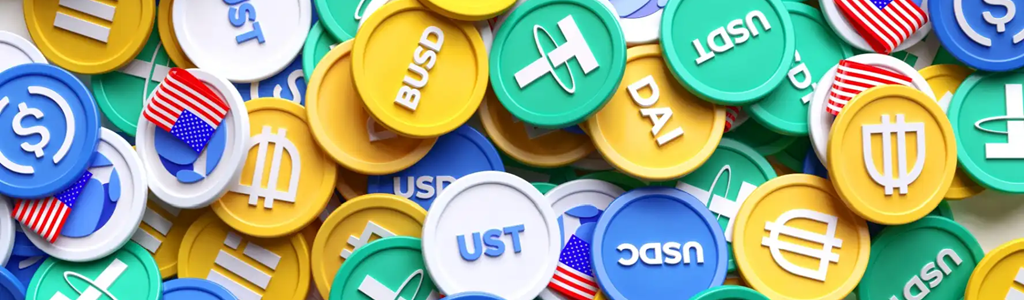
The numbers tell the story better than any speech. In Argentina, the exchange Lemon reported in 2023 that 80% of its users’ crypto purchases were dollar-pegged stablecoins. Not bitcoin, not ether: synthetic dollars. Mexico, the world’s second-largest recipient of remittances, has become one of the most active crypto-remittance corridors on the planet, and more than 90% of that flow moves in stablecoins.
According to Chainalysis, Brazil, Argentina, Mexico and Venezuela consistently rank among the top 20 in the global crypto adoption index. This is not a technological curiosity; it is a parallel economy growing on the margins of local regulations.
Herein lies the central paradox that the Fed has understood with crystalline clarity. For the ordinary citizen, stablecoins are a lifeline. They offer protection from galloping inflation, from arbitrary devaluations, from the capital controls that limit how many dollars one can legally buy each month. They restore a sense of control over one’s own labor, a store of value that the individual’s own state cannot provide. In that sense, they are an unquestionable tool of individual freedom. But at the same time, they are the perfect battering ram for the dollar to penetrate economies where it once encountered political or logistical resistance. The Fed does not need to impose anything: demand is born from the failure of pesos, bolívars, and soles, and the technology does the rest.
The result is a de facto digital dollarization that no parliament voted for and no international treaty formalized. Latin American central banks lose seigniorage —the profit earned from issuing currency— and watch as the velocity of local money collapses, because people hold the official means of payment only for the bare minimum time required to convert it into USDT.
Monetary policy becomes impotent: if the Central Bank of Argentina raises interest rates, the market’s response is to take refuge even deeper in stablecoins, because no one any longer believes the peso can act as a store of value over the medium term. It is the triumph of digital private money backed by the most powerful public currency in the world, a symbiosis that leaves local authorities with their hands tied.
And all the while, the Fed observes. It does not do so with the anxiety of someone who fears losing control, but with the caution of someone who wants to make sure the vehicle does not veer off course. In the same speech, Waller warned about the risks of runs on stablecoins if the reserves backing them are not transparent, and he urged regulation that would protect U.S. financial stability.
But that regulation does not seek to stop the phenomenon; it seeks to domesticate it, to integrate it into the perimeter of the formal financial system so that the digital dollar can continue expanding without endangering the home office. The irony is enormous: the very people who in 2013 saw in Bitcoin a libertarian challenge to dollar dominance have ended up providing, unintentionally, the infrastructure for the greatest project of U.S. monetary expansion since the Bretton Woods agreements.
Latin America is thus trapped in a bitter dilemma. It can repress the use of stablecoins —as it has attempted, clumsily and with little success, through exchange controls and blocks on exchanges— but the political and social cost of removing the population’s only defense against inflation would be enormous. It can ignore them, as most governments do, and accept that a growing share of the effective money supply escapes its control.

Or it can try to compete with them through central bank digital currencies (CBDCs), a path that, in the best of cases, will take years to implement and that will hardly recover the trust of citizens who have already been betrayed far too many times.
The Federal Reserve’s declaration is, at bottom, a diplomatic toast to a victory that did not require firing a single bullet. The dollar is not retreating in the face of the crypto revolution; it is mutating, and Latin America is the testing ground where that mutation is proving its potency. Every time an Argentine worker converts their paycheck into USDT, they are casting a vote of no confidence in their own state and, simultaneously, a vote of adherence to the U.S.-led monetary order.
They call it “financial freedom,” and in part it is. But it is worth remembering that, in the quiet geopolitics of money, even the most intimate acts of self-protection can become the cogs of an empire that no longer even needs to print dollars to expand.