Small Latin American governments are gaining ground in the race to regulate cryptocurrency while large economic powers on the continent advance with measured and deliberate steps. The phenomenon does not stem from greater technological vision or research capacity, but rather from a starker administrative reality: fewer institutional layers equate to faster decision-making. What unfolds across the region defies conventional logic that assumes large economies always lead regulatory innovation.
El Salvador placed Bitcoin as legal tender in 2021, becoming the first country in the world to make a decision of that magnitude. Then came the creation of its National Commission for Digital Assets (CNAD), a specialized supervisory apparatus that concentrates all regulatory functions within a single entity. Cuba, facing external blockades and restrictions on access to the international banking system, accelerated its own legal process for cryptocurrency legalization. It did not do so out of technological ideology, but because it needed immediate financial alternatives to keep its economy operational.
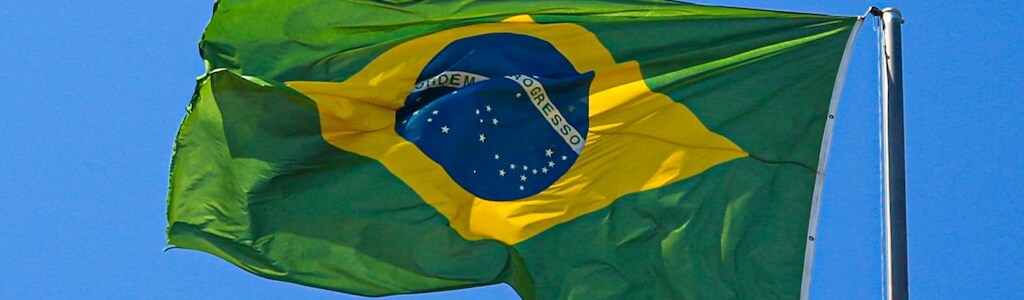
Meanwhile, Brazil and Mexico advance with institutional caution reflecting their markets’ complexity. Brazil currently builds a licensing system for cryptocurrency service providers, but within a broader regulatory framework that prioritizes financial stability and systemic risk control. Mexico maintains partial regulations through its 2018 FinTech Law, which addresses cryptocurrency-related services without recognizing them as legal tender. Argentina barely begins serious conversations in legislative committees, with no institutional consensus yet on which direction to take.
Institutional complexity as a regulatory brake
The fundamental reason behind these regulatory speed differences lies in the scale of institutional coordination. A small economy needs to convene twenty or thirty relevant actors: specific regulators, some banking institutions, treasury units, money laundering prevention agencies. A large economy like Brazil or Mexico requires convincing hundreds of institutions: multiple regional central banks, business guilds, consumer associations, academic think tanks, and private actors with contradictory interests.
Coordinating that many voices takes years. Each institution holds its own interests, its own lawyers, its own ideological resistances. Brazil’s Central Bank does not think the same way as its Insurance Superintendency. Mexican private banks do not see eye-to-eye with fintech companies. When El Salvador convenes its regulatory commission, it brings together people who can reach agreements in weeks. When Brazil attempts the same, it faces negotiations lasting months or years.
It determines the difference between implementing a regulatory framework in eight months versus waiting four years. It explains why small nations like El Salvador and Cuba achieve breakthroughs while Brazil remains in consensus-building phases. Institutional complexity slows progress, regardless of how intelligent the involved regulators are.
Systemic risk also weighs disproportionately on large economies. If El Salvador experiments with cryptocurrencies and something fails, damage remains contained within a small economy whose financial structure is relatively simple. If Brazil adopts bitcoin as a parallel currency at national scale and extreme volatility occurs, effects ripple through monetary policy, bank credit availability, capital flows, exchange rates, and external debt repayment capacity. Large governments bear the weight of amplified consequences.
A regulatory collapse in a small country affects mainly its own population and internal market. A collapse in a large economy generates regional contagion. Brazil influences Paraguay, Argentina, and Uruguay. Mexico affects Central America. That is why regulators in these large economies think twice, three times, before experimenting.
There also exists an explicit political and strategic dimension driving small governments. El Salvador sought with its cryptocurrency bet not only financial innovation but also to attract investment capital, technical talent, and position the country in global fintech conversations. Cuba accelerated its legalization because it needed immediate solutions to survive external restrictions. In both cases, structural urgency led to bold decisions.
Governments of large economies prioritize protection of the existing system. They worry more about defending the status quo than experimenting with the new. When Brazil regulates, it thinks first about how to avoid risks. When El Salvador regulates, it thinks about how to seize opportunities. These are different mentalities born from different pressures.
Regulatory fragmentation as continental reality
The region presents today a fragmented regulatory landscape. Some countries have advanced with complete frameworks. Others have barely issued warnings or partial regulations. No regional harmonization exists. An investor operating in El Salvador must learn a completely different set of rules than necessary in Mexico or Brazil. This fragmentation reflects exactly the absence of leadership from large economies.
If Mexico or Brazil had taken the lead in cryptocurrency regulation three years ago, probably the rest of the continent would have followed their standards. A common foundation would have existed. But since both nations chose to wait and study, they left the space open for smaller actors to define the standard. Now each small country writes its own rules.
What unfolds in Latin America functions as a de facto regulatory laboratory. Small countries experiment first, assume risks, build models, document results. Large ones observe from a distance, analyze, adjust, and advance later with greater caution. It is a slow but systematic process of collective learning.
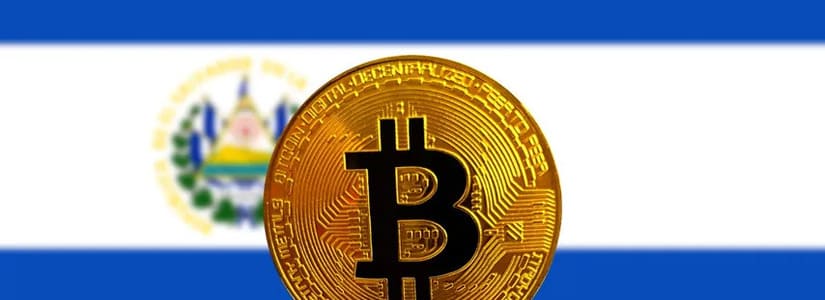
El Salvador experiments with bitcoin as legal currency. Cuba legalizes use in banks. Paraguay debates adoption. These movements generate real data on what works and what does not. Large economies receive that information and process it. Within five years, probably Brazil and Mexico will have collected sufficient empirical evidence to move forward. But by then, El Salvador and Cuba will have already built consolidated ecosystems.
The question dividing regional analysts is whether this lag by large economies constitutes justified prudence or missed strategic opportunity. Are we witnessing intelligent caution or institutional paralysis disguised as risk analysis?
What appears clear is that cryptocurrency regulation in Latin America no longer depends on Brazil or Mexico, despite their larger economies. It depends on who establishes standards first that others embrace, on who builds institutions that function in practice, on who generates reliable evidence about sustainability. For now, that responsibility rests with small nations that chose to take risks while economic giants continued deliberating.
The region has become an unintended testing ground where smaller players define rules while larger ones watch. The irony cuts deep: in a continent where size once guaranteed influence, agility now trumps scale. The question is not whether regulation will come to Latin America, but rather who will have already written the playbook by the time the big players finally decide to join the race.