TL;DR
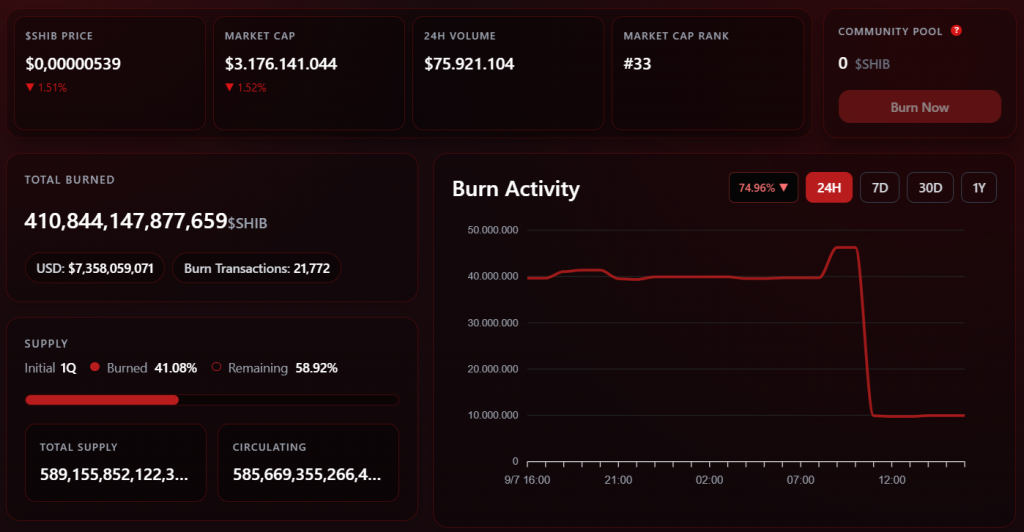
- SHIB recorded a 1,307% increase in its daily burn rate, sending 46.25 million tokens to unrecoverable wallets in 24 hours.
- The weekly burn volume surpassed 126 million tokens, equivalent to approximately $678 at the current trading price.
- Despite the massive burn event, the token is trading in negative territory and remains just above $0.00000539.
The Shiba Inu network recorded over the last 24 hours an explosive increase in its burn activity, with a total of 46.25 million SHIB tokens permanently destroyed and sent to unrecoverable wallets, according to data recently published.
The event represents a 1,307% surge in the daily burn rate of the token, a figure that reflects an unusually high level of activity within the network.
The cumulative impact of this session pushed the weekly burn volume above 126 million SHIB, valued at approximately $678 at the current trading price. This type of operation permanently removes tokens from the circulating supply, reducing the amount available for sale on the market.
SHIB’s Burn Fails to Strengthen Its Price
Although massive burn events are often interpreted as bullish signals, given that they point to network growth and a tightening of available supply, market analysts warn that this mechanism alone is not sufficient to drive an appreciation in the asset’s price.
The logic behind burning indicates that, by reducing the circulating supply, the token’s relative scarcity increases, which under normal conditions would tend to strengthen demand. However, price dynamics respond to multiple variables that go beyond the volume destroyed in any given period.
The token is currently trading in negative territory, with its price stagnating just above $0.00000539. The divergence between the magnitude of the burn event and the behavior of the price comes as no surprise to those who closely follow the Shiba Inu market, since the correlation between both indicators is neither direct nor immediate. The sustained growth of network activity, nonetheless, continues to be monitored as an indicator of the ecosystem’s long-term health.