TL;DR:
- The upgrade plan uses advanced mathematical specifications to eradicate critical bugs in the network’s native financial functions.
- The platform’s financial tools operate directly within the layer-one (Layer 1) code, increasing transactional speed.
- The network’s governance ecosystem will use validated logical proofs as the primary criterion for approving future code deployments.
XRP Ledger is set to receive a technical restructuring aimed at mathematical security. Information revealed by RippleX developer Vito Tumas indicates that the ecosystem is preparing to implement a nuclear-grade formal verification system. The community lead at the XRPL Foundation, known as Vet, publicly described this technological evolution under the concept of Fortress XRP.
Algorithmic shielding against native DeFi sector risks
Unlike alternative blockchains such as Ethereum, the XRP ecosystem has an architecture with financial tools integrated directly into the layer-one base code. Data from the project indicates that this layout drastically accelerates the processing speed of financial transactions. However, RippleX analysis suggests that the structure increases the platform’s systemic risks. Any minor hidden flaw within the network’s operational core could compromise the total integrity of the ledger and user funds.
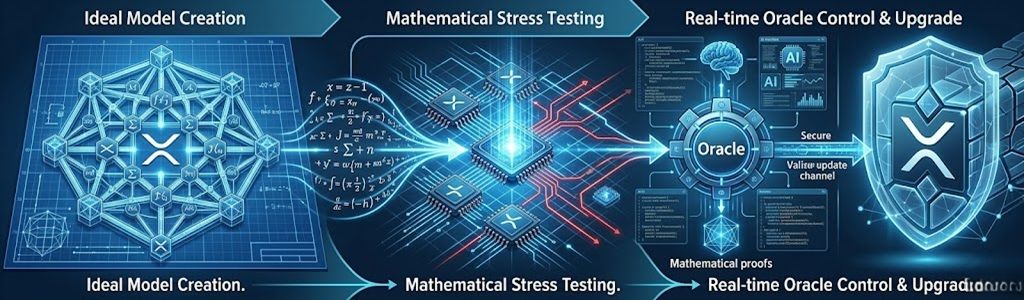
To counter potential vulnerabilities to cyberattacks, the development team along with the specialized firm Common Prefix designed a method based on strict mathematical proofs. The proposed methodology is a structured process with 4 defined phases:
Construction of an ideal digital model: In this phase, an exact computational replica of the protocol is designed, which outlines only the correct and legal behaviors that the network accepts.
Stress and resilience testing: In this phase of the process, an algorithm constantly evaluates the model, thereby corroborating the mathematical impossibility of critical flaws in the system’s wallets.
Control through real-time Oracles: In the third phase, all operations carried out on the blockchain are cross-checked against the pre-established mathematical reference benchmark.
Automated assistance through AI: Artificial intelligence tools manage the routine inspection of code, while logical rules ensure architectural invulnerability.
The presented data suggests that upon the slightest detected variation between the executed transaction and the ideal mathematical model, the protocol will proceed to the preventive and immediate blocking of the transfer.
Institutional governance and security goals for 2026
The technical proposal introduces substantial transformations in the regulations governing the internal governance of the blockchain. According to projections published by the RippleX team, strict mathematical verification proofs will be established as the mandatory standard to determine if software updates are ready for release. Promoters of the initiative state that this methodological rigor is necessary to attract large-scale investment funds and global banking entities that require absolute digital protection guarantees.
According to Common Prefix, the early phases of development focused on modeling the Payment Engine and the Consensus Protocol. Developers will maintain the operational testing phases of this logical shielding during the upcoming months of June and July 2026. The rollout of the verification modules for the ledger’s validation infrastructure is expected by late 2026, consolidating the institutional security architecture of the crypto ecosystem.