MarketsNews
Regulator Targets Prediction Markets as Hundreds of Insider Trading Cases Face Scrutiny
The CFTC is investigating hundreds of insider trading cases in prediction markets, following Michael Selig's firm pledge to enforce the law.


Key points
- The CFTC currently has hundreds of open investigations into alleged insider trading on leading industry platforms.
- Michael Selig, the agency’s chairman, appeared before Congress to ensure that the “full force of the law” will be applied against fraud.
- Transaction volume in the industry has already reached billions of dollars weekly, attracting unprecedented bipartisan scrutiny.
Michael Selig, chairman of the CFTC, issued a stern warning against fraud in prediction markets. The executive appeared before Congress, stating that his agency is investigating hundreds of cases of potential insider trading.
In an industry led by platforms such as Kalshi and Polymarket, which allow users to place bets on election outcomes, military conflicts, or weather events, technical data suggests that capital flow on these platforms has skyrocketed, posing significant challenges for capitalization and surveillance.
Experts pointed to several suspiciously lucrative movements on Polymarket prior to critical geopolitical events, such as attacks in Iran. These patterns raised alarms regarding operational integrity and the need for more rigorous technical supervision.

Ethical conflict and the legal battle for regulation
On Capitol Hill, the debate centered on alleged—yet unproven—links between Donald Trump Jr. and the segment’s major platforms. Michael Selig defended the CFTC’s impartiality, rejecting accusations of favoritism while the agency operates with critical vacancies in its leadership.
Furthermore, the government in Washington reminded its personnel that it is illegal to use privileged information to trade on these sites. Although there is no evidence of direct links, Democratic pressure demands total transparency regarding who is profiting from confidential data.
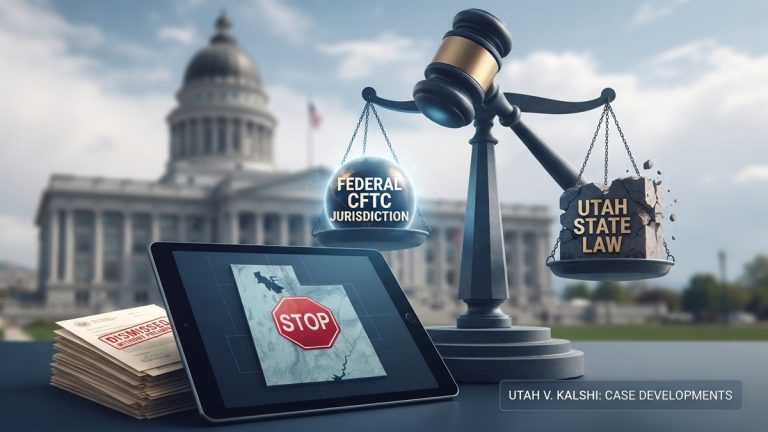
Meanwhile, in California courts, it is being decided whether these instruments are financial products or simple wagers. The resolution of this jurisdictional conflict between states and the federal government will determine the legal survival of prediction markets.
The CFTC faces the challenge of regulating an expanding industry that moves massive volumes of capital. Transparency and the resolution of current investigations will be the pillars that define market trust in these predictive derivatives.