TL;DR:
- Quant participates in key atomic settlement initiatives at the Bank of England, the UK’s GBTD project, and Hong Kong’s EnsembleTX program.
- The atomic DvP mechanism eliminates the T+2 settlement window, removing counterparty risk and hundreds of billions in pre-positioned collateral.
- DTCC advances the tokenization of U.S. Treasury bonds on Canton Network. Its deployment is scheduled for the second half of 2026.
The atomic settlement of tokenized assets is becoming operational infrastructure. Quant Network, through its Overledger protocol and PayScript engine, holds a central place among the most advanced projects in the sector: the Bank of England’s Synchronisation Lab, the UK’s sterling tokenized deposits project, and the EnsembleTX program of the Hong Kong Monetary Authority. In every case, the goal is the same: that the delivery of the asset and the payment occur simultaneously and irreversibly, or not at all.
Why Does the Current System Fail?
Standard securities settlement involves a gap of one to two business days between trade execution and final settlement. During that period, both parties assume counterparty risk. This is not a theoretical risk: the collapse of Lehman Brothers in 2008 generated settlement failures across thousands of open transactions, and the market stress of March 2020 exposed the structural fragilities of the U.S. Treasury bond market. The financial system’s response to that risk is margin: hundreds of billions in pre-positioned collateral to manage a problem that Quant and atomic settlement would eliminate entirely.

On top of that come the operational costs of the T+2 model: assets and amounts locked for up to two business days, failures requiring manual reconciliation, and transactions piling up over weekends and holidays. In cross-border transactions, the window can extend to three days or more.
Quant: Overledger and the Interoperability Problem
The most complex technical challenge for Quant in implementing atomic settlement at systemic scale is atomic confirmation across distinct platforms. When the asset and the payment reside on different distributed ledgers, operated by institutions with incompatible technologies, the settlement guarantee cannot hold without a mechanism that spans both environments simultaneously. Without solving that, atomic DvP only works within individual platforms and breaks down at the boundaries between them.
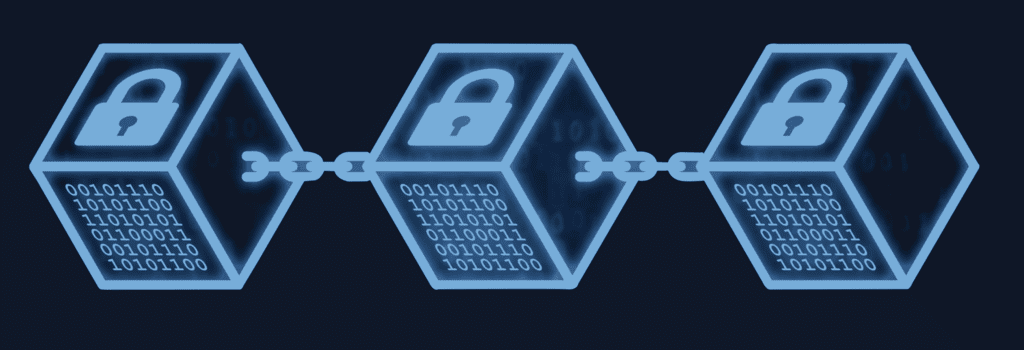
Quant’s Overledger cross-ledger transaction protocol addresses precisely that problem, enabling atomic commitments across any combination of distributed ledgers. The principle is that the all-or-nothing property of DvP is maintained regardless of the platforms used by the counterparties.
Meanwhile, the DTCC program advances the tokenization of U.S. Treasury bonds on Canton Network. Its deployment is scheduled for the second half of 2026. The institution’s scale is impossible to ignore: its depository subsidiary provides custody and services over securities reaching $99 trillion, though the tokenization program begins as a limited pilot that will expand incrementally.