
TL;DR:
- Paxful pleaded guilty to three criminal counts, including violating the Travel Act and operating without a money transmitting license.
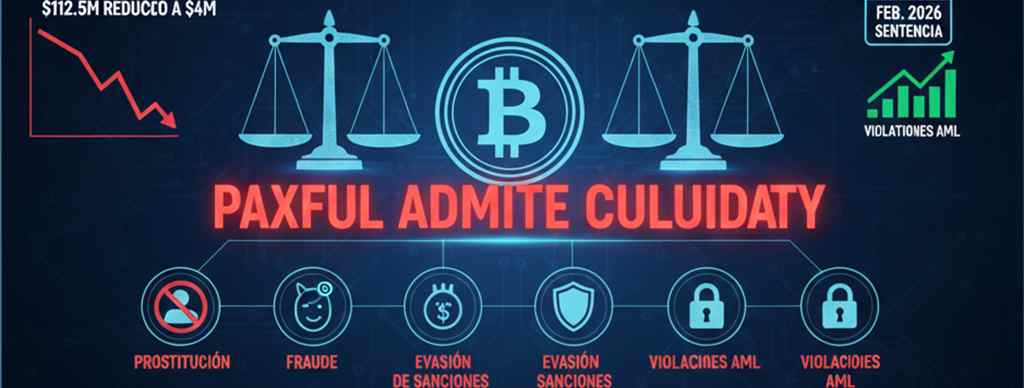
- The platform facilitated crimes such as illegal prostitution, fraud, and sanctions evasion, earning $29 million in fees.
- The $112.5 million fine imposed by the DOJ was reduced to $4 million, with sentencing scheduled for February 2026.
The Bitcoin marketplace Paxful pleaded guilty to a three-count criminal information, admitting in court that it helped criminals move funds and profit from illegal activities including prostitution, fraud, and sanctions evasion.
Paxful admitted to violating the Travel Act by promoting illegal prostitution through interstate commerce, operating an unlicensed money transmitting business, and fundamentally, evading AML rules by failing to implement an anti-money laundering (AML) program as required by the Bank Secrecy Act.
According to the Department of Justice’s (DOJ) Eastern District of California branch, Paxful earned millions of dollars by actively turning a blind eye to the criminal activities happening on its platform. Between 2015 and 2019, the company processed nearly $3 billion in trades and collected over $29 million in fees.
Active Promotion of Evasion and Reduced Financial Consequences
Prosecutors pointed out that, instead of preventing abuse, Paxful actively marketed its lack of compliance controls and user identification to attract clientele looking to evade detection. The platform failed to report suspicious activity, falsified its compliance policies, and facilitated transfers from high-risk jurisdictions, including Iran and North Korea.
A key example of this conduct was Paxful’s link to Backpage, an online classified site known for illegal sex work, where nearly $17 million in Bitcoin moved from Paxful to that site and similar ones, generating at least $2.7 million in profit for the platform.
Acting Assistant Attorney General Matthew R. Galeotti emphasized that the platform attracted its criminal clientele by “promoting its lack of anti-money laundering controls and its deliberate decision not to identify its customers.”
Despite the DOJ determining that the criminal conduct warranted a $112.5 million penalty, this figure was reduced to just $4 million after prosecutors assessed the company’s current financial condition. This factor, known as ability to pay, has been a point of debate in previous regulatory cases.
Paxful’s final sentencing is scheduled for February 2026. This case underscores the regulatory agencies’ offensive against cryptocurrency companies seeking to operate without basic compliance controls.
In summary, Paxful’s admission and the plea of its former Chief Technology Officer in a related case last year mark an important precedent in the prosecution of Bank Secrecy Act violations in the digital asset sector.