TL;DR
- Chainalysis data says crypto to trafficking services rose 85% in 2025 to hundreds of millions, spanning escort, prostitution, labor placement, and CSAM globally.
- Stablecoins dominate escort and prostitution flows, while nearly half of traced transactions topped $10,000, creating high-impact compliance chokepoints at exchanges and issuers today.
- CSAM vendors use subscription models and layered laundering, and labor agents show $1,000 to $10,000 recruitment payments tied to laundering networks and guarantee platforms.
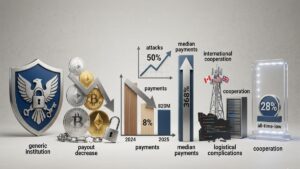
Crypto flows to suspected human-trafficking services jumped 85% in 2025 to hundreds of millions of dollars, according to new Chainalysis data. The signal is that these networks are professionalizing, and crypto has become a trackable payment rail within them. The report grouped activity into Telegram “international escort” services, prostitution networks, “labor placement” agents tied to scam compounds, and child sexual abuse material vendors, stressing that blockchain trails can surface repeatable patterns for investigators.
Compliance and laundering signals
Within those segments, stablecoins sit at the center of settlement. The practical takeaway is that “stable” tokens are being used to move larger sums quickly, which concentrates enforcement leverage at fiat on-ramps and off-ramps. Chainalysis found stablecoins dominate flows to escort and prostitution services, suggesting users value predictable pricing and speed. That preference also creates chokepoints: centralized issuers, exchanges, and payment processors can freeze, flag, or block suspect activity when controls are tuned at scale today.

Transaction sizing further separates the categories. The key insight is that many payments are not “micro,” and nearly half of traced transactions exceeded $10,000. For prostitution-related activity, the most common bracket was $1,000 to $10,000, representing 23% of transactions. By contrast, child sexual abuse material payments skewed small: 36% of those transactions were under $100, a pattern consistent with low-cost access models and high volume distribution. This spread complicates screening, because risk hides in both ends.
Chainalysis described how vendors diversify their rails. The headline risk is that CSAM commerce is shifting toward subscription bundles, while laundering tactics become more layered. One dark web site active since 2022 used more than 5,800 addresses and generated over $530,000, and the report noted overlap with a scam marketplace. Bitcoin remains primary, but alternative layer 1 networks are gaining share, and some actors use instant exchangers, token swaps, and Monero before cashing out into fiat.
For labor placement agents tied to scam compounds, Chainalysis traced recruitment-style payments. The strategic takeaway is that trafficking and scam logistics can share the same crypto rails, creating cross-risk exposure. The report linked this activity to Southeast Asia and said payments often landed between $1,000 and $10,000. It also described links to Chinese-language money laundering networks and “guarantee” platforms, with inflows seen from the U.S., Brazil, the U.K., Spain, and Australia. Compliance teams must tighten controls.