TL;DR
- Cardano is entering a quiet reset that combines a low-impact technical hard fork with a political reorganization that brings its five entities under one structure.
- The network is adopting Protocol Version 11, a hard fork within the Conway era that fixes weaknesses exposed after the November breakdown and speeds up script execution.
- The upgrade adds strict VRF key checks, new native functions in Plutus, and a plan to build core infrastructure and revive the ecosystem.
Cardano is undergoing a quiet reset that merges a low-impact technical hard fork with a political reorganization aimed at unifying the five entities supporting the ecosystem. The goal is to correct operational weaknesses, streamline internal governance, and set a framework that allows the network to compete in a market dominated by Ethereum and Solana.
Protocol Version 11 Changes
The starting point is the move to Protocol Version 11, a hard fork within the Conway era that avoids applying structural changes to the ledger. The team chose this approach to reduce integration overhead and focus on adjustments that strengthen consistency, speed up script execution, and fix issues exposed after the November incident, when a malformed transaction caused a temporary breakdown in the Cardano network. Although no funds were lost, the episode showed that the network needed clearer rules and more deterministic behavior.
The Cardano upgrade introduces a set of discrete improvements. The ledger will apply strict checks on VRF key uniqueness to prevent two pools from using the same hash. Plutus receives updates that remove bottlenecks in the use of reference inputs and adds new native functions that expand the scope of smart contracts: on-chain arrays, optimized multi-asset value operations, modular exponentiation, and support for BLS12-381 through multi-scalar multiplication.
These tools make it possible to build applications with stronger cryptographic guarantees and improve performance in sensitive areas such as deserialization and data matching. If DEXs and lending protocols adopt these functions, they will be able to lower costs in complex contracts and improve user experience without redesigning their architecture.
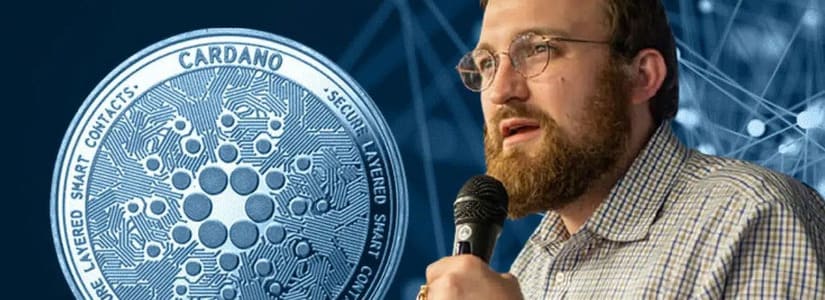
Hoskinson Seeks to Unify the Cardano Ecosystem
Meanwhile, Charles Hoskinson is pushing a reorganization that aims to bring the Cardano Foundation, Emurgo, IOG, Midnight Foundation, and Intersect under an executive body called Pentad. The proposal seeks to end years of fragmented decisions and a lack of commercial coordination.
The first phase requires the five entities to build core infrastructure — stablecoins, bridges, oracles — under a simple metric: approval or rejection. If they deliver, the network will adopt a joint strategy to expand DeFi usage and strengthen metrics that remain weak today, such as a TVL below $700 million and roughly 20,000 daily active addresses.
Cardano is trying to update itself and align its institutions. The network is opting for a model that favors stability, operational clarity, and coordination over big public launches