News
Kalshi Pitches Small Businesses Risk Hedges Amid Sports Legal Battles
Kalshi pitches prediction-market hedges to small businesses as thin liquidity and legal battles over sports contracts test its diversification push.


Key points
- Kalshi says about 500 businesses have used its prediction markets to hedge risks including tariffs, extreme weather and power outages.
- The company is pitching event contracts as “almost a form of microinsurance,” while liquidity means Kalshi is offering cash incentives to attract counterparties.
- The diversification comes as sports dominate trading and legal disputes across more than 20 states challenge whether those contracts fall under federal rules or state gambling laws.
Kalshi is pitching small businesses on using prediction markets to hedge operational risks amid sports-contract litigation. Nicolas Hull said in comments published Friday that 500 companies have used the platform to hedge risks ranging from commodity price swings to extreme weather and power outages. Kalshi is presenting specialized event contracts as a risk-management tool for businesses that often have little experience with traditional hedging.
Kalshi Tests Business Hedging as Sports Contracts Face Legal Pressure
Hull described the offering as “almost a form of microinsurance,” although these remain prediction-market contracts, not insurance. New York rice company Not So Boring is considering spending roughly $9,000 on contracts tied to tariffs on Indian rice imports. The contracts could pay $30,000 if tariffs reach 30% or $60,000 if they reach 50%, while the company would lose its stake if those thresholds are not reached.

Event organizers have also used similar contracts. NEXTPredict paid a $12,000 premium for positions that could have returned about $3 million if more than half of scheduled JFK arrivals were cancelled before its October conference. The event proceeded, so the contracts did not pay. The example shows how event markets can transfer specific operational risks when a willing counterparty takes the opposite side.
Liquidity remains a constraint. Kalshi is offering cash incentives to traders providing the other side of specialized contracts, while insurance broker Lockton said it had seen limited uptake. The platform also rejected a request to hedge wildfire risk because of concerns about creating perverse incentives. The business-use case depends not only on demand from companies, but on enough counterparties to make narrowly defined markets tradable.
The diversification push comes as sports-event contracts remain Kalshi’s dominant business. Sports represented about 87% of the $39.7 billion traded on the platform in the year to February 2026, while legal disputes span more than 20 states. The central question is whether these contracts are federal financial products or gambling subject to state rules.
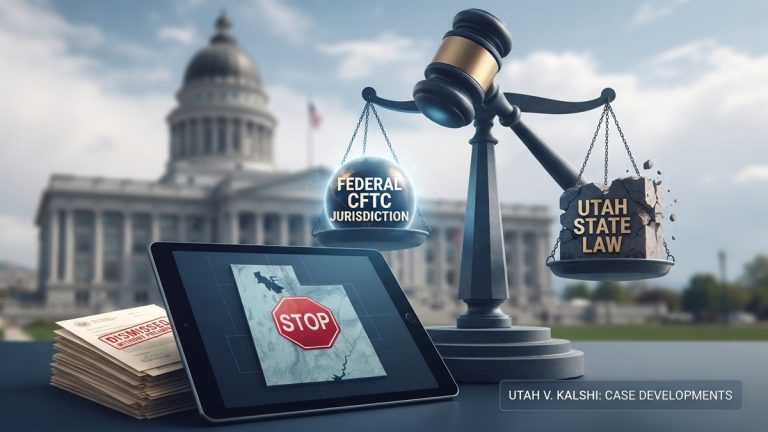
This week, Kalshi stopped operating in Utah, affecting more than 177,000 users, after failing to block state enforcement. Utah then moved to dismiss 14 criminal charges without prejudice, meaning they could return if operations resume. Three of four federal appellate rulings have favored state oversight. Kalshi’s business-risk push offers diversification, but scale will depend on liquidity while the federal-state jurisdiction fight remains unresolved.