

The convergence of crypto wallets and trading platforms has moved from product hypothesis to dominant strategy. During the 2025–2026 cycle, wallets operating at opposite ends of the custody spectrum—from hardware wallet manufacturers to large centralized exchanges—redirected roadmaps toward a common objective: a crypto super app that combines storage, exchange, derivatives, staking, and real-world assets in one interface. User demand supports the shift. Structural tensions remain unresolved.
Fragmentation as the original problem
The crypto ecosystem grew in functional silos. Holding assets required a self-custody wallet; trading derivatives required an exchange account; accessing DeFi yield required connections to specific protocols; moving capital across networks required an independent cross-chain bridge. Each service carried its own registration process, learning curve, and custody model. This fragmented user experience exposed retail users to operational friction and risks they did not always understand.
The friction is the problem all-in-one crypto trading apps attempt to solve. The proposal is not only technical but also a business model: if a user remains inside one application for most financial operations, the provider captures flows previously distributed across multiple platforms.
Wallets no longer compete only against other wallets, and exchanges no longer compete only against other exchanges. Both categories now compete for the same user sessions, order flow, and deposit base.
Platforms defining the category
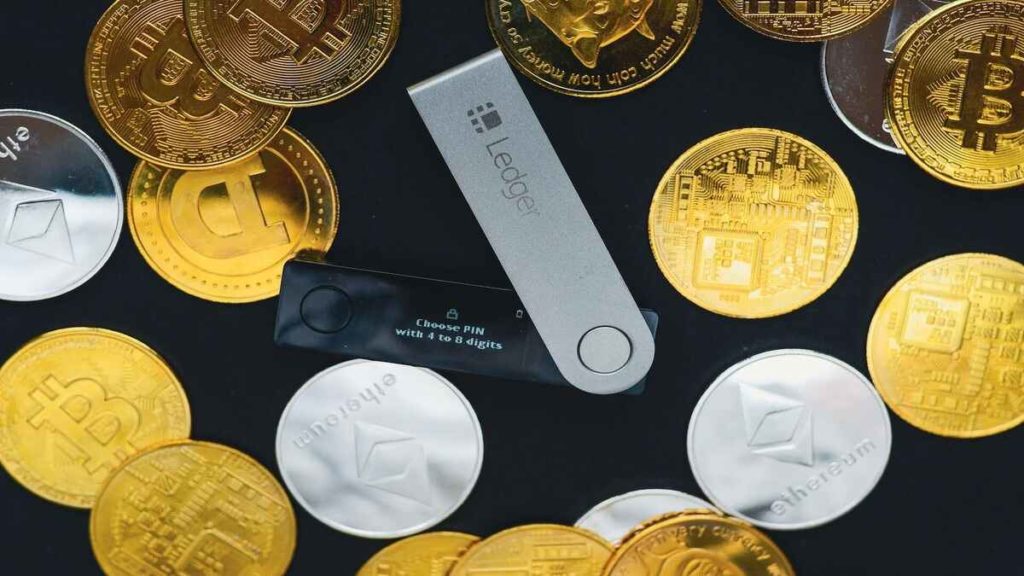
Ledger represents the conservative end of the trend. Its July 2026 update introduced real-time P&L tracking, aggregated multichain balances, and an Earn Simulator—tools previously available only on centralized trading platforms.
Ledger’s differentiator is that the functions operate without private keys leaving the hardware signer, preserving self-custody while accessing external liquidity providers. The approach maintains a clear boundary between key management and trade execution, although the user still assumes protocol risk once a position is open.
OKX Wallet has adopted a more aggressive aggregation approach. Its unified dashboard allows users to view and manage assets across more than 130 blockchains, including Bitcoin, Ethereum, Solana, and Base, with access to DEX trading, automated strategies, and smart money signals from one interface.
Integration of Smart Accounts enables automated trading strategies and timed orders—functions historically belonging to professional exchanges. The product direction reduces the operational distance between a self-custody wallet and a centralized trading terminal.
Trust Wallet, with more than 220 million downloads, launched its Trade Menu in February 2026, an interface integrating swaps, perpetual contracts, prediction markets, and meme tokens in one screen. The decision responds to a change in user behavior: traders operate from mobile devices and expect to execute multiple operation types without navigating between tabs or nested menus. Integrating multiple asset classes into one wallet raises questions about risk disclosure, particularly for users who primarily hold tokens and do not actively trade derivatives.
Kraken Wallet followed a different route. In July 2026, the company acquired Magic Labs’ embedded wallet business, allowing integration of wallet functionality directly into its main trading interface. The result is that a user can trade more than 2,500 Solana tokens without managing seed phrases or switching applications.
Its Bitcoin Vault accumulated approximately $400 million in deposits through mid-2026, evidence that exchange users adopt DeFi products when entry is invisible. The model works because the user does not need to understand the underlying protocol to access the yield source.
In the centralized exchange segment, Coinbase formalized its “Everything Exchange” strategy, expanding from spot trading into derivatives, tokenized equities, and prediction markets. The company reported that its Coinbase One membership program surpassed one million subscribers in the second quarter of 2026, against a backdrop of weak crypto markets.
The strategy aims to convert a trading account into a broader financial account, which increases user retention but also concentrates operational dependency on a single provider.
Bitget Wallet completed a strategic reorientation toward what it calls “Everyday Finance”, adding a Pay feature in its main navigation that groups crypto cards, QR code payments, bank transfers, and in-app purchases. The proposal aims for users not only to trade but to use the wallet as a daily financial account. Expanding crypto wallets into everyday payments also introduces compliance requirements and transaction monitoring obligations.
The risk that convenience hides
Integrating trading functions into self-custody wallets introduces risks that did not exist when asset storage and trading remained separate. Ledger, when integrating perpetual trading, warns that funds remain exposed to protocol-level risks while positions are open, including code vulnerabilities or operational failures.
Automatic liquidations and periodic payments between long and short positions can erode returns in ways users do not anticipate when opening a trade. A wallet interface may present derivatives as simply as a token swap, even though the underlying risk profiles differ substantially.

MetaMask has taken automation further with AI agents that can execute transactions autonomously under user-defined rules. Product documentation acknowledges that prompt injection attacks or malicious content can trigger unintended agent actions before the wallet registers the transaction.
Risk increases because agents operate at software speed, reducing opportunities for human intervention. The user delegates execution to a system that may interpret instructions differently from the original intent, and the wallet’s confirmation layer may not provide enough time or context to detect the deviation.
A conceptual tension also exists that the sector has not addressed consistently. A self-custody crypto wallet promises that the user maintains sovereign control over assets. An all-in-one crypto wallet optimized for trading encourages users to execute operations with minimal friction.
The two objectives are not contradictory in principle, but joint implementation creates incentives to reduce confirmations, automate decisions, and delegate functions to third-party components. Each step toward greater automation can weaken effective user sovereignty, even if the private key remains technically under user control.
The risks of all-in-one crypto wallets extend beyond smart contract failures. They include interface design that normalizes high-risk operations, default settings that prioritize execution speed over review, and notification systems that do not distinguish between a token approval and a leveraged position.
A user who understands self-custody as a security model may not understand that an integrated trading module introduces counterparty exposure, oracle dependency, and liquidation mechanics. A wallet can remain non-custodial at the key layer while exposing users to financial risks that differ fundamentally from simple asset storage.
The underlying question
The trend toward all-in-one crypto wallets is a rational response to the fragmentation that characterized the ecosystem’s first decade. Users want to operate without switching between five applications, and platforms compete to become their primary financial interface.
Gate CEO Lin Han has stated that all-in-one money apps will become a leading consumer trend, and product evidence supports this interpretation. The competitive logic is clear: wallets that offer more functions can increase session time, transaction volume, and data on user behavior.
The relevant question is not whether convergence will continue, but under what conditions. If a crypto trading app integrated into a wallet replicates the incentives of a centralized exchange—maximizing volume, reducing confirmations, and automating decisions—without the custody safeguards an exchange offers, the user is exposed to the worst of both models. Self-custody does not replace operational diligence, and convenience should not become an excuse to delegate responsibility the user does not fully understand.

The sector has an opportunity to define transparency standards for crypto wallet integrations: which risks platforms communicate to users, how they manage open positions on external protocols, and what limits they impose on automation.
A useful standard would require wallets to display protocol-level risk separately from custody risk, log automated actions with enough detail for post-trade review, and provide clear opt-in controls for features that alter the user’s risk profile. Without a framework, adoption of crypto super apps will advance regardless, but the market will eventually price in the resulting trust deficit.
The industry has spent years arguing that self-custody is safer than centralized intermediation. The argument remains valid at the key management layer. It becomes weaker when the same interface encourages users to open leveraged positions, delegate execution to AI agents, and interact with external protocols they cannot audit. The next phase of crypto wallet competition should measure not only how many functions one application offers, but whether users understand the risks they accept when using them.

