TL;DR:
- Multichain Infrastructure: The solution synchronizes dividend distributions across four distinct blockchain networks utilizing the ISO 20022 financial messaging standard.
- Automated Processing: The architecture orchestrates the lifecycle from corporate action notifications to final reconciliation via the Chainlink Runtime Environment (CRE).
- Settlement Instruments: The mechanism executes disbursements using stablecoins and tokenized commercial bank deposits directly into holders’ wallets.
Aiming to automate tokenized stock dividend flows across four blockchains without manual intervention, decentralized oracle network Chainlink extends its partnership with Swift.
Developed within the framework of the Swift Business Challenge 2026, the system spans the complete corporate action lifecycle. The infrastructure covers everything from the initial announcement to final settlement and cross-ledger reconciliation without manual intervention.
Technical Integration Between ISO 20022 Messaging and Smart Contracts
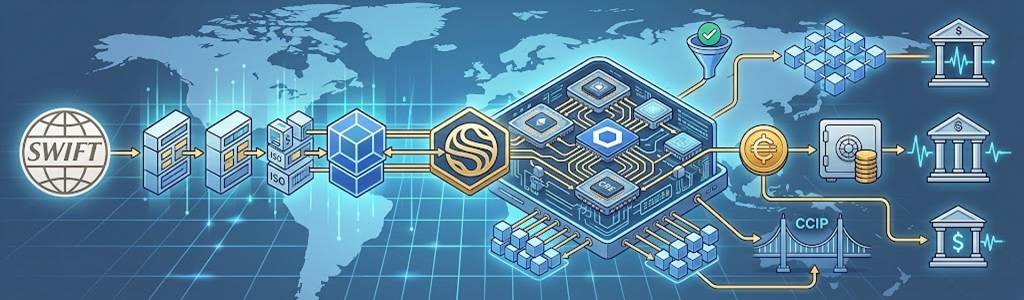
The deployed technical architecture pairs Swift’s proprietary ISO 20022 messaging standard with the Chainlink Runtime Environment (CRE). This component allows paying agents to coordinate corporate actions when a single security trades or circulates simultaneously across multiple chains.
The protocol resolves balance synchronization by consolidating distributed holdings into a unified canonical ledger record. According to market coverage, this functionality prevents the double-counting of shares in transit between chains during the record-date cutoff.
Concurrently, the workflow incorporates the Automated Compliance Engine to audit eligibility criteria, tax withholding obligations, participant identity, and sanctions screening lists prior to net payment calculation.
Once parameters are verified, monetary distributions are executed using stablecoins or tokenized bank deposits directly on the network where the investor resides. If the settlement asset exists on an external chain, the cross-chain transfer operates via the Cross-Chain Interoperability Protocol (CCIP).
Outlook for Institutional Asset Management
Project documentation notes that the dividend trial marks merely the initial use case for this operational framework. The modular architecture is designed to handle stock splits, debt coupon distributions, rights offerings, and mandatory capital redemptions.
According to Chainlink projections cited in the report, the architecture is designed for full compatibility with commercial stablecoins, tokenized deposits, and central bank digital currencies (CBDCs).
This initiative builds on earlier collaborations where both organizations bridged legacy banking networks with tokenized investment funds. Industry analysts emphasize that these technical trials aim to ensure assets issued on distributed ledgers mirror the operational guarantees found in traditional capital markets.
The Swift banking cooperative and Chainlink’s technical engineering team plan to evaluate pilot results during upcoming international financial forums and working groups before advancing toward commercial production deployments.