TL;DR
- Bitcoin obtains more than 52% of its electricity from sustainable sources, according to Cambridge’s latest survey on crypto mining.
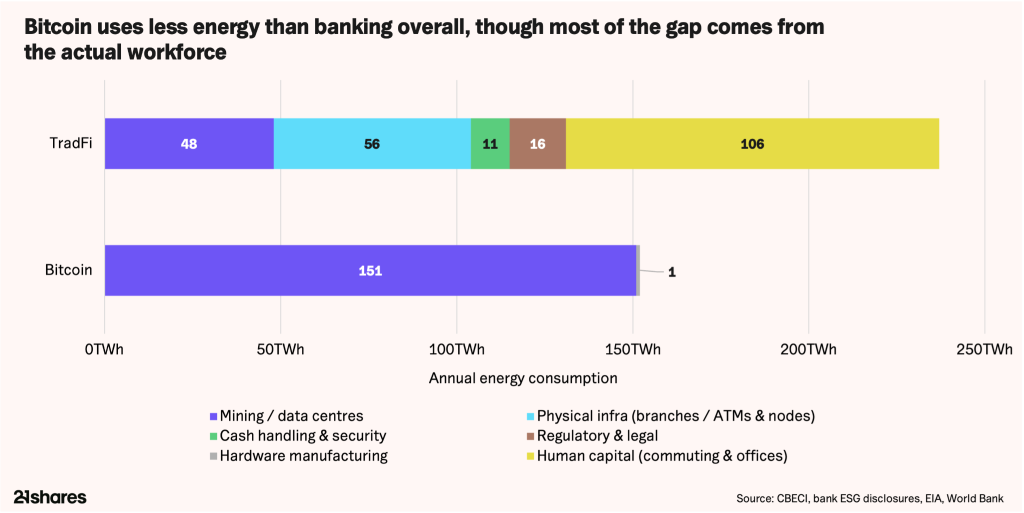
- The global banking system consumes approximately 237 TWh annually, compared to Bitcoin’s 151 TWh, according to estimates by 21Shares Research.
- Between 2021 and 2025, the network’s computing power grew sixfold while electricity consumption barely doubled: efficiency per unit tripled.
Digital asset management firm 21Shares published an analysis questioning the terms in which the environmental impact of Bitcoin is debated, arguing that the public conversation omits essential comparisons and does not examine the real energy sources that sustain the network. The piece, authored by Karim AbdelMawla, contends that the debate lacks the necessary context to reach valid conclusions.
According to the Cambridge Centre for Alternative Finance, the Bitcoin network consumes approximately 151 TWh annually, a figure updated daily. Of that total, 52.4% comes from sustainable sources: 42.6% from renewables and 9.8% from nuclear energy. The 21Shares analysis adds that around 40% of that electricity would have been wasted or discarded without the presence of miners, as it includes generation from remote hydroelectric plants, wind farms with surplus output, and natural gas that would otherwise be flared into the atmosphere.
Bitcoin and the Banking System: Shifting Perspectives
When 21Shares Research estimated the energy consumption of the traditional banking system —including data centers, some 600,000 branches, 2.91 million ATMs, armored vehicles, and financial regulators—, the result was approximately 237 TWh per year, a figure that exceeds the network by 57%. The research warns, however, that this comparison does not settle the debate: traditional banking serves billions of people and moves trillions of dollars daily.
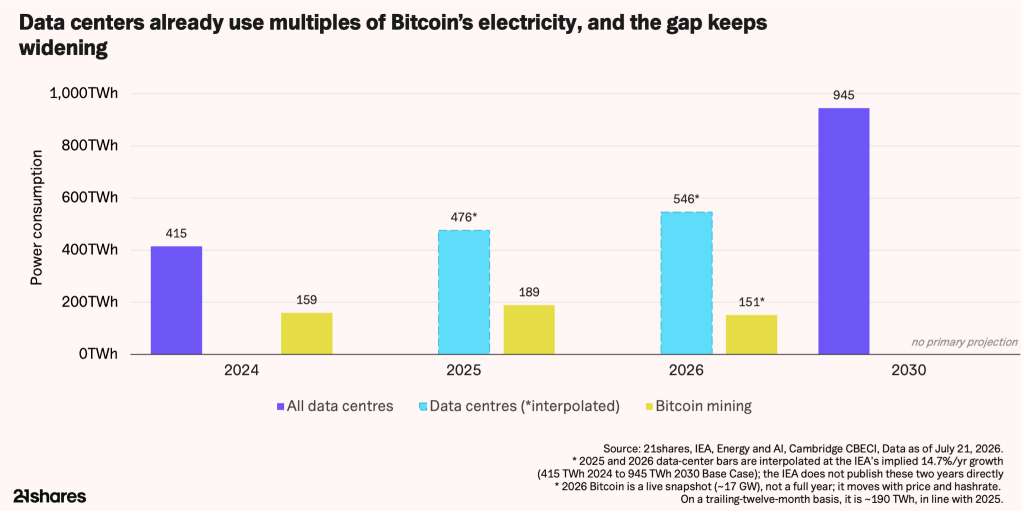
A more revealing reference, according to the report, is that of global data centers. The International Energy Agency estimates that this sector consumed around 415 TWh in 2025 and could reach 945 TWh by 2030, driven largely by artificial intelligence. Bitcoin, in that context, represents a fraction of that demand.
BTC’s Efficiency Is Built From Its Own Economics
Between 2021 and 2025, the network’s computing power increased approximately sixfold while electricity consumption barely doubled. Hardware data from the CCAF indicates that the average mining machine improved its efficiency by around two-thirds during that period.
This progress does not stem from sustainability commitments but from the economic structure of the protocol: each halving —the most recent occurred in April 2024, reducing the reward from 6.25 to 3.125 BTC per block— compresses margins and forces inefficient equipment out of operation. Since electricity represents miners’ primary operating cost, the constant search for cheap energy naturally steers them toward renewable sources.