TL;DR
- SwissBorg has added Zcash (ZEC) and Litecoin (LTC), expanding access to both assets through a platform operating under MiCA.
- The move comes as EU anti-money-laundering rules tighten around anonymity-enhancing crypto services.
- ZEC’s recent move above $1,000 and Litecoin’s optional MWEB privacy layer make the listing especially relevant as regulated venues reassess which digital assets can remain accessible.
Zcash (ZEC) and Litecoin (LTC) are gaining exposure in Europe after SwissBorg expanded support for both assets through a platform operating under the European Union’s MiCA framework. The timing is notable as regulators increase scrutiny of privacy-enhancing features.
Zcash has entered the spotlight after a sharp market rebound. ZEC crossed $1,000 in early September, supported by demand and the launch of Grayscale’s ZCSH, the first U.S.-listed exchange-traded product dedicated solely to ZEC. The fund began trading on NYSE Arca on August 25, giving investors regulated exposure to Zcash. By September 8, it had more than $532 million in assets under management.
$LTC and $ZEC are now supported on SwissBorg. 🚀
Two of the most searched-for tokens were not there last time you looked.
We noticed, and changed that! 🔍🪙 @litecoin: one of the oldest names in crypto. Built for fast, low-cost payments since 2011.
🟠 @zcash: a pioneer of… pic.twitter.com/VTbyQJH41W— SwissBorg (@swissborg) September 14, 2026
Zcash And Litecoin Find A European Trading Window
SwissBorg says it operates its app under a MiCA authorization in France. Its platform supports trading across multiple fiat currencies and a broad range of digital assets.
Zcash is sensitive to European policy because its protocol offers shielded transactions that can conceal transaction details. However, it also supports transparent transactions, creating a distinction between the network itself and how a regulated platform chooses to handle the asset.
Litecoin presents a different case. Its MimbleWimble Extension Block, or MWEB, is an optional privacy layer rather than the default transaction mode. Litecoin’s documentation says MWEB allows confidential transactions while the standard chain remains transparent. That design gives exchanges greater flexibility when applying compliance controls.
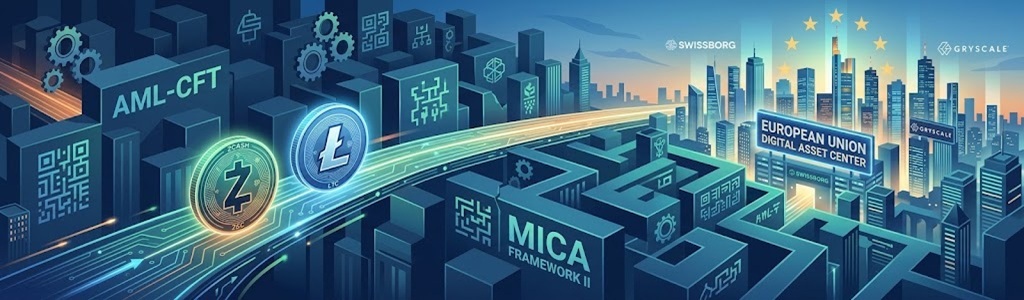
EU Rules Put Privacy Features Under Closer Review
The EU’s Anti-Money Laundering Regulation, Regulation 2024/1624, applies from July 10, 2027. Article 79 prohibits banks, financial institutions and crypto-asset service providers from maintaining anonymous crypto-asset accounts or accounts that enable customer or transaction anonymization, including through anonymity-enhancing coins. The rule does not amount to a blanket ban on owning ZEC or LTC, but it creates a significant compliance issue for regulated intermediaries.
Self-custody and peer-to-peer activity are not automatically outlawed by Article 79, while regulated platforms face stricter obligations. For Zcash and Litecoin, the rules could encourage exchanges to distinguish between transparent trading support and privacy-enabled functionality.
The SwissBorg listing arrives as institutional access to Zcash continues to expand. ZCSH has shown that regulated products can provide exposure to a privacy-focused asset under a controlled structure. That suggests privacy and compliance do not necessarily have to be mutually exclusive.