TL;DR
- ZetaChain surpassed 260,000 on-chain users through Anuma, its private AI memory layer, with more than 26,000 wallets created in a single week.
- Privy, a Stripe group company, provides the wallet infrastructure behind every Anuma account, ensuring self-custody without added complexity for the end user.
- Anuma users made more than 1,100,000 AI requests across 34 different models, including chat, image, and video, since the platform launched.
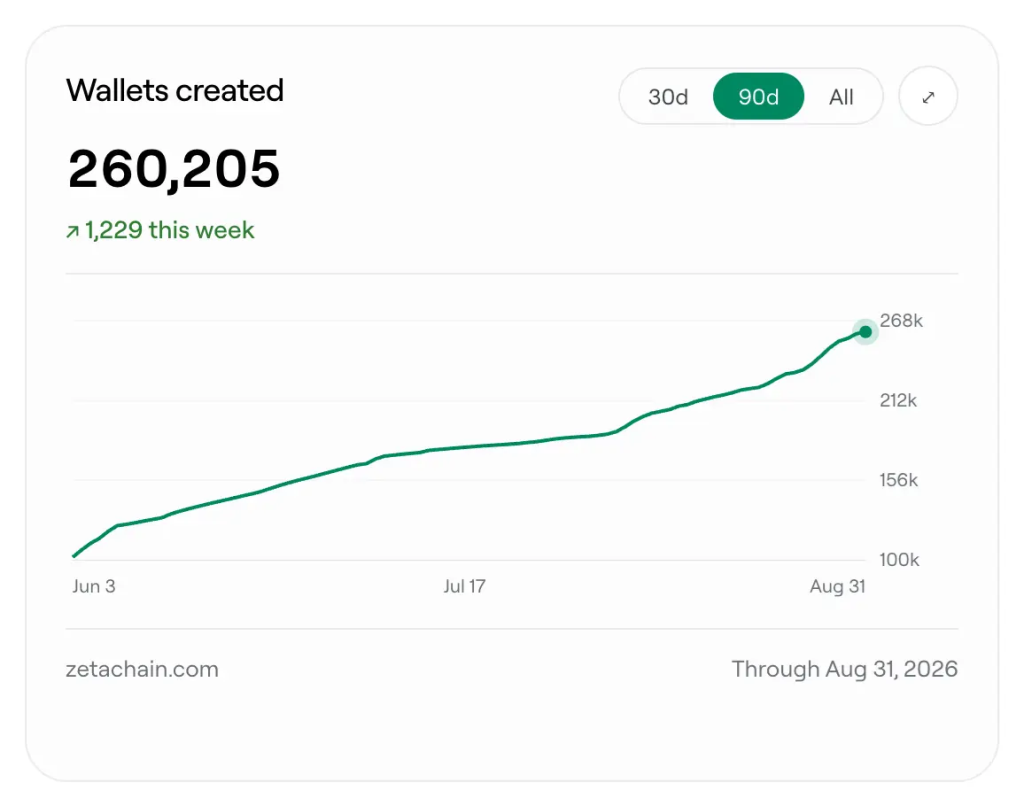
ZetaChain surpassed 260,000 on-chain users through Anuma, its artificial intelligence application that functions as a private memory layer for AI models. These figures position the project as one of the most significant real-scale wallet implementations in the blockchain ecosystem so far this year.
ZetaChain: Digital Identity and Privacy
When a user registers on Anuma, Privy —a Stripe group company— automatically provisions a self-custody wallet on the ZetaChain network. That wallet is not an auxiliary access point: it becomes the user’s AI identity. A key derived from that wallet unlocks a client-side encrypted memory vault, meaning neither ZetaChain nor the model providers can read the stored content. The history of styles, preferences, projects, and files travels with the user from ChatGPT to Claude to Gemini without needing to start from scratch on each platform.
This scheme reverses the logic of centralized AI products, where memory becomes trapped within a platform’s account. Here, the user decides which people, agents, and applications can access their data.
260,000 Wallets and Steady Growth
Since Anuma launched in spring 2026, more than 260,000 accounts with a wallet were created, according to data published openly on ZetaChain Research. Over the past four weeks, the weekly average exceeded 17,000 new wallets. The most recent week recorded more than 26,000 sign-ups, the highest figure to date.
Debbie Soon, Head of Marketing at Privy, stated that they are “excited to see how wallets create new use cases beyond financial products, from identity to AI.” The choice of Privy was not coincidental: the team prioritized an infrastructure that would make self-custody invisible to the user, without compromising real control over assets and data.
The team is also exploring integrating stablecoin rails and card programs that operate directly from the wallet balance, features that could become available to Anuma users in an upcoming phase.