The recovery of Strategy (MSTR) and the broad rally in crypto assets during the week of August 20, 2026, have reopened the debate over the formation of a market floor. Bitcoin’s price surpassed $72,000, its highest level since June, while shares of companies tied to the ecosystem posted double-digit gains.
The rally: three concurrent pressure vectors
The upward move can be decomposed into three distinct catalysts, each with particular implications for supply and demand dynamics.
First, the U.S. Treasury’s bond buyback policy. On August 19, the Treasury Department announced the doubling of the minimum long-term bond repurchase amount, raising it from $2 billion to $4 billion per operation starting September 9. This measure, although not constituting direct monetary expansion — the Treasury repurchases existing debt without creating new money — was interpreted by markets as a form of implicit quantitative easing.
The effect on long-term bond yields was immediate: lower yields reduce the opportunity cost of holding non-yielding assets like Bitcoin, and weaken the dollar in relative terms. Matt Mena, a strategist at 21Shares, described this move as a signal that “sends scarce assets and hedges against monetary degradation higher.” Bitcoin ETFs in the U.S. recorded net inflows of approximately $517 million on August 19, their best day since May.
Second, the SEC’s regulatory proposal. On August 18, the Securities and Exchange Commission put forward a proposed rule for crypto assets that creates two registration exemptions for token offerings: a one-time exemption of up to $5 million over four years, and a recurring exemption of up to $75 million in any 12-month period.
Although the proposal is still in the comment period and does not constitute a final rule, its mere existence reduces regulatory uncertainty for token issuers, a factor that had weighed on market sentiment since the collapse of key legislation in Congress.

Third, the short-position squeeze. This is likely the factor with the greatest immediate impact. CoinGlass reported liquidations of short positions totaling $3.1 billion in the cryptocurrency market between August 19 and 20. Bitcoin accounted for approximately $1.8 billion of those liquidations.
The magnitude of the event is historic: in a single minute, roughly $700 million in short positions were liquidated. Glassnode characterized the move as a 5.8-standard-deviation deviation relative to Bitcoin’s 30-day volatility, the largest bullish shock since October 2023.
The rally in MSTR — which gained over 10% on the week, closing at levels not seen since mid-June — presents a paradox. The company holds 840,447 BTC, with an average acquisition cost of $75,385 per bitcoin. At the price of $72,000, the holding shows an unrealized loss of approximately $4.77 billion, a significant improvement from the over $10 billion in unrealized losses the company reported in prior weeks. However, the position remains below breakeven.
Strategy, reported a net loss of $8.22 billion in the second quarter of 2026, attributable almost entirely to an $8.32 billion writedown on the fair value of its Bitcoin holdings. Management has authorized the sale of up to $5 billion in Bitcoin to fund reserves, dividends, and share buybacks, which introduces additional selling pressure risk into the market.
Strategy’s mNAV multiple (modified net asset value) has compressed to approximately 1.0, meaning the stock price trades near the value of its underlying Bitcoin holdings. This compression eliminates the company’s ability to issue shares at a premium and purchase more Bitcoin, which was the central mechanism of Michael Saylor’s strategy. The company has suspended Bitcoin purchases for seven consecutive weeks. The rally in MSTR, therefore, is primarily a reflection of Bitcoin’s price increase, not a revaluation of the company’s multiple as a leveraged investment vehicle.
squeeze or accumulation?
The distinction between a short-squeeze rally and a shift in demand structure is fundamental to assessing the sustainability of the move.
The volume of short liquidations — $3.1 billion in 48 hours — is indicative of a market that was over-leveraged short. When a market is so positioned in one direction, any bullish catalyst can produce a disproportionate price move. The fact that the Fear and Greed Index remains in “neutral” territory (54) suggests that the rally has not been accompanied by widespread speculative enthusiasm. This is consistent with a move driven by short covering rather than new long-term demand.
However, the flow into spot Bitcoin ETFs — roughly $1 billion in net inflows over the first two weeks of August — suggests that there is underlying institutional demand that predates the Treasury announcement. The ETF structure allows institutional and retail investors to access Bitcoin without the operational costs of self-custody.

The structural case for Bitcoin allocation remains intact: in an environment of monetary degradation, an asset with a fixed supply of 21 million units offers a hedge that no other asset can replicate. The Treasury’s decision to increase long-term bond buybacks reinforces this thesis, even if the measure is not direct monetary expansion.
Analyst Ansem pointed out that the market might regret having ignored bottom signals in the third quarter of 2026, arguing that markets often overlook positive signals at the bottom, only recognizing them after the rally has begun. Bitwise, in turn, interpreted the volatility in STRIC — Strategy’s perpetual preferred shares — as an indicator of end-of-cycle deleveraging, suggesting that the market floor could be near.
Bitcoin’s price needs to rise approximately 8% further for Strategy to reach breakeven on its position. If the rally exhausts before reaching that level, the company could face the need to sell Bitcoin at a loss to meet its dividend and share buyback obligations, adding selling pressure to the market.
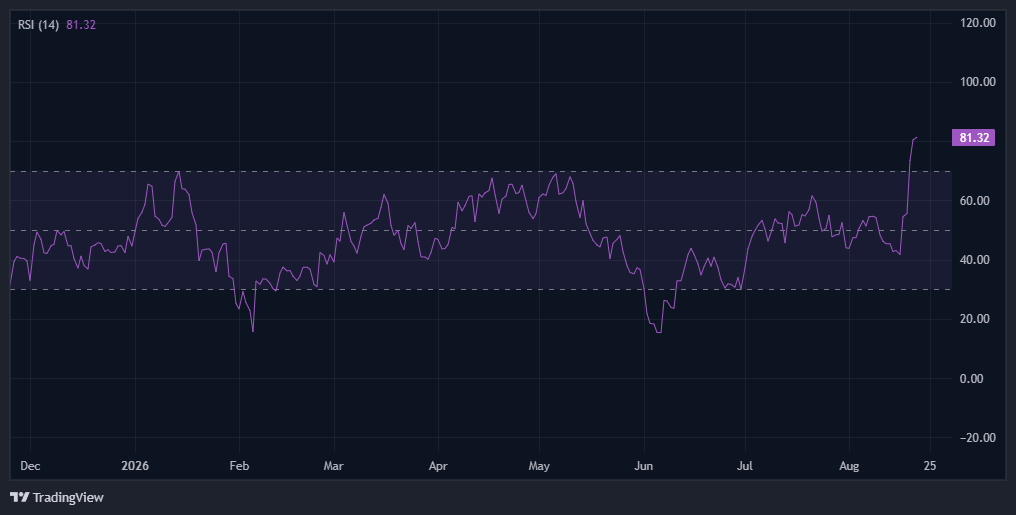
Second, Bitcoin’s daily relative strength index (RSI) has entered overbought territory, which technically increases the probability of a near-term pullback. Markets that move on short squeezes tend to be volatile in both directions: the same mechanics that accelerate the upside can reverse if traders who have covered their shorts decide to take profits.
Third, the SEC proposal, though positive, is not a final rule. The 60-day comment period could introduce modifications, and political resistance within the agency or in Congress could delay or dilute implementation. The $75 million exemption, while significant for small and medium-sized issuers, does not resolve the structural problem of how digital assets will be classified under existing securities laws.
the floor, still unconfirmed
The rally in Strategy and the broader crypto sector has been driven by a confluence of external factors — the Treasury’s buyback policy, the SEC’s regulatory proposal, and a historic short squeeze — that have acted as catalysts in a market that was oversold and over-leveraged short.