
TL;DR
- VanEck noted that Bitcoin triggered 8 of its 12 capitulation signals; all 12 touched their zones over the past three months.
- Historically, when between 8 and 12 signals are triggered, returns at 90 and 180 days fall below the cryptocurrency’s historical averages.
- Spot bitcoin ETFs in the U.S. received approximately $663 million over the past 30 days, reversing part of the $2.4 billion in outflows from the previous month.
VanEck published its mid-August Bitcoin ChainCheck with a conclusion that calls for caution: BTC currently triggers 8 of its 12 capitulation indicators tracked by the asset manager, and all 12 signals touched their alert zones at some point over the past three months. The warning does not imply that the bottom has already formed, but rather that the bear cycle is in advanced stages, though no reversal has been confirmed.
The signals are triggered when a metric falls at or below the 15th percentile of its own history. Among the factors measured are the drawdown from peak, miner economics, and the proportion of holders sitting on unrealized losses. The exception is the price drawdown, which activates at -35% or more rather than by percentile.
Bitcoin was hovering around $64,500 during Asian overnight hours on Wednesday, its pullback from its all-time high reaching 49%, placing it at the 35th percentile of its history and explaining why the drawdown signal is computed independently.
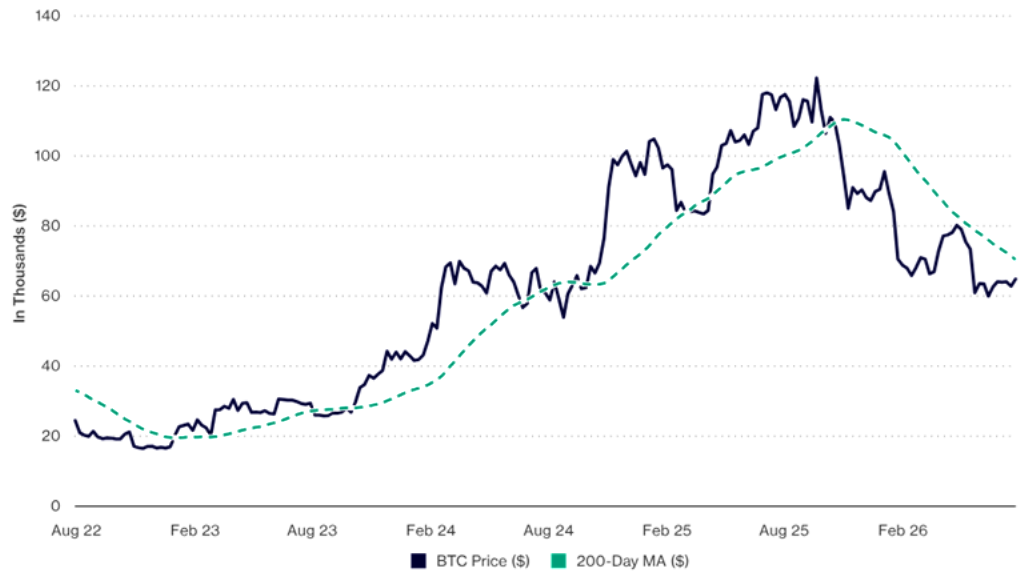
Bitcoin Remains in Its Bear Cycle
What the historical record of these signals shows is less encouraging than one might expect. When between 8 and 12 indicators are triggered simultaneously, the average return at 90 days was 12.8% and at 180 days was 32%, both below the overall historical averages of 15.2% and 36.3% respectively. The edge over the historical average only appears over a one-year horizon.
VanEck counted four complete cycles since 2011, with peak-to-trough declines averaging 11 months, or 12.7 months excluding the 2011 cycle. Bitcoin entered its tenth month of decline from its October 2025 peak in August, which would place the next accumulation phase between September and November. The firm did not specify a date within that range.
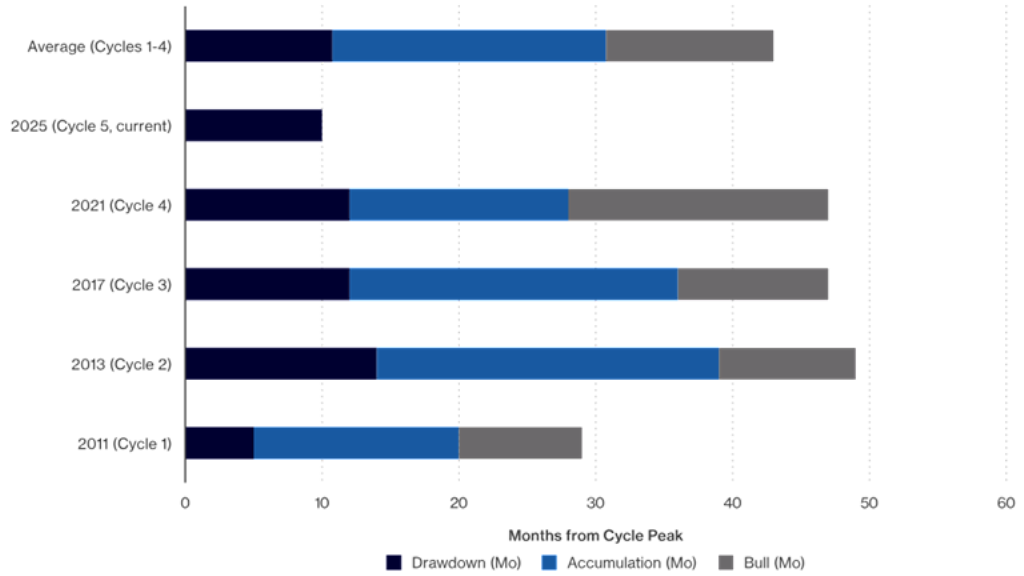
Miners Under Pressure, Funds in Recovery
Miners took the hardest hit: daily network revenues fell 46% year-over-year, and mining difficulty dropped 18.3% from its November 2025 peak, the largest decline since China banned the activity in 2021. On the other side, spot BTC ETFs in the United States — a category where VanEck operates its own HODL fund — received approximately $663 million over the past 30 days, partially reversing the $2.4 billion in outflows recorded the previous month.