TL;DR
- Chuck Schumer proposed a seven-member Anti-Corruption Bureau with subpoena, enforcement, oversight and recovery powers to investigate executive-branch corruption and major contractors independently.
- The bill would let state attorneys general and private plaintiffs pursue allegedly corrupt proceeds while dedicated funding and temporary appointments protect continuity during disputes.
- Scrutiny intensified around Trump family crypto ventures estimated at $620 million, complicating Clarity Act negotiations over ethics rules and enforcement authority in Washington today.
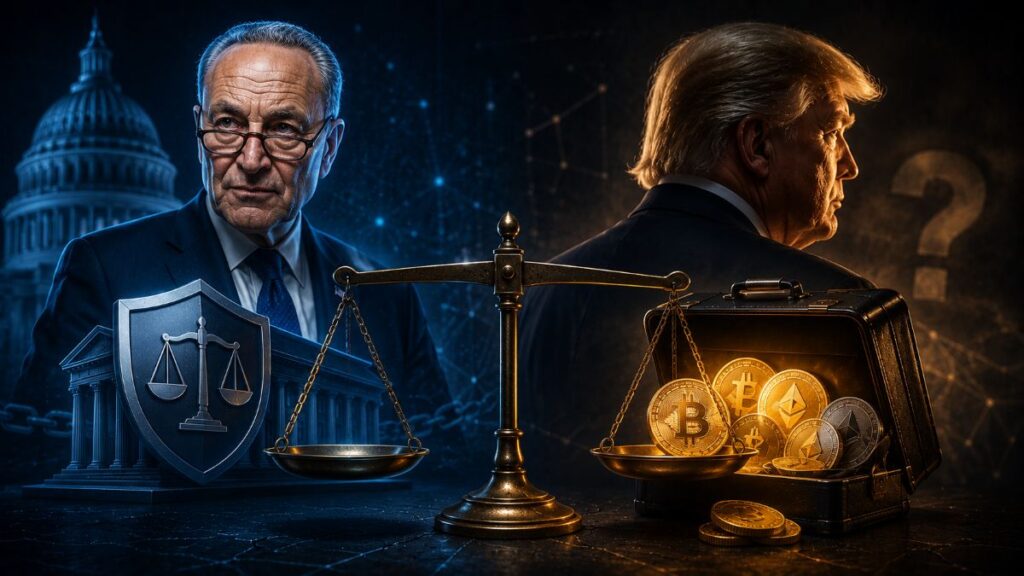
Senate Democratic Leader Chuck Schumer has introduced legislation to create an independent Anti-Corruption Bureau, presenting it as a response to alleged conflicts involving President Donald Trump and his family’s business interests. The seven-member federal agency would investigate executive-branch corruption, issue subpoenas, pursue enforcement actions, oversee cases and publish reports. The proposal attempts to build a watchdog capable of following money beyond the normal reach of presidential control across the federal government and executive contracting. Schumer says the bureau could recover improperly obtained funds, while the White House maintains that Trump has no conflicts of interest.
Crypto proceeds intensify the debate over independent enforcement
The bill would give private plaintiffs and state attorneys general authority to sue for money allegedly obtained through corruption by presidents, senior officials, campaign figures and major contractors. Funding would come from a dedicated Freedom From Influence Fund, limiting presidential influence over the bureau’s budget. Its design reflects an unusually direct effort to prevent the executive branch from weakening the institution meant to investigate it during prolonged political or institutional deadlock. A special three-judge division of the D.C. Circuit would also appoint temporary members when vacancies threatened to stop operations, preserving continuity during political confrontation.
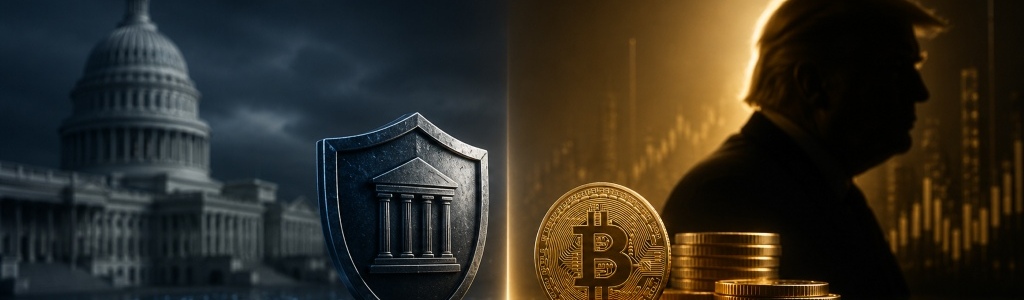
The timing is inseparable from renewed scrutiny of the Trump family’s cryptocurrency ventures. Financial disclosures showed more than $65.6 million from equity sales in WLF Holdco and $236 million in token-sale proceeds distributed by the entity linked to World Liberty Financial. An estimate places the family’s proceeds from crypto ventures at roughly $620 million, bringing digital assets directly into the broader corruption debate in Washington. That calculation encompasses World Liberty Financial tokens, the Trump memecoin, NFTs and a stake in a Bitcoin mining company, although the administration rejects claims that these holdings create improper conflicts.
The ethics dispute is also complicating negotiations over the Clarity Act, a federal cryptocurrency bill. Democratic lawmakers want restrictions preventing presidents and other officials from profiting from digital assets while serving in office. Trump accepted a rule barring federal officials from issuing cryptocurrencies, but it assigns primary enforcement to the Department of Justice rather than state attorneys general. The unresolved question is whether an administration can credibly police financial conduct connected to its own leadership. Democratic negotiators criticized that structure, leaving ethics provisions as a barrier to final text and a targeted early-August Senate vote.