TL;DR
- Trump accepted approximately 80% of the CLARITY Act’s bipartisan ethics package, which now faces the 60-vote threshold in the Senate.
- The final text incorporates 126 changes requested by Democrats, including restrictions on crypto interests held by elected officials and their spouses.
- The revised version adds a mechanism allowing the Treasury Secretary to intervene if stablecoins trigger massive outflows from bank deposits.
The administration of Donald Trump accepted approximately 80% of a bipartisan ethics package to advance the CLARITY Act, legislation aimed at defining when a digital asset is classified as a security or commodity, and distributing oversight among federal regulators.
The bill now faces its most demanding test: clearing the 60-vote threshold in the Senate next Tuesday, which requires Republicans to secure support from at least several Democrats.
The last-minute changes target the points of greatest resistance between the Trump administration and the opposition. The conflicts of interest section, which had blocked bipartisan backing until the very end, was rewritten to impose restrictions on crypto interests held by federal elected officials, judges, and their spouses.
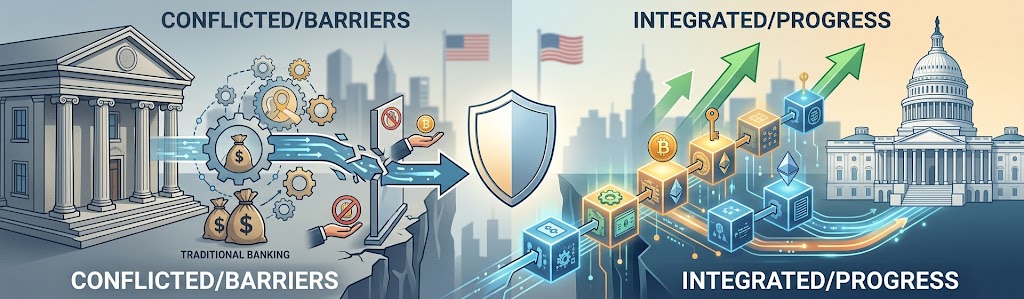
Senator Cynthia Lummis described the new text as “essentially the near-totality” of the proposal put forward by senators Thom Tillis and Ruben Gallego. One of the most significant concessions grants state attorneys general authority to participate in the enforcement of ethics rules, moving away from exclusive control by the federal Department of Justice.
Trump, the Treasury, and Stablecoins
The second central amendment responds to pressure from the banking sector. The final text grants the Treasury Secretary new powers to intervene if payment stablecoins begin triggering significant deposit outflows from the traditional banking system.
Republican authors describe this mechanism as a “circuit breaker” designed to protect smaller and regional banks. The Independent Community Bankers of America had warned that the migration of deposits toward high-yield digital dollars could reduce the funds available for loans to households and small businesses.
The final version also amends the Blockchain Regulatory Certainty Act to protect decentralized software developers from being classified as money transmitters, provided they do not control funds or user transactions. A civil safe harbor for certain activities is also included.

Protection for Software Developers
The section drafted by the Agriculture Committee incorporates rules on insider trading, conflicts of interest, and enforcement of state consumer protection laws, preserving the existing jurisdiction of the CFTC over derivatives.
Senators Lummis, John Boozman, and Tim Scott present the document as the definitive compromise after more than a year of negotiations. However, the political arithmetic remains tight.
Resistance persists around the ethics rules, anti-money laundering concerns, and the potential impact of stablecoins on bank deposits. Tuesday’s outcome will determine whether the concessions accumulated during the Trump administration are sufficient to bring the bill to a final vote.