TL;DR:
- Implied odds on Polymarket regarding the enactment of the law fell to 37% during July 2026.
- President Donald Trump’s annual financial disclosure reported nearly $1.4 billion in income linked to the crypto industry.
- The legislation requires a minimum of 60 votes in the U.S. Senate to overcome a potential filibuster.
Polymarket odds of the Clarity Act being passed into federal law before the end of 2026 dropped to 37%. The downward revision comes after negotiations stalled in the U.S. Senate over discrepancies regarding ethics amendments linked to President Donald Trump’s financial interests.
The House of Representatives and the Senate Banking Committee have already passed the base text of the initiative. According to official negotiation documents, the bill does not yet have a scheduled date for a vote on the Senate floor.
The president’s financial disclosure reported nearly $594 million associated with World Liberty Financial and approximately $635 million connected to the TRUMP memecoin project. Senate report data suggests that Democratic lawmakers, led by Senator Elizabeth Warren, insist on incorporating strict ethics restrictions for high-ranking officials before offering their support.
For their part, Republican lawmakers rejected including clauses targeted specifically at the president’s investments. According to the negotiators’ report, the Republican caucus contends that those additions could shatter the bipartisan consensus built around the market structure.
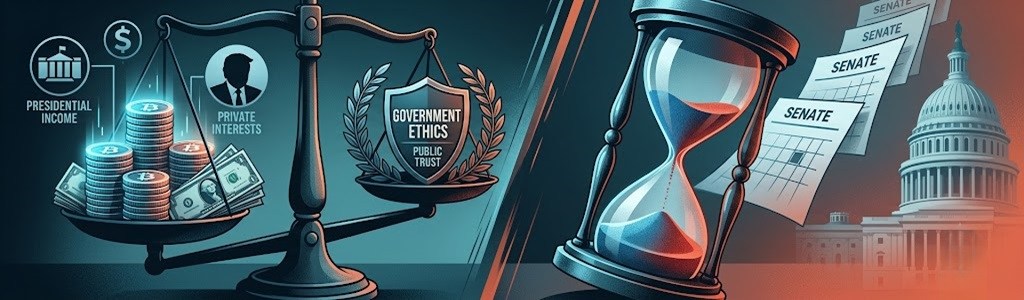
Ethics Amendment Dispute Stalls Progress on the Bill
To advance on the floor, the legislation requires 60 favorable votes. According to parliamentary composition analysis, the Republican group lacks sufficient votes to pass the rule on its own, making support from Democratic senators essential.
Several senators who had previously shown a favorable stance now condition their vote on the inclusion of enforceable ethics safeguards. Polymarket data suggests that this lack of consensus keeps the text in procedural limbo despite backing from tech sector companies.
Time constraints are also influencing the processing of the bill before the congressional recess. The Senate calendar prioritizes appropriations bills and official nominations, which reduces the number of available working days.
The start of the congressional summer recess, scheduled for August 7, 2026, serves as the key deadline to determine whether negotiators manage to bring the text to a vote before the end of the legislative session.