TL;DR:
- Academic study: The research was published this Monday by the Initiative for CryptoCurrencies and Contracts (IC3), composed of experts from universities such as Cornell, Princeton, and Yale.
- Sector launches: Consensys announced this Monday early access to MetaMask Agent Wallet, a non-custodial wallet designed for automated operations of artificial intelligence agents.
- Retail trade testing: The Robinhood app confirmed it will allow its users to employ automated systems to trade digital assets, starting with a beta phase in stocks.
Promises regarding the blockchain technology’s capability to solve the challenges of artificial intelligence might be overstated. A recent study by the Initiative for CryptoCurrencies and Contracts (IC3) points out that cryptographic tools show a limited utility when attempting to solve complex problems of trust, data verification, and autonomous payments in the AI sector.
Myths about the financial autonomy of AI agents
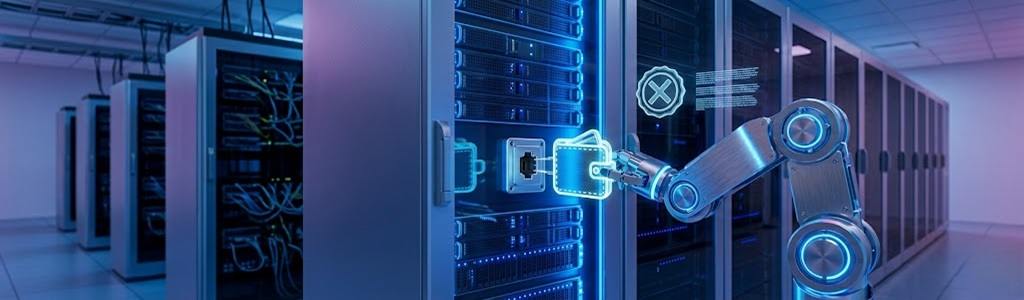
The notion that equipping artificial intelligence systems with digital wallets grants them absolute independence was one of the points questioned by the academic organization. According to the IC3 report, the integration of these financial instruments does not increase the cognitive capacity of computer models. The researchers detail that having a blockchain address facilitates the automation of transactions without human approval loops, but it does not exempt programs from dependency on creators and traditional infrastructure.
On the other hand, the digital asset industry continues to develop products oriented toward capital automation through algorithms. The company Consensys announced this Monday the launch in the early access phase of MetaMask Agent Wallet, a non-custodial wallet focused on allowing AI entities to operate programmatically in decentralized financial protocols. Data supplied by the company suggests that decentralized networks present themselves as an optimal environment to coordinate the operations of automated actors managing their own funds.
Additionally, firms oriented toward retail trade are executing similar integration plans for their user base. The trading platform Robinhood announced that its clients will soon have the option to delegate cryptocurrency trading to independent automated agents from their main portfolios, beginning with a test deployment limited to the equities market.
Barriers in content detection and bias identification
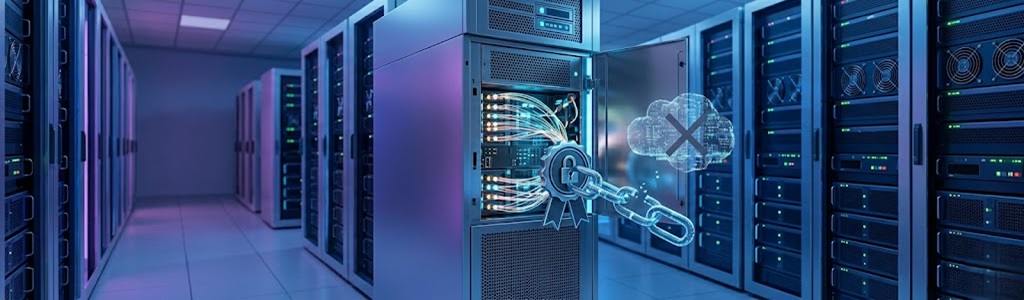
The IC3 analysis evaluated the use of distributed ledgers as a method to differentiate generative AI creations from human productions. Blockchains function as high-integrity registries to store timestamps and record specific digital artifacts. The authors of the technical document argue that this function possesses a limited utility because accounting protocols fail to autonomously verify the primitive origin of the files.
To classify the nature of the content, an evaluator external to the network environment is required. If that external tool issues an erroneous diagnosis, the blockchain will simply preserve the flaw permanently in its data history.
According to the current trend described in the university consortium’s report, decentralization does not solve structural fairness issues in language models either. IC3 researchers state that algorithmic bias arises during the technical training stages. Decentralized governance mechanisms can increase transparency in distributive processes, but they do not correct the source of the mathematical problem in the analyzed algorithms.
The IC3 research document was edited by specialists from Carnegie Mellon and Cornell Tech, additionally counting on the participation of scientists from Chainlink Labs. The debate over the real capabilities of technological convergence is projected to continue during the next IC3 blockchain camp in New Jersey.