TL;DR:
- Fabric Foundation announced the launch partners for RoboPay to integrate artificial intelligence and robotics into the blockchain.
- Projects such as Aethir, AEON, Kite AI, Peaq, FLock, PrismaX, and Unibase form the initial infrastructure of this network.
- The system spans from agent identity and hosting to execution, payment, and verification of physical tasks.
Fabric Foundation introduced the launch partners for Fabric Foundation RoboPay, a group of blockchain projects aiming to connect artificial intelligence agents with real-world robots. The initiative seeks to lay the operational foundations for the so-called machine economy through onchain payment standards and task verification.
Meet the RoboPay Launch Partners.
From agent identity and hosting to payments, robot execution, verification, and machine infrastructure, these partners are helping build the foundations of the machine economy.
Here's how each partnership expands what's possible.
— Fabric Foundation (@FabricFND) July 22, 2026
Project data indicates that the ecosystem combines hosting tools, digital identity, payment settlement, and decentralized storage to enable autonomous transactions in the physical environment.
Payment and settlement infrastructure for agents and robots
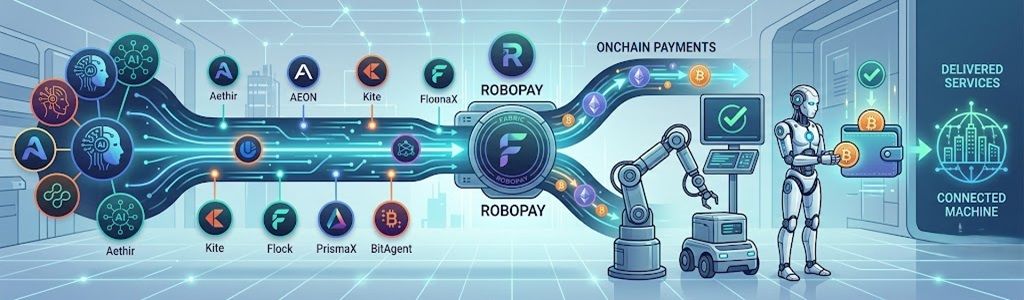
Among the partner group, Aethir’s Claw platform offers one-click browser hosting on decentralized infrastructure. This tool provides full virtual private server (VPS) capabilities to developers, allowing them to deploy AI agents in minutes. When combined with the payment system, these agents gain the ability to transact directly with robots responsible for performing physical tasks.
For its part, AEON provides the onchain payment settlement layer and infrastructure through its global merchant network. Company data suggests that the integration will extend this standard from traditional merchants to service machines, unifying commerce between agents and physical services under a single financial structure.
In the authentication area, Kite AI is developing payment infrastructure that provides verifiable identity and delegated spending authority to agents through its Agent Passport system. Similarly, the Peaq protocol grants robots digital identities, crypto wallets, and reputation scores to integrate them directly into the decentralized economy.
Training, task verification, and decentralized memory
The rest of the technology stack is complemented by training and work validation solutions:
- FLock: Implements collaborative training tasks through its FLock AI Arena platform to expand the catalog of available robotic skills.
- PrismaX: Functions as a service layer to validate work performed by physical systems, turning each processed transaction into proof of verified work.
- Unibase: Provides persistent memory through Membase and coordination management via its discovery protocol.
- BitAgent: Converts agent capabilities into executable services callable by other systems on the network.
With this framework, autonomous agents can discover, hire, and pay robots for tasks completed in the real world. According to current industry trends, the next verifiable milestone for this infrastructure will be the rollout of the first test executions with onchain settlement on dedicated testnets throughout the year.