TL;DR
- Funding Clash: Cardano faces a major governance dispute over an IO Research proposal seeking $52 million, with supporters calling it essential for long‑term innovation.
- Critics’ Push: Opponents argue Cardano should prioritize practical ecosystem growth, citing ADA’s 91% value drop and calling for funding to be split into smaller, selective parts.
- Hoskinson’s Warning: Hoskinson says rejecting the proposal risks losing key scientists to chains like Solana or Ethereum and could damage the blockchain’s reputation as a research‑driven network.
The Cardano community is confronting one of its most significant governance challenges since shifting to a fully decentralized, on‑chain model. A new Input Output (IO) Research funding proposal, backed by Charles Hoskinson, seeks millions in continued research support. The request has triggered a sharp divide within the protocol, with supporters calling it essential for long‑term innovation and critics arguing the funds should instead fuel real‑world growth and adoption.
On Science https://t.co/2SzNmG44LD
— Charles Hoskinson (@IOHK_Charles) May 20, 2026
Hoskinson Warns of Consequences if Research Funding Fails
At the center of the dispute is a $52 million request, down from last year’s $98 million. Hoskinson accuses several Japanese Delegate Representatives of voting against what he describes as critical funding for Cardano’s scientific backbone. He argues that researchers working within Cardano are “precious assets” and warns that if the proposal fails, many will leave the ecosystem entirely.
一部の日本のdRepが私たちの研究提案に反対票を投じたことに、深い悲しみを覚えています。…
— Charles Hoskinson (@IOHK_Charles) May 20, 2026
Hoskinson stresses that Cardano has always been a science‑driven project, pointing to milestones such as publishing the first proof‑of‑stake protocol whitepaper, pioneering sidechains on Bitcoin, and contributing to early DeFi concepts on Bitcoin. He believes dismantling the research group would erode Cardano’s relevance and push top scientists toward competing chains like Solana, Ripple, or Ethereum.
Critics Push for Practical Growth and a New Funding Structure
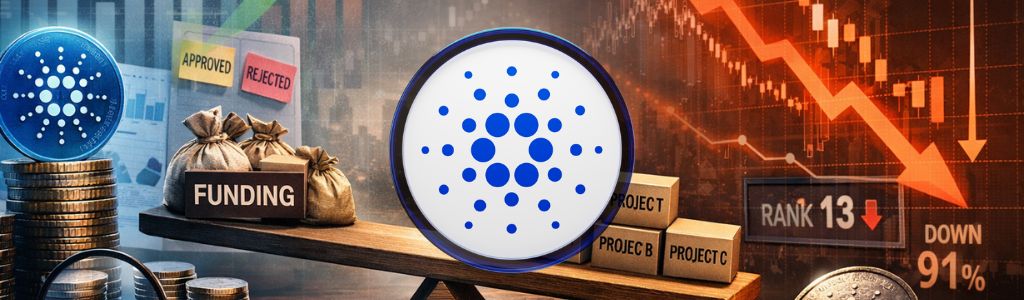
Opponents of the proposal argue that Cardano has spent too many years solving problems for the broader crypto sector instead of accelerating its own ecosystem. They want funding broken into smaller parts so the community can selectively support the most impactful initiatives. They also point to ADA’s performance: once valued above $100 billion and ranked in the top ten, it has since fallen to 13th and lost over 91% of its value in five years. At the time of writing, ADA trades at $0.2471.
Hoskinson rejects the idea of splitting the proposal, saying it is impractical and would force the team to decide who stays and who goes. He argues that such fragmentation would undermine Cardano’s scientific foundation and send a damaging signal to the market. With the debate intensifying, Hoskinson is urging undecided dReps to vote in favor and asking those who voted against the proposal to reconsider. The outcome will shape how Cardano balances research, innovation, and ecosystem growth in the years ahead.