Spending crypto no longer requires manual conversions, exchange withdrawals, or complicated workarounds. Crypto payment cards now allow users to pay directly with digital assets almost anywhere traditional cards are accepted, helping bridge the gap between Web3 and everyday finance. Below is a ranked breakdown of notable crypto payment cards in 2026.
How We Ranked These Cards
These cards were evaluated across five core criteria: rewards structure, fee transparency, regional availability, custody model, and real-world usability. Rankings reflect a review of official product documentation, supported regions, card functionality, and current fee policies. Where a card appears earlier in the ranking due to a commercial relationship, that relationship is disclosed. The Bitget Wallet Card appears first because it is affiliated with this publication. Editorial assessments of the remaining cards remain independent.
The 7 Leading Crypto Payment Cards Ranked
1. Bitget Wallet Card
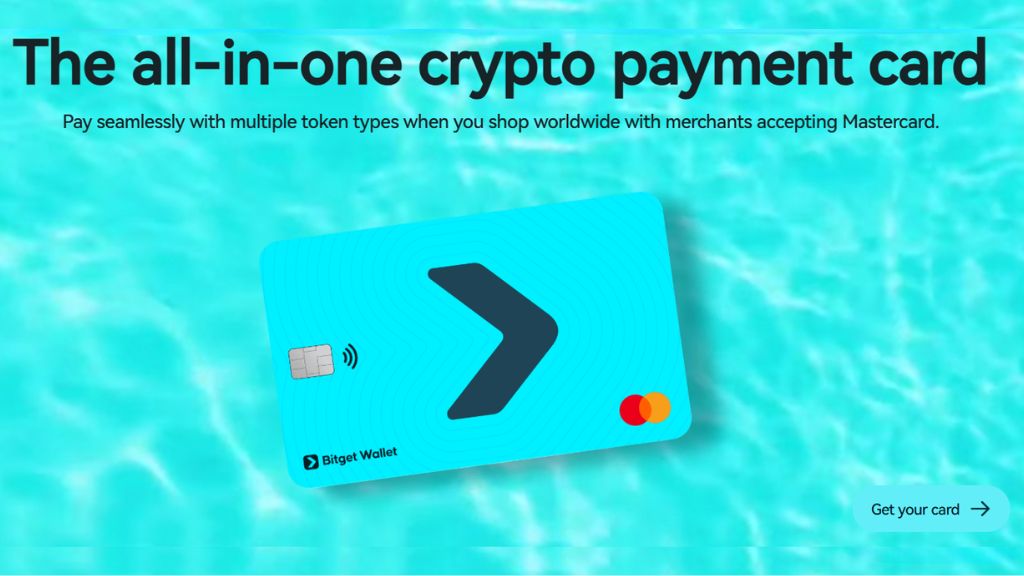
The Bitget Wallet Card stands out as one of the most complete crypto payment solutions available in 2026, combining Web3 accessibility with everyday usability. Unlike many traditional crypto cards that rely entirely on custodial balances, the card integrates directly with the Bitget Wallet ecosystem, giving users more flexibility when managing digital assets while still offering a streamlined spending experience.
The card can be used at millions of merchants worldwide through the Mastercard network and supports popular mobile payment integrations including Apple Pay, Google Pay, Alipay, and WeChat Pay. Users can fund the card using supported cryptocurrencies such as USDT and USDC, with real-time conversion at checkout. The application process is handled directly inside the wallet app and can typically be completed within minutes.
Another reason the card ranks highly is its fee structure. Bitget Wallet promotes no annual fees, no top-up fees, and competitive exchange rates, making it more practical for regular spending than many reward-focused alternatives that require large token lockups. The card is also expanding rapidly across Europe, Latin America, and Asia-Pacific markets, helping position it as one of the most globally accessible crypto payment products currently available.
2. Crypto.com Visa Card
The Crypto.com Visa Card remains one of the most recognized crypto cards on the market thanks to its extensive international availability and established rewards ecosystem. Cashback rewards are paid in CRO and vary depending on the selected tier and staking level. Higher tiers unlock stronger benefits, though most users will remain within the lower or mid-range reward structures.
The card is available across the United States, most European countries, the UK, Singapore, Australia, and several Latin American markets. Its strongest appeal comes from ecosystem integration, particularly for users already active within Crypto.com’s trading and staking services.
3. Coinbase Card
Coinbase Card continues to appeal to users looking for simplicity and easy integration with one of the world’s largest crypto exchanges. The card allows users to spend crypto balances directly while earning rotating crypto rewards on eligible purchases. Reward options change periodically and are selected directly inside the Coinbase app.
There is no annual fee and no mandatory staking requirement, making the card relatively accessible for casual users entering the crypto payments space. Availability remains strongest across the United States, the UK, and Europe.
4. Nexo Card
The Nexo Card differentiates itself through its hybrid debit and credit functionality. Instead of forcing users to sell crypto immediately, the platform allows eligible holders to borrow against digital assets while continuing to maintain exposure to their portfolio.
Users can switch between debit and credit modes depending on their preferred spending strategy. Cashback is available in either BTC or NEXO tokens, and the platform remains particularly popular among users who prioritize liquidity management rather than direct crypto liquidation.
The card is primarily available across European markets and selected international jurisdictions.
5. Binance Card
The Binance Card continues to attract users already integrated into the Binance ecosystem. Cashback rewards are tied to BNB holdings, with larger balances unlocking stronger reward percentages. The platform historically focused heavily on ecosystem incentives rather than broad consumer simplicity, which makes the card more appealing to active Binance users than casual crypto holders.
Availability remains concentrated across selected EEA markets and certain international regions. While the rewards structure can be competitive at higher tiers, many benefits depend on maintaining substantial BNB exposure.
6. BitPay Card
The BitPay Card takes a more straightforward approach to crypto spending by converting digital assets into fiat currency at the moment funds are loaded onto the card. This model may appeal to users who prefer predictable balances and simplified budgeting rather than continuous real-time crypto conversion.
The card supports several major cryptocurrencies and is designed primarily for US residents. Its simplicity and long-standing presence in the market continue to make it a recognizable option for crypto users seeking practical day-to-day spending functionality.
7. Wirex Card
The Wirex Card combines traditional fintech usability with crypto rewards through its Cryptoback program. Rewards are paid in WXT tokens and vary depending on account level and platform participation. Unlike some competitors, Wirex focuses heavily on combining fiat and crypto management inside a single interface.
The card is available across much of Europe, the UK, and selected Asia-Pacific markets. Its balanced approach between digital banking features and crypto functionality continues to attract users looking for a hybrid financial experience.
Real-World Comparison: Everyday Crypto Spending
In practice, the premier crypto payment card depends less on headline reward percentages and more on how efficiently users can actually spend digital assets in daily life. Factors such as hidden conversion spreads, staking requirements, mobile wallet support, and regional availability often have a greater impact than advertised cashback rates.
Cards focused purely on rewards frequently require large token holdings or premium subscription tiers to unlock their performance trajectory. Meanwhile, solutions emphasizing usability, instant issuance, and lower fees may provide stronger long-term value for regular spending.
How Crypto Payment Cards Work
When a crypto payment card is used, the provider converts supported digital assets into local fiat currency during the transaction process. Some cards operate entirely through custodial exchange balances, while others integrate more directly with Web3 wallets and decentralized asset management.
Custodial cards generally offer a simpler onboarding experience, while wallet-integrated models can provide users with greater flexibility and control over how funds are managed before spending occurs.
Fees to Understand Before Choosing
Beyond cashback percentages, users should pay attention to annual fees, FX conversion costs, ATM withdrawal charges, inactivity fees, and conversion spreads. These expenses can significantly affect overall value, especially for frequent international spending.
Reviewing the full fee structure for your region remains essential before applying for any crypto payment card, since supported features and pricing can vary depending on local regulations and issuing partners.
Tax Implications
In many jurisdictions, spending cryptocurrency may constitute a taxable event because crypto assets are often treated as property rather than currency. Users should maintain accurate transaction records and consult a qualified tax professional regarding local reporting obligations. This information is general in nature and should not be considered financial or tax advice.
FAQs: Crypto Payment Cards
Are crypto payment cards safe to use?
Established crypto card providers generally implement security protections including two-factor authentication, encryption, fraud monitoring, and mobile verification tools. Using regulated and well-known providers significantly reduces potential risk.
Do crypto cashback rewards get taxed?
Tax treatment varies depending on jurisdiction. In some regions, rewards themselves may not trigger taxation immediately, while selling or spending the rewarded crypto later could create a taxable event.
Can I use a crypto card without selling my holdings?
Some providers allow users to borrow against crypto collateral instead of liquidating assets immediately. Others support wallet-based spending models that convert assets only at the point of transaction.
Which crypto card offers the premier overall value?
The strongest option depends on individual priorities. Some users prioritize rewards, while others focus on lower fees, regional access, mobile wallet support, or Web3 integration.
In 2026, the market is increasingly shifting toward cards that combine practical usability with flexible crypto management rather than relying exclusively on high staking-based rewards.
Press releases or guest posts published by Crypto Economy have been submitted by companies or their representatives. Crypto Economy is not part of any of these agencies, projects or platforms. At Crypto Economy we do not give investment advice, if you are going to invest in any of the promoted projects you should do your own research.