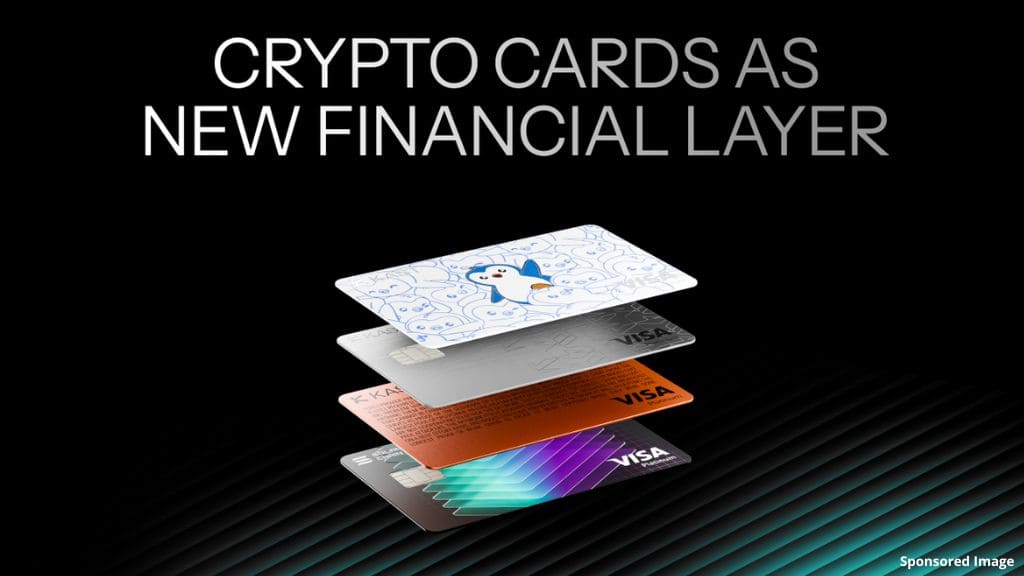
For years, crypto existed outside traditional finance. Users kept wallets, exchanges, tokens, and payment tools in separate places.
That setup worked for holding assets. It did not work as smoothly for daily payments.
In 2026, crypto is moving into a different phase. It is not replacing the existing financial system. It is connecting to the parts people already use, especially cards, online checkouts, and digital wallets.
Crypto cards show that shift clearly. They turn a crypto balance into something users can spend through familiar payment rails.
From Separate Systems to One Payment Flow
Early crypto users moved between two financial worlds.
One side had wallets, exchanges, and onchain transfers. The other side had card terminals, online checkout pages, subscriptions, and local merchants.
Moving funds between those systems often meant extra steps. Users had to convert assets, transfer funds, wait for settlement, and check how much value they lost during the process.
Crypto cards reduce that gap. They let users keep funds in digital assets while paying through card networks that merchants already accept.
Why Crypto Cards Are Growing Now
Several changes have made crypto cards more practical.
Stablecoins are now widely used as digital dollars. They give users a less volatile way to hold value compared with many other crypto assets.
At the same time, card networks already have broad global acceptance. Users also expect faster access to money across apps, wallets, and payment tools.
Together, these conditions make crypto spending easier to use in real life. The card becomes the connection point between a digital balance and everyday payments.
What Makes Crypto Cards Different
A crypto card looks like a standard payment card, but the funding source can be different.
Instead of only relying on a bank account, the card can use a crypto balance, often stablecoins, as the source of funds. When the user pays, the spend flow converts the needed amount, and the merchant is typically settled through the card network in fiat.
The user experience stays simple. The person taps, confirms, and moves on.
The main difference sits behind the payment. Digital funds become usable across real world card acceptance points, without asking every merchant to support direct crypto payments.
A Financial Layer, Not a Bank Replacement
Crypto cards do not need to replace banks to matter.
They add another layer between digital assets and traditional payment infrastructure. That layer connects crypto balances with merchants, card networks, digital wallets, and online platforms.
This matters because users do not have to choose between crypto and traditional payments. They can hold funds in digital assets and still pay through systems that already work in daily life.
That is why adoption can feel quiet. Users are not changing everything at once. They are adding one more way to access and spend money.
Where Crypto Cards Help in Real Life
Crypto cards become useful when money needs to move across borders, platforms, or currencies.
A freelancer may receive digital assets and spend from that balance. A traveler may need access to funds outside their home banking setup. A remote worker may want a payment method that works across online tools, subscriptions, and local merchants.
These situations are common for people who work, travel, or operate internationally.
Crypto cards make the flow less fragmented. Users can move from holding funds to spending them without building a separate payment process for every purchase.
Why Stablecoins Matter
Stablecoins help make crypto cards practical for everyday use.
Without a more stable unit of value, daily spending becomes harder to manage. Price changes can make a simple purchase feel uncertain.
Stablecoins reduce that problem by giving users a crypto based balance that tracks a more familiar value, such as the U.S. dollar.
That changes the role of crypto. It moves from something users only hold to something they can use for payments, subscriptions, travel, and daily expenses.
KAST Card as a Practical Example
The KAST Card shows how this model can work in practice.
It connects stablecoin balances to a global payment network, so users can spend where the card network is accepted. That includes online payments, in store purchases, and supported digital wallet use.
KAST also supports common card based situations that direct crypto payments usually cannot handle well. These can include deposits, pre authorizations, and cash withdrawals when needed.
Key features include:
| Feature | What it supports |
| Physical and digital cards | Online and in person payments |
| Apple Pay and Google Pay | Mobile wallet spending where supported |
| ATM access | Cash withdrawals when needed |
| Eligible cashback | Rewards on qualifying spending |
| Card network acceptance | Payments at supported merchants |
This makes KAST useful for people who want crypto to work inside normal payment habits, not outside them.
Why the Shift Feels Quiet
Major financial changes often look dramatic from the outside.
Crypto cards do not work that way. A user gets a card, links it to a digital balance, and starts using it for normal payments.
The change happens through repeated small actions. A subscription payment goes through. A store purchase works. A travel charge clears. A wallet balance becomes usable beyond the crypto app.
Over time, more spending can move through crypto linked payment tools without changing the merchant experience.
What This Means for Finance
Crypto cards point to a more connected financial system.
Digital assets can sit on one side. Card networks, merchants, and payment processors can sit on the other. The card links both sides in a way that feels familiar to users.
This does not remove traditional infrastructure. It uses that infrastructure to make crypto easier to spend.
The larger shift is practical. Crypto becomes less isolated from daily money movement and more connected to how people already pay.
Make Crypto Usable for Everyday Payments
Crypto cards are turning digital value into something people can use beyond trading, holding, or transferring.
They help users spend from crypto balances, access funds across more places, and use familiar payment tools without waiting for every merchant to accept direct crypto.
With the KAST Card, users can connect stablecoins to everyday payments through card network acceptance.
See how KAST helps make crypto usable for real world payments.
Guest posts published by Crypto Economy have been submitted by companies or their representatives. Crypto Economy is not part of any of these agencies, projects or platforms. At Crypto Economy we do not give investment advice, if you are going to invest in any of the promoted projects you should do your own research.