TL;DR:
- Nine Granbury residents filed a lawsuit against MARA Holdings on May 1, 2026, in the Northern District of Texas.
- The claim seeks financial compensation exceeding $1 million for personal injuries and the loss of property value.
- Plaintiffs allege that cooling systems generate low-frequency noise and vibrations that affect the physical health of neighbors.
Residents of the state of Texas have initiated legal action against MARA Holdings, alleging that operations at its Granbury data center produce unbearable noise levels. The lawsuit was filed on Friday, May 1, in the United States District Court and contends that the Bitcoin mining infrastructure directly interferes with the daily life and well-being of local families.
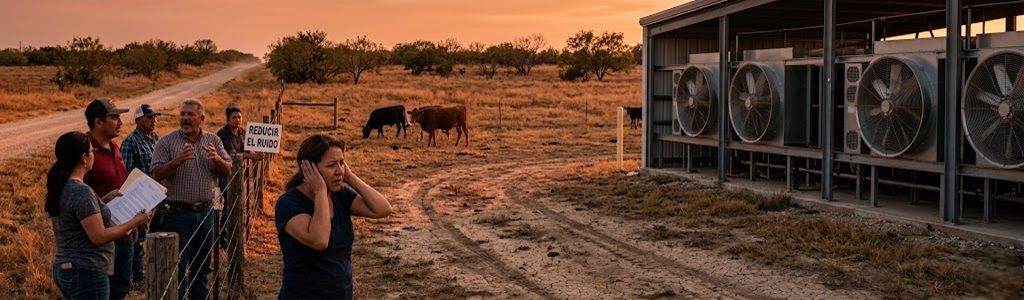
Judicial sources indicate that the plaintiffs—some with residences located less than 0.01 miles from the facilities—argue that the cooling systems operate 24/7. This constant activity reportedly generates a hum and vibrations that penetrate their homes, leading those affected to request a jury trial to determine the company’s liability.
Impact on health and the community environment
The court report details a series of conditions that residents link directly to the plant’s startup. Those affected report suffering from insomnia, chronic headaches, tinnitus, anxiety, and extreme fatigue. In more severe cases, the lawsuit mentions incidents of hearing loss and high blood pressure detected among members of the Granbury community.
Testimonies collected in the case file indicate that the noise not only affects humans but also alters livestock behavior and has reduced wildlife activity in the area. According to the Blockspace report, neighbors point out that conditions worsened significantly since MARA Holdings assumed full control of the plant’s operations in 2024.
For its part, the company reported in previous statements that it is working on implementing mitigation measures. Actions cited by the company include the construction of acoustic barriers, shutting down air-cooling units, and a progressive transition toward liquid immersion cooling systems. However, the plaintiffs claim these solutions do not address the underlying problem.
Legal framework and expansion into Artificial Intelligence
The lawsuit filed includes four main charges: persistent private nuisance, negligence, intentional infliction of emotional distress, and restitution for damages. This litigation comes at a time when digital asset mining companies, such as MARA Holdings, are diversifying their operations toward high-performance computing and Artificial Intelligence (AI).
This technological evolution requires even more robust cooling and power infrastructure, which could intensify tensions in other regions of the United States. Recent data indicates that states like Maine have already implemented moratoriums on new large-scale data centers due to similar concerns regarding local resource consumption and environmental impact.
At the time of writing, it is estimated that the case could set a relevant precedent for the regulation of industrial noise emissions in rural Texas. Meanwhile, MARA Holdings‘ first-quarter financial results presentation is scheduled for May 11, an event where investors are expected to seek clarity on the operational impact of these legal challenges.