For decades, the sound of the closing bell on Wall Street marked an almost sacred ritual. When the session ended, traders shut down their terminals, prices froze, and the financial world took a breather. That pause, that nighttime or weekend silence, was also a safety valve: a space for information to settle, for regulators to observe, and for investors to sleep without the anguish of a crash at three in the morning.
Today, that temporal frontier is evaporating at a speed that is equal parts frightening and fascinating. It is not being torn down by century-old banks or stock exchanges. It is being obliterated by cryptocurrency exchanges, which have decided to invade the territory of traditional finance with a very clear banner: 24/7 trading. And they are doing it with a mixture of ambition, financial engineering, and an alarming lack of regulatory anchoring that should worry us all.
The news is not that we can buy Bitcoin on a Sunday. The true silent revolution is that now, from a single application and using synthetic tokens, you can trade shares of Tesla, gold, oil, or stock indices on a perpetual basis, with no expiry and at any hour of the day or night. Crypto exchanges, led by giants like Binance, Bybit, Bitget, have launched what they call “perpetual contracts” on traditional assets.
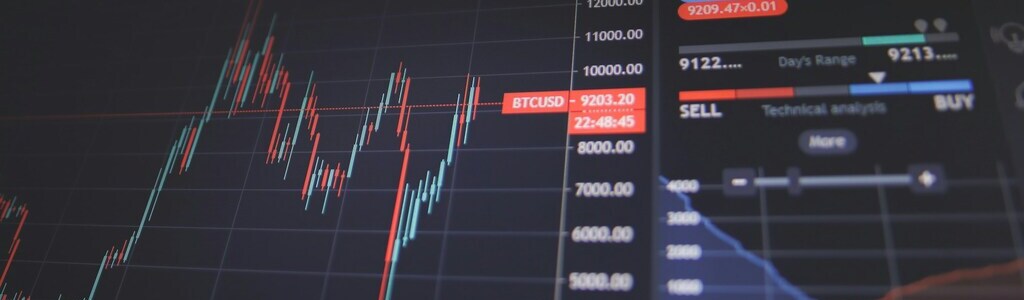
These are not real stocks or regulated futures, but synthetic derivatives that track the price of the underlying asset and settle in stablecoins like USDT. The promise is seductive: global access, leverage of up to 500 times, and the ability to react in real time to a geopolitical crisis on a Saturday afternoon, hours after physical exchanges have closed for the weekend.
The numbers speak for themselves: in the first quarter of 2026, Binance reported an average daily volume in these contracts of $8.6 billion, with a cumulative historical figure exceeding $130 billion.
The first thing that must be acknowledged is that this convergence has positive aspects that a reactionary analysis cannot ignore. The fragmentation of investment accounts is a real headache: one holds stock custody with a broker, futures somewhere else, gold perhaps in an ETF, and crypto in yet another exchange. Being able to manage everything from a single platform, with a single line of credit and unified collateral, is a leap in operational efficiency that institutional investors have sought for years.
Moreover, the capacity for real-time hedging is a genuine advance. If a conflict erupts in the Middle East over the weekend, traditional commodity markets do not open until Monday, leaving entire portfolios exposed to chance. Bitget has documented how its commodity tokens absorbed the impact of geopolitical events immediately, allowing positions to be adjusted without waiting for Monday. For a corporate treasurer or a risk manager, that is not a luxury; it is a necessity that the old system fails to cover.
Even sacred names of TradFi have understood this: BlackRock, the world’s largest asset manager, has brought its tokenized money market fund BUIDL to the OKX exchange in partnership with Standard Chartered, allowing traders to use shares in a money market fund as collateral for crypto derivatives operations. That move blurs the line between the safest institutional liquidity and the wildest speculative trading, all within a single digital environment open 24/7.
Where the Dream Becomes a Ticking Time Bomb
But it is worth pausing right here, at the image of the safest asset serving as fuel for insane leverage, because this is the exact point where the techno-libertarian dream begins to smell like a ticking time bomb. In April 2026, the Bank for International Settlements (BIS), an institution not known for sensationalism, issued a warning that should be read aloud at every fintech conference: cryptocurrency exchanges that offer loans, yield products, and synthetic derivatives are functioning as “lightly regulated shadow banks,” without the safeguards inherent to traditional banking—namely deposit insurance, robust capital requirements, or a lender of last resort.
The BIS does not speak idly. Its report explicitly mentions the collapses of Celsius and FTX as mirrors of the past that refuse to fade away. This dangerously circular: you capture retail funds promising yields (sometimes generated by opaque operations or the exchange’s own token), you use them as collateral for hyper-leveraged bets, and the whole castle stands only as long as the market does not turn sharply.

The problem is that, unlike a traditional bank, there is no public backstop to protect the small saver when the castle crumbles. And in a 24/7 environment, collapses do not respect office hours, making an orderly intervention by regulators virtually impossible. The IMF already warned of this: moving traditional trading onto blockchain rails could accelerate financial crises faster than supervisors can react.
The irony is that this phenomenon is accelerating just as U.S. regulators are beginning to seriously flirt with extending the hours of traditional exchanges. The SEC has approved NYSE Arca to operate 22 hours a day, and both the SEC and the CFTC have proposed exploring round-the-clock operations.
In other words, instead of setting clear limits on the perpetual casino, traditional institutions seem determined to imitate it in hopes of not becoming irrelevant. The CME Group has already promised 24/7 crypto futures, and it is only a matter of time before others follow. The direction of travel is clear: we are heading toward a global market without pauses, but with two regulatory speeds.
One lane, that of crypto exchanges, with lax rules, extreme leverage, and opacity; another lane, that of traditional markets, burdened with compliance costs but also with safety nets. This duality is unsustainable and, worse still, profoundly unfair to the ordinary investor, who does not always distinguish whether they are buying a regulated CFD or an opaque synthetic derivative until it is too late.
The entry of heavyweights like JPMorgan, which since 2025 has been offering banking services to exchanges, or Franklin Templeton partnering with Binance on tokenization, carries a double meaning. On one hand, it legitimizes the ecosystem and gives it a layer of institutional credibility it previously lacked. On the other, it creates a dangerous interconnection between the traditional financial system and these semi-regulated entities. If one of these giant exchanges fails again, the shockwaves will no longer be confined to the crypto niche; they will hit pension funds, asset managers, and systemic banks that have built bridges without properly measuring the depth of the precipice.
The merger between programmable money and the stock market is unstoppable, and probably desirable in many respects, but without a global regulatory framework that demands transparency, reasonable leverage limits, and resolution mechanisms, we will be building a parallel financial system that operates with the rules of a video game and the consequences of the real world.
This is not about romanticizing the past or demonizing innovation. The possibility that a student in Venezuela or a small entrepreneur in Nigeria can access global markets with a mobile phone is profoundly democratic. The problem is that the narrative of financial inclusion is being used as a pretext to sell extremely high-risk products to a mass audience that, in many cases, lacks the financial literacy necessary to understand a 500x leveraged perpetual contract. The line between empowering and preying is very thin, and the exchanges that rush to offer “24/7 TradFi” rarely stop to draw it.

At its core, what is at stake is the very definition of a market. A market is not just a place where supply and demand meet; it is a social mechanism that requires trust, clear rules, and, yes, pauses. The nighttime or weekend break was not a technical vestige of paper and telephone, but a tacit institution that allowed information to be digested and prevented hot-headed decisions that ruin lives. Eliminating it without having first designed equivalent protection circuits is like removing the brakes from a car because we have invented a more powerful engine. Sooner or later, the accident happens.
The question, then, is not whether markets will be 24/7—they already are becoming so—but rather who will pay the price when the dream of the eternal market turns into a nightmare of cascading liquidations at four in the morning. If we want a virtuous convergence between traditional finance and crypto, we need regulators to stop chasing innovation and sit down to design, once and for all, a legal architecture that protects the investor without killing efficiency.
Demanding transparency in the price formation of these synthetic derivatives, limiting leverage to sensible levels, forcing the segregation of client assets, and establishing continuous supervision mechanisms that never sleep, just like the markets themselves. Until that happens, the blurring line between TradFi and crypto will also be the line that separates opportunity from a disaster foretold. And on that invisible frontier, the only thing that never closes is risk.