TL;DR
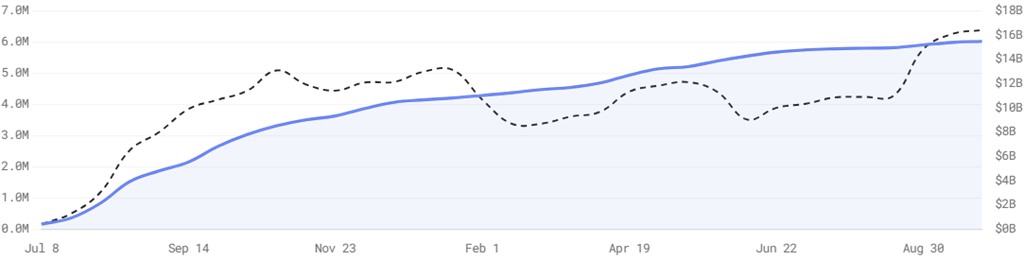
- BitMine holds 6,016,414 ETH, nearly 5% of Ethereum’s supply, and could reach its target in approximately six weeks if it maintains its current buying pace.
- The end of BitMine’s weekly purchases could reduce demand for ETH and leave it more exposed to downward market pressure.
- Staking its holdings does not replace Ethereum purchases, meaning other investors and institutions would need to make up for the lost demand.
BitMine is close to reaching its goal of accumulating 5% of Ethereum’s supply, a strategy that has made it the largest corporate holder of ETH. However, its success presents a problem for the market: one of its most consistent institutional buyers could stop purchasing tokens within weeks.
The company has maintained steady weekly purchases since June 2025. This recurring demand has provided a consistent source of buying pressure, although it is impossible to determine exactly how much it has contributed to Ethereum’s price. Its eventual disappearance could leave ETH more vulnerable to selling pressure in a market already struggling with bearish conditions.
BitMine Is Just Weeks Away From Reaching Its Limit
According to its latest announcement, BitMine holds 6,016,414 ETH, equivalent to approximately 4.9% of the total supply of 122.1 million tokens. The company acquired another 15,112 ETH during the previous week and remains committed to reaching its 5% target.
Based on those figures, it would need approximately 88,586 additional ETH to reach that limit. If it maintains its current pace, it could complete its purchases in roughly six weeks. This estimate assumes that neither its acquisition rate nor Ethereum’s supply changes substantially.
BitMine Chairman Tom Lee stated that the company will stop accumulating ETH once it reaches that percentage. This decision challenges the expectations of those who view corporate crypto treasuries as a permanent source of demand.
A company can hold cryptocurrencies for years without continuing to buy them indefinitely. For the market, maintaining a position and expanding it every week are two very different activities.

The Danger Lies in the Demand That Disappears
BitMine’s purchases have removed millions of ETH from the market that might otherwise have remained available to other investors. However, there is insufficient evidence to attribute a specific share of Ethereum’s price performance to those acquisitions.
What can be assessed is the effect of interrupting recurring demand. If BitMine stops acquiring roughly 15,000 ETH per week, other buyers will need to absorb the supply that previously found a buyer in the company.
The absence of purchases is not the same as selling, but it can change the balance between supply and demand. If investors reduce their exposure and leveraged liquidations increase, that shift could amplify price declines.
Ethereum does not depend exclusively on BitMine, either. ETFs, retail investors, and other institutions participate in its market. Their ability to compensate for the lost purchases will matter more than the percentage of supply accumulated by a single company.

Staking Does Not Replace Purchases
BitMine has approximately 5.07 million ETH in staking, an activity that allows it to earn rewards without necessarily selling its holdings.
This approach may encourage the company to retain its positions and reduce the number of tokens available for immediate trading. However, earning staking rewards does not generate the same demand as purchasing ETH on the market.
The company could also revise its targets, but there is no reason to assume it will continue accumulating beyond its announced limit.
The main danger for Ethereum is not that BitMine will sell its holdings, but that a buyer the market has grown accustomed to will disappear.
Corporate accumulation can support demand for a period, but it can also create dependence when a small number of participants make exceptionally large purchases.
If Ethereum needs BitMine to keep buying in order to maintain its price, its underlying strength would be far weaker than its institutional holdings suggest. The real test will begin when those purchases end and ETH must sustain demand without one of its most consistent buyers.