

BlockDAG is described by its team as an early-stage crypto project that has raised $364 million and released mining-related tools. The project also says it has secured or is planning listings across 20 exchanges. Project materials reference a token price of $0.0016 at the time of writing, although token prices after a market launch can be volatile and are not guaranteed.
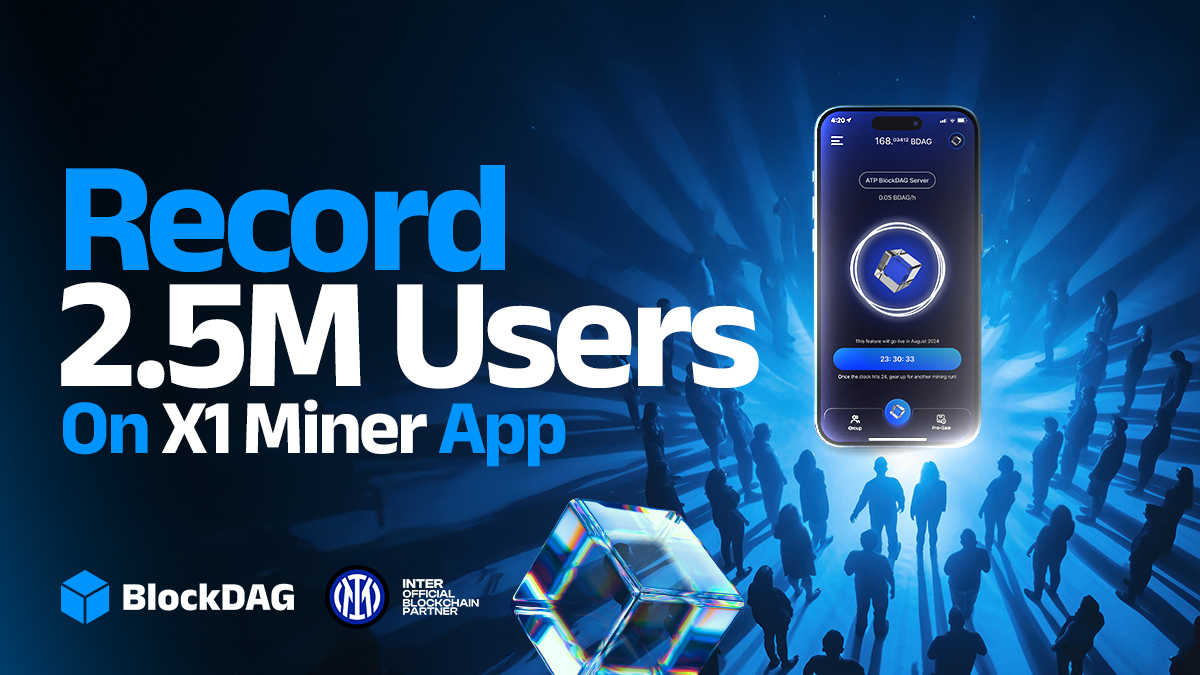
According to the project, BlockDAG’s hybrid blockchain-DAG model is intended to support faster transaction processing and real-time participation through mobile and hardware tools. It also states that its user base includes over 2.5 million X1 miners, though third-party verification of user counts can vary by methodology.
A Closer Look at the Technology Behind BlockDAG
BlockDAG’s documentation describes an architecture that combines elements of a traditional blockchain with the scalability approach of Directed Acyclic Graphs (DAGs). Traditional blockchains, such as Bitcoin and Ethereum, process transactions in a single chain of sequential blocks. BlockDAG’s approach, as presented by the project, aims to enable parallel block creation so multiple blocks can be confirmed in the same time window.
The project claims its framework could support 2,000 to 15,000 transactions per second (TPS) under certain conditions. As with any throughput figure, real-world performance depends on network usage, validator/miner participation, hardware, and implementation details; these figures should be treated as project-reported targets rather than guarantees.
BlockDAG also outlines a dual-layer participation model. The X1 mobile app is presented as a lightweight mining option tied to what the project calls Proof-of-Engagement. The X10 hardware miner is described as operating under a Proof-of-Work system. Any rewards, yields, or outputs from these mechanisms depend on network rules and conditions and may change over time.

The project’s roadmap references smart contract support, cross-chain interoperability, and developer tooling. As with any roadmap, timelines and deliverables can change.
Token sale update: $364M reportedly raised
As of August 2025, BlockDAG says its token sale has exceeded $364 million. The figure is presented by the project as an indicator of demand, though fundraising totals do not necessarily correlate with long-term network usage or token performance.
BlockDAG also highlights what it calls a product-first delivery approach. The project’s Dashboard V4 is described as providing users with a trading simulator intended to reflect certain post-launch functions, including simulated trades and wallet tracking.
On the mining side, the project states that the X1 app has over 2.5 million registered users and that the X10 miner has been demonstrated in live presentations. Demonstrations and early tooling do not eliminate technical, regulatory, or market risks associated with early-stage crypto projects.
The project has also referenced promotional campaigns such as Buyer Battles and a 10 BTC Auction as part of its marketing. Separately, it says it has a plan for listings across 20 centralized exchanges, although listing timing and availability can vary by exchange and jurisdiction.
Price scenarios and risk context
Discussion around BDAG often focuses on the gap between the project-reported token sale price and hypothetical future market prices. Any forward-looking scenarios depend on factors that are difficult to forecast, including circulating supply, market capitalization, liquidity, broader market conditions, and regulatory developments.
Even when framed as “illustrations,” return-on-investment examples can be misleading because they implicitly assume outcomes that may not materialize. Readers should treat such scenarios as speculative and consider that tokens can lose value, become illiquid, or face trading restrictions.
Why BlockDAG’s approach is being discussed
Supporters of BlockDAG point to early tooling, reported user numbers, and its hybrid architecture as reasons for interest. The project also emphasizes participation mechanisms via mobile and hardware mining, along with community engagement features and a simulator-style dashboard.
As with other early-stage networks, the key open questions include whether the technology delivers as described at scale, whether developers and users adopt the chain over time, and how any eventual market listing is structured and regulated.
Final Thoughts
BlockDAG’s public messaging highlights its hybrid architecture, a reported $364M+ raise, and an active set of tools and demos. Readers evaluating the project should separate verifiable disclosures from marketing claims, and consider the risks that can accompany token sales and new network launches.

Website (for reference): https://blockdag.network
Telegram: https://t.me/blockDAGnetworkOfficial
This outlet is not affiliated with the project mentioned. This article is for informational purposes only and does not constitute financial or investment advice.

