TL;DR
- Buterin stated that the Hegotá upgrade, scheduled for 2027, could be the last “normal” fork before a radical transformation of Ethereum.
- Vitalik described the network’s evolution toward a “cryptographic world computer” with recursive STARKs and quantum cryptography.
- Researchers and specialists debate how much computation should migrate off-chain and which records must remain on the base layer.
Ethereum co-founder Vitalik Buterin argued that the Hegotá upgrade, planned for 2027, would likely be the last one in which its technologies would be recognizable to someone familiar with the network in 2015. From that point on, Ethereum’s development would advance toward recursive STARKs, automated formal verification, optimized consensus, and cryptography resistant to quantum computing.
Buterin noted that PeerDAS, the mechanism that allows nodes to verify data availability by sampling portions rather than downloading all content, marked the beginning of the transition of Ethereum from being simply a blockchain toward something substantially more powerful.
He described that destination as a “cryptographic world computer“, an architecture that combines cryptographic verification, privacy, and decentralized off-chain components, moving away from the model in which nodes individually download and re-execute transactions.

Buterin: The Future of Computing on Ethereum
The scheme would involve moving a greater volume of computation off the base layer, using the latter to verify results, settle transactions, and preserve access to shared on-chain state. The proposal sparked a debate among researchers and ecosystem specialists.
Ethereum researcher Barnabé Monnot noted that committing and proving results on-chain, rather than executing all computation there, would significantly reduce the burden on the network and allow for lighter nodes. However, Monnot warned that a “world computer” should keep critical records on-chain that its applications depend on, ensuring that users can observe and interact directly without relying on external servers.
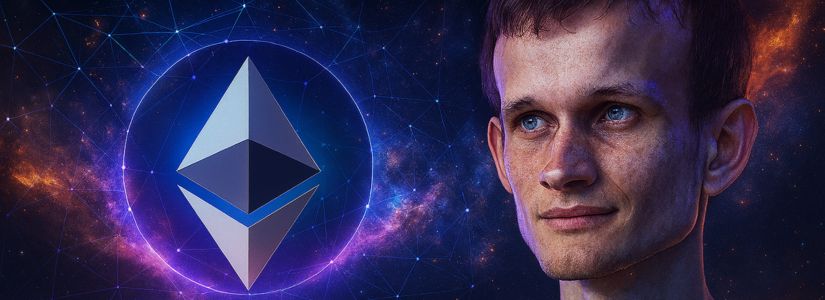
Debate Over the Limits of the Model
Commentator Cryptographic argued that the architecture could expand the capabilities of decentralized finance applications, enabling complex calculations outside smart contracts while Ethereum verifies that the resulting transactions comply with protocol rules. He used DeFi credit as an example, where collateral analysis and the matching of lenders and borrowers could occur off-chain before Ethereum verifies and settles the outcome.
Crypto asset attorney Gabriel Shapiro questioned whether sufficient demand exists for systems based on cryptographic proofs compared to traditional trust models, which rely on reputation, regulation, and legal enforcement rather than continuous cryptographic verification.