Trump said he will nominate former Federal Reserve Governor Kevin Warsh to succeed Jerome Powell as chair of the US central bank, teeing up a Senate confirmation battle. The nomination makes Fed leadership a catalyst that can reprice policy expectations and crypto risk appetite in one move. Trump announced the pick on Truth Social, confirming reports that he would move ahead with the 55-year-old former Fed official and Morgan Stanley banker. He praised Warsh and said he expects him to rank among the best Fed chairs. Prediction markets had been leaning that way.
Confirmation and crypto
Warsh served on the Federal Reserve Board from 2006 to 2011 and has since criticized ultra-loose monetary policy, calling for a “regime change” and questioning post-crisis balance sheet expansion. His track record sets expectations of tighter posture and sharper messaging. That history is likely to shape the confirmation process, with lawmakers scrutinizing his past calls for tighter policy and his criticism of the Powell Fed’s approach to regulation and crisis interventions. For stakeholders, the hearings become a stress test of how a new chair could define mandate, tools, and constraints under heightened market pressure.
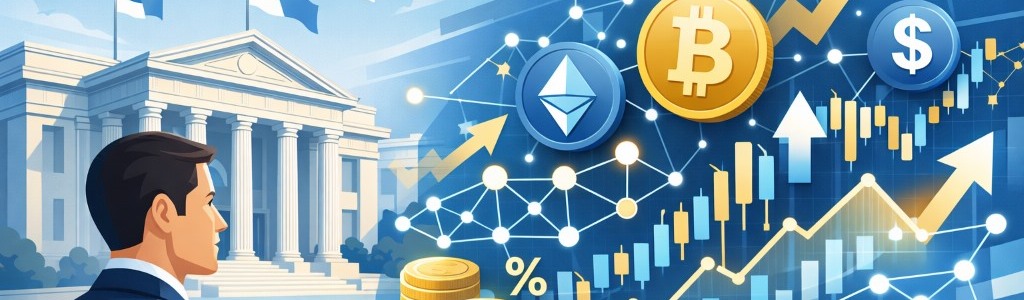
Warsh has been more upbeat on Bitcoin than Powell, who has repeatedly played down the cryptocurrency’s importance for the US economy. He has argued that Bitcoin does not have to erode the Fed’s steering capacity, and could act as market discipline. In a July discussion hosted by the Hoover Institution, Warsh rejected the notion that Bitcoin would weaken the central bank’s ability to guide the economy. For crypto markets, that stance is less a policy pledge than a tone shift, signaling willingness to treat digital assets as a real input to the macro narrative.
Warsh’s selection comes as traders were repricing risk assets, including Bitcoin, around the prospect of a hawkish chair and the threat of a US government shutdown. The playbook is that confirmation headlines will drive positioning while markets debate whether “hawkish” is substance or branding. Gold advocate Peter Schiff argued the “crash” in gold and silver had nothing to do with the nomination, adding Trump would not have picked Warsh if he thought he was a hawk and that even the most hawkish officials are still doves. Now the Senate process is the next catalyst.