

What happens when an established crypto asset starts climbing the charts again while a newer meme-token project draws attention through marketing and community updates? That is part of the current discussion. Tron (TRX) has recently traded above the $0.30 area and has been moving within the $0.37–$0.38 zone at times, based on recent market prices. As with any crypto market move, short-term momentum can change quickly and does not guarantee future results.

Meanwhile, Arctic Pablo Coin (APC) is being promoted as an early-stage meme-token project. The project describes a staged token sale and has reported raising funds during it, though such figures are best treated as project-provided and not independently verified here. Project materials also describe marketing incentives, such as bonus-code promotions, and some third-party commentary includes speculative price scenarios; these projections are uncertain and should not be read as expectations.
In addition, the article references Brett and Bonk as established meme coins that are actively traded. Below is a high-level overview of each project’s publicly discussed positioning, without implying future performance.
Arctic Pablo Coin: Token-sale stage details and project positioning
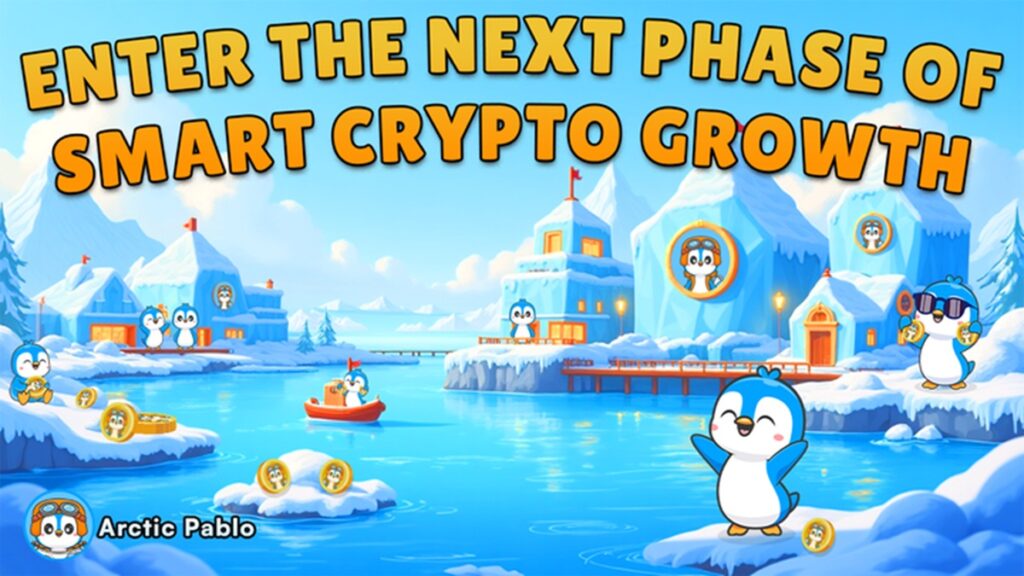
The project’s marketing frames Arctic Pablo Coin around a fictional explorer narrative. According to project materials, APC’s token sale is organized into multiple stages, each with a name and theme. Any stage-completion claims, sale pricing, and fundraising totals referenced by the project may change over time and may not be independently verifiable from public sources.
Some promotional content around early-stage token sales uses hypothetical examples to illustrate outcomes at different prices. These scenarios are inherently speculative, exclude trading frictions (such as liquidity constraints and fees), and should not be treated as forecasts.
Beyond the sale itself, the project also describes additional features, including staking and referral-style incentives, as well as token supply management (such as burning unsold tokens). Where the project cites yields, rewards, or schedules, those terms can change and may depend on participation conditions. The project has also stated that it plans to make the token available on venues such as Coinstore and PancakeSwap; planned listings are not a guarantee of execution or liquidity.
Marketing incentives and staged-sale updates
Like many early-stage token sales, APC’s communications emphasize stage progress and promotional incentives. Readers should treat these as marketing statements and consider that pricing, availability, and terms can change, and that early-stage tokens typically carry elevated risk.
The project’s narrative-led approach is central to its branding, with stage names tied to locations in a fictional journey. That storytelling may appeal to some community members, but it does not reduce market, execution, or liquidity risks associated with newly launched tokens.
Brett: The Based Meme Movement
Brett, often referred to as “Based Brett,” is presented by its community as a culture-first meme coin. Its identity is largely driven by internet culture and community participation rather than product or protocol development.
As with many meme coins, trading interest can be highly sentiment-driven, and price moves may be volatile. Any discussion of market interest should not be interpreted as a recommendation or a view on likely returns.
Bonk: Solana’s Meme Engine
Bonk is commonly described as a Solana-native meme coin and has been associated with community activity across that ecosystem. Public commentary has linked BONK to use cases such as tipping and integrations around NFTs and community campaigns, though adoption and impact can vary over time.
BONK’s market activity, like other meme coins, can change rapidly with shifts in liquidity and sentiment. Comparisons to other well-known meme assets are descriptive and do not imply similar performance.
Tron price context: recent trading range and market commentary
Tron’s recent price action has been a focal point in broader market commentary. TRX has traded above the $0.30 area and has consolidated around the mid-$0.30s at times. Some analysts watch whether the price can sustain moves above nearby resistance zones, but any path toward higher levels remains uncertain and is subject to market conditions.
Separate from price, commentary around Tron often cites network usage (including stablecoin activity) and changes to fee mechanics. These factors can influence narratives about the asset, but they do not eliminate volatility or guarantee future price direction.
How these projects are being discussed
Crypto markets often group assets into themes—such as legacy altcoins, ecosystem tokens, and meme coins—especially during periods of heightened trading activity. In that context, Tron (TRX) is discussed as an established network asset, while Brett and Bonk are discussed as community-driven meme coins with ongoing market activity. Arctic Pablo Coin is discussed primarily in connection with its token sale and project-led marketing narrative.
Any statements about future prices, listings, or returns for these tokens are speculative. Readers should consider the materially different maturity, liquidity, and risk profiles across these assets and avoid relying on promotional projections.
For More Information:
Arctic Pablo Coin: https://www.arcticpablo.com/
Twitter: https://x.com/arcticpabloHQ
Frequently Asked Questions about meme coins and early-stage token sales
How do investors evaluate meme coins?
Market participants commonly look at liquidity, token distribution, exchange availability, community activity, and disclosure around risks. None of these factors can ensure price performance, and meme coins can be particularly volatile.
Do meme coins sometimes start with token sales?
Yes. Some meme-token projects begin with early-stage fundraising or token-sale events. Terms and availability vary by project, and participants typically face higher execution, smart-contract, and liquidity risks than with more established assets.
Can analysts reliably predict which meme coin will surge?
No. Price targets and return estimates are speculative and can be based on assumptions that may not hold. Readers should treat any such projections as opinion rather than objective forecasts.
What are common risks to consider?
Common risks include extreme volatility, limited liquidity, concentrated token ownership, smart-contract and operational risks, and changing exchange or regulatory conditions. Early-stage token-sale participation can add additional risks around delivery and listing outcomes.
Are large fundraising totals evidence of safety?
Not necessarily. Fundraising or participation figures can be incomplete, difficult to verify, and do not guarantee product delivery, sustained liquidity, or favorable pricing once trading begins.
Summary
This article reviewed recent discussion around Tron (TRX) price movement and three meme-coin-related names: Arctic Pablo Coin (APC), Brett, and Bonk. Tron is discussed in the context of recent market pricing and network commentary, while Brett and Bonk are discussed as sentiment-driven meme assets with active communities. APC is discussed mainly through the lens of its staged token sale and project-reported features, which should be treated as promotional claims and not as guarantees of outcomes.
This outlet is not affiliated with the project mentioned. This article is for informational purposes only and does not constitute financial or investment advice.

