
Zcash Foundation Reports $36.69M in Liquid Assets as Q1 Expenses Reach $817K
TL;DR The Zcash Foundation Q1 Financial Report shows $36.69 million in liquid assets at the end of the quarter, supported mainly by $21 million in ZEC

TL;DR The Zcash Foundation Q1 Financial Report shows $36.69 million in liquid assets at the end of the quarter, supported mainly by $21 million in ZEC

TL;DR: The new financial product from Solayer allows users to spend USDC balances on physical and electronic purchases, as well as ATM withdrawals. The Solayer Pay

TL;DR: Coinstancy built a Polygon-based stablecoin savings product for mainstream users, managing over $1 million in deposits and connecting fiat access to USDC settlement. Coinme provides
TL;DR: Upshift launched Clear, a USDC vault platform for instant settlements of tokenized real-world assets. Liquidity providers deposit USDC and receive clrRWA receipt tokens that accumulate

TL;DR: Coinbase became the official treasury deployer of USDC on Hyperliquid, positioning USDC as an Aligned Quote Asset for onchain trading markets. Native Markets agreed to
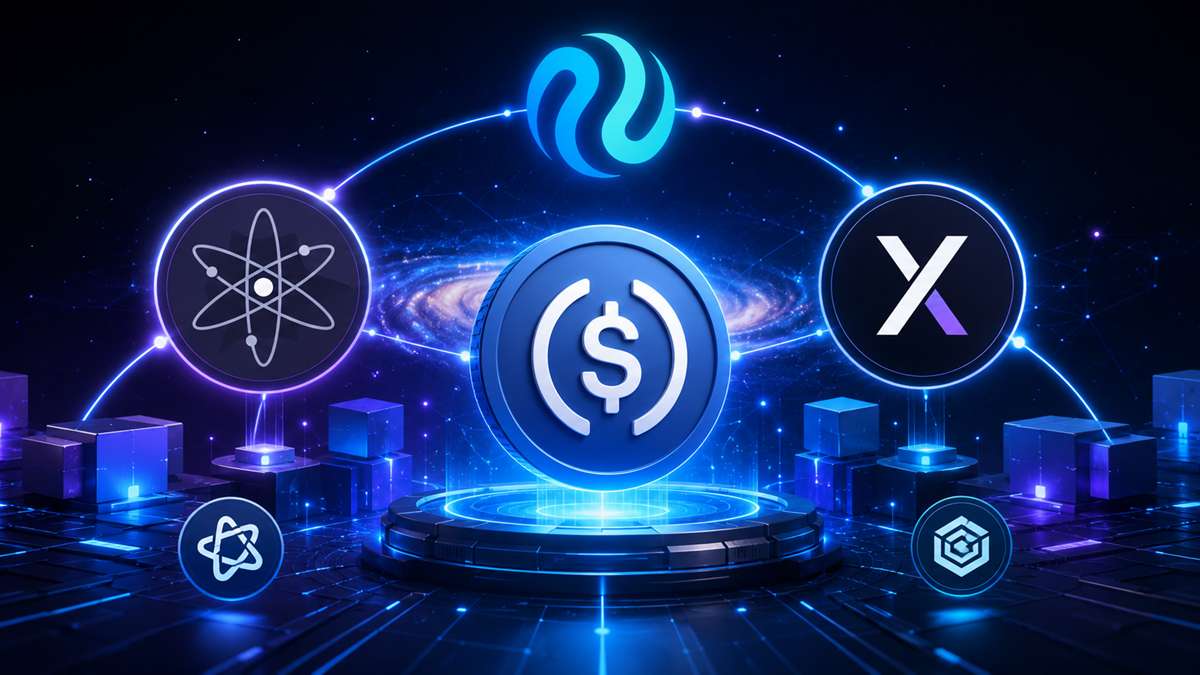
TL;DR Injective’s native USDC is becoming the canonical stablecoin standard across the Cosmos ecosystem and the dYdX chain, bringing liquidity under a unified issuance framework. Skip:Go

TL;DR: USDC on-chain transaction volume reached $21.5 trillion in the first quarter of 2026, a 263% year-over-year increase. Circle’s net income from continuing operations decreased by
TL;DR: Circle raised $222 million in the presale of the ARC token, linked to its new Arc blockchain, which was valued at around $3 billion. CEO

For more than a decade, the world of cryptocurrencies has been searching for its place in the sun. It promised to revolutionize finance, democratize access to
TL;DR: Circle will present its financial results on May 11, a report that will have a direct impact on USDC and the stablecoin market. The company

