
TL;DR
- Strategy (MSTR) posted a $17.44B unrealized loss on its Bitcoin holdings but purchased an additional 1,286 BTC for $116M.
- Its total BTC holdings now stand at 673,783 BTC, funded through a $312M equity issuance.
- Despite the loss, the company maintains a $2.25B USD cash reserve for financial obligations.
Strategy (MSTR.O), led by Michael Saylor, closed the fourth quarter with an unrealized loss of $17.44 billion on crypto assets after a drop in Bitcoin (BTC). Across 2025, the shares fell 47.5%, tracking crypto volatility that pressured results and the balance sheet.
For the year ended December 31, 2025, the company reported an annual unrealized loss of $5.40 billion tied to its crypto holdings. In December, management cut 2025 earnings guidance after BTC’s weak run.
Liquidity stayed intact. As of January 4, 2026, Strategy reported $2.25 billion in USD reserves earmarked for preferred dividends and debt service. The message to investors: protect cash flows while maintaining the accumulation thesis.
Additional purchase of 1,286 BTC and MSCI decision in focus
The company bought 1,286 BTC for $116 million, lifting its total holdings to 673,783 BTC. The average purchase price filed with the SEC was $88,568 per BTC. Part of the deal executed in late December and the rest in January at quotes above $90,000.
Funding came from the issuance and sale of ~2 million shares, delivering net proceeds of $312.2 million. Strategy disclosed the move as markets awaited an MSCI decision on the inclusion of heavy crypto treasuries in global indices.
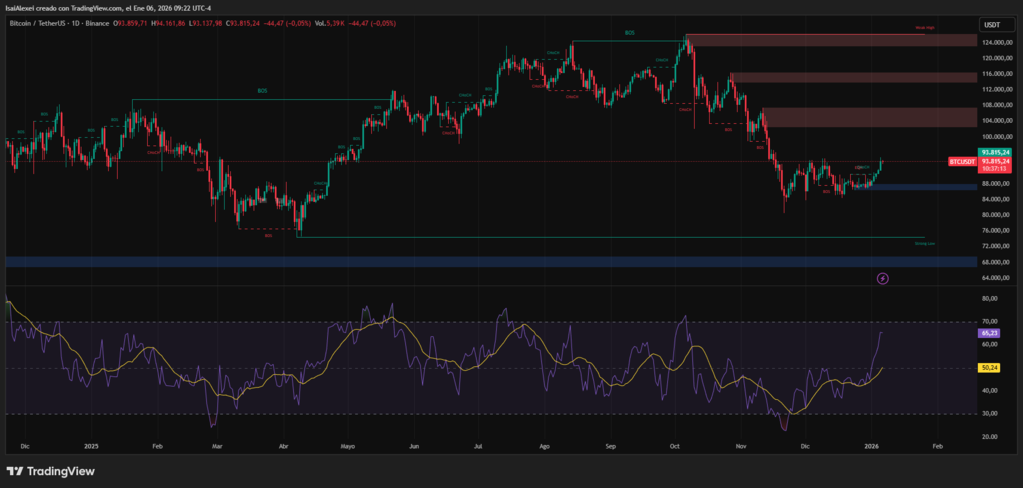
Price action supported the timing. Bitcoin topped $94,000 early in the week, up ~7% in 2026 amid U.S.–Venezuela geopolitical tensions. MSTR rose about 4% on the week and traded near $164 at midday on Monday, January 5, 2026.
Operating signals and read-through for the market
Two vectors define the sequence: mark-to-market pressure and position reinforcement. Fair-value accounting magnifies price swings and produces unrealized losses in down phases. At the same time, the purchase program seeks to add BTC using equity financing to sustain the long-term thesis. The USD reserve backs financial commitments, reducing cash-stress risk during volatility.
Peer comparisons keep pressure on issuers with crypto on the balance sheet after a choppy fourth quarter. Even so, Strategy maintains a large monetary asset and capital-market access to extend its accumulation plan. Any MSCI call on index treatment can shift passive flows and liquidity for the stock, making regulatory disclosures and financing discipline central to the investment case.